Full Article
about Aielo de Malferit
Birthplace of Nino Bravo, a town with a liquor-making tradition and industrial heritage.
Hide article Read full article
A scent that announces the town
The smell of anise reaches you before the town itself. It appears on the road as soon as the car leaves the N‑340 and enters the Vall d’Albaida. This is not accidental. In Aielo de Malferit, liqueurs have been distilled since the 19th century, shaping the local economy for generations.
Towards the end of that century, a company from the town produced a kola‑coca syrup that was exported to America. It is a curious episode that often comes up in conversations about the origins of certain soft drinks. Beyond that anecdote, Aielo still reflects its beginnings as an Islamic alquería, a rural settlement that over time became the centre of a small lordship.
From morisco settlement to feudal town
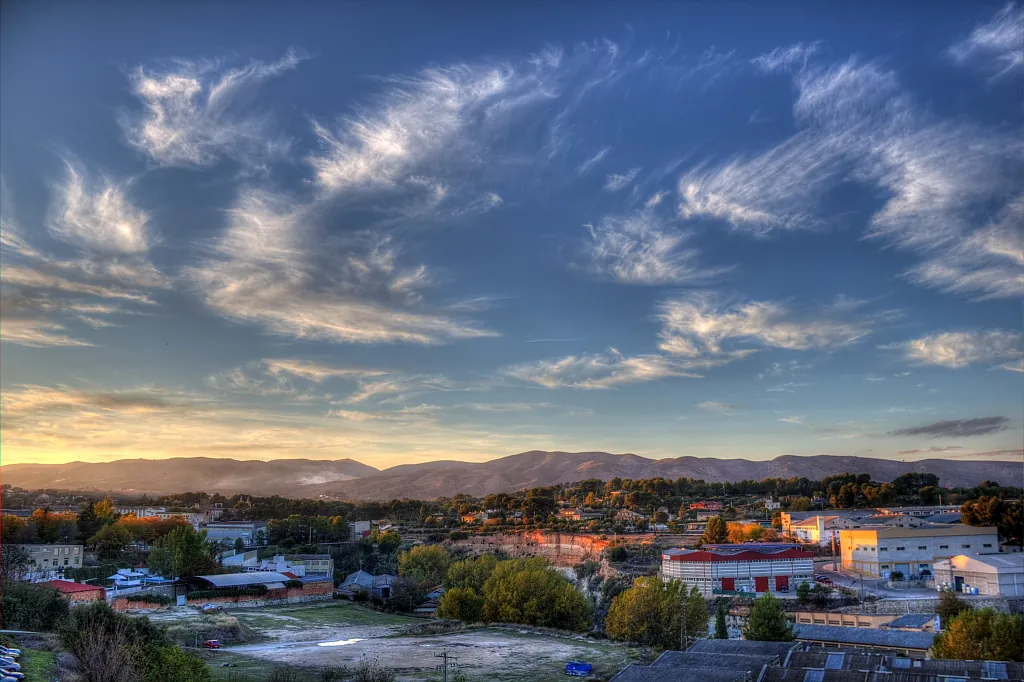
Aielo is not laid out in straight lines. Its form makes more sense on foot. Streets climb in zigzags, houses cluster closely together to create shade, and the historic centre tightens around the main square.
Medieval texts mention an alquería called Ayyub. A morisco population remained here until 1609, when their expulsion left the area almost empty. Two years later, Lucas de Malferit organised its repopulation with dozens of Valencian families. The Carta Puebla of 1611 set out the rules of daily life in detail, covering land, grazing, water use and how vineyards were divided.
This feudal framework lasted for centuries. The Palacio de los Malferit, a building with Gothic origins that was heavily altered later on, recalls that period. Today it functions as a cultural space and keeps objects linked to local history, including an old baptismal font that likely served several generations of the town’s residents.
A parish long in the making
The parish church of San Pedro Apóstol stands at the centre of the urban area. The current building dates from the 18th century, constructed roughly between 1732 and 1744 in a restrained Baroque style. Its square tower is visible from most parts of the town.
What stands out is how long Aielo took to gain its own parish. For centuries it depended on nearby settlements for religious administration. Parish independence arrived in the 16th century, when Patriarch Juan de Ribera reorganised the ecclesiastical network following the forced conversion of the moriscos. From that point on, baptisms, burials and religious celebrations no longer relied on other towns in the comarca.
Inside the church there are later altarpieces and several processional figures that still appear during Holy Week. The processions here are modest in scale compared to those in larger Valencian cities. They move through narrow streets in relative quiet, leaving behind the faint scent of candle wax after the brotherhoods have passed.
The presence of Nino Bravo
Aielo de Malferit is widely known in Spain as the birthplace of Nino Bravo (1944–1973). Although his career unfolded far from the town, his memory remains here. In a house in the centre there is a museum dedicated to the singer, displaying records, photographs, stage costumes and archival material connected to his career.
The collection has grown over time through contributions from admirers and family members. Visitors often arrive from Latin America, where Nino Bravo’s voice still has a strong following.
In a nearby street, a small workshop continues the specialised craft of making pilotas valencianas, the balls used in the traditional game of raspall. It is meticulous manual work involving leather, strong thread and many hours of stitching. Trades like this now survive in only a few places in the Comunidad Valenciana.
The Clariano and the surrounding hills
Aielo sits at around 280 metres above sea level on the southern side of the Vall d’Albaida. The river Clariano runs close to the town, although in some stretches it is barely visible from the built-up area. A local path descends towards its banks, passing orchards and riverside vegetation. Depending on the time of year, the river may carry a noticeable flow or shrink to scattered pools.
In the nearby hills there are small cavities known as the Cova Fosca and the Cova Blanca. Popular tradition links them to shelters used during the morisco period, though it is not always easy to separate history from legend. Some walking routes in the area pass close to these spots.
The cooking here follows the traditions of inland Valencia. Many households still prepare arroz al horno on special occasions, and cured sausages are made during the winter months. Vineyards were once important; today only scattered plots remain, mixed among almond and olive trees.
Getting your bearings
Aielo de Malferit lies in the southern part of the province of Valencia, within the Vall d’Albaida comarca. It can be reached by road from the A‑7 and the CV‑40, which connect the area with the city of Valencia and other nearby towns. Public transport does exist, though services are limited.
The town itself is easy to explore on foot. To understand its layout, it helps to head up towards the Calvari. From there, the clustered houses spread across the slope become clear, along with the surrounding landscape that frames this small but historically layered place.