Full Article
about Atzeneta d'Albaida
A town with a long esparto-grass craft tradition at the foot of the Sierra de Mariola
Hide article Read full article
Atzeneta d'Albaida y la falda del Benicadell
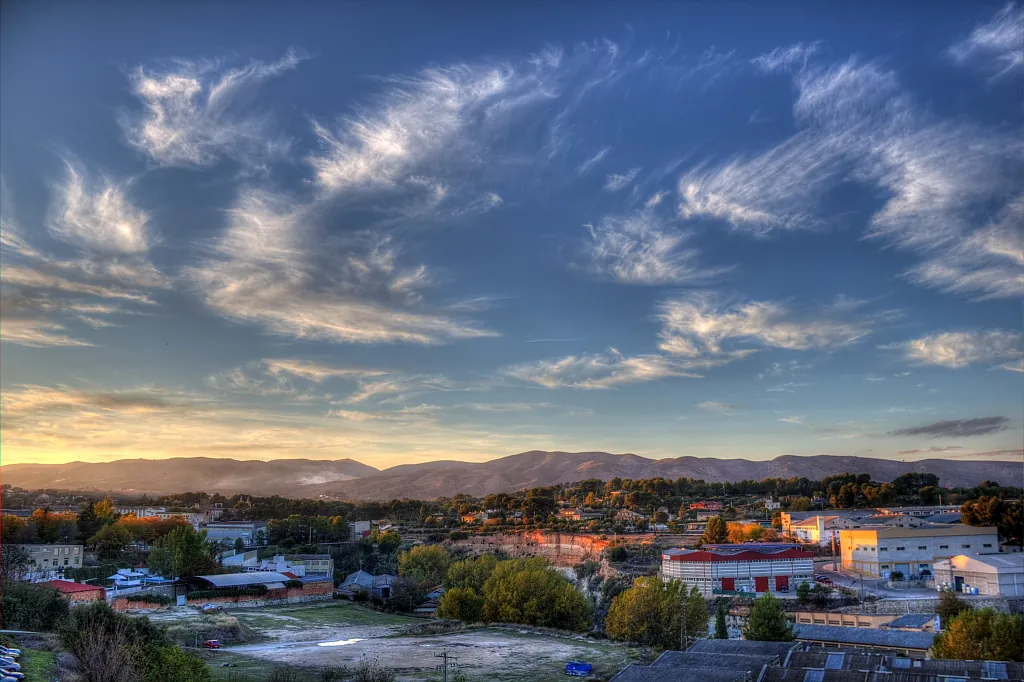
Atzeneta d'Albaida se asienta en la vertiente que mira a la sierra del Benicadell, en el corazón de la Vall d'Albaida. Su posición no es casual: el pueblo creció aquí, a unos 450 metros de altitud, porque el terreno más llano y fértil de la valla ya estaba ocupado por cultivos. Las calles suben y bajan con la pendiente, trazando un plano que obedece a la topografía. Viven algo más de mil personas.
El paisaje inmediato es de bancales, principalmente de olivos y almendros. Este es un terreno trabajado desde hace siglos, donde el espacio para construir era limitado. Por eso el núcleo antiguo es compacto, y por eso las casas se apiñan en la ladera. Las sierras del Benicadell y de Agullent han servido siempre de límite natural, pero también de recurso, proporcionando leña, pastos y rutas hacia las comarcas vecinas.
La iglesia y el trazado de un pueblo agrícola
La silueta de Atzeneta d'Albaida la marca la torre de la iglesia de San Miguel Arcángel. El edificio actual es del siglo XVI, con reformas posteriores, sobre todo en el XVIII. Como ocurre con muchas parroquias valencianas de su época, es el resultado de varias fases constructivas. Su torre cumplía una función práctica más allá de lo religioso: en un paisaje de campos dispersos, servía como referencia visual desde la distancia.
El interior guarda piezas litúrgicas de distintas épocas, fruto de esas sucesivas reformas. La información disponible sobre ellas es a veces escasa, pero dan cuenta de la evolución del templo.
Se puede recorrer el casco antiguo con calma en poco tiempo. Merece la pena fijarse en los portales de piedra y los balcones de forja; no son elementos decorativos puestos después, sino parte de las viviendas que se reconstruyeron sobre estructuras anteriores. La plaza principal sigue siendo el punto de encuentro cotidiano. Desde ella hay una vista abierta hacia las laderas del Benicadell, con los bancales llegando casi hasta las últimas casas.
Senderos que fueron caminos de trabajo
La cercanía de la sierra hace que varios senderos partan desde los límites del pueblo. No son rutas creadas para el ocio, sino antiguos caminos de carro y veredas para acceder a las tierras de labor. Si se sigue cualquiera de ellos, se ven aún algunas masías dispersas, esas casas de campo tradicionalmente ligadas a la explotación de una parcela.
El paisaje es el del secano mediterráneo: olivos, almendros, algo de viña, y entre ellos, el matorral de romero, tomillo y pinos. Después de la lluvia, el aroma de estas plantas llena el aire. Desde algunos puntos del camino se entiende bien la geografía del lugar: Atzeneta mira a la larga cresta del Benicadell, que actúa como frontera norte del amplio valle.
Estos caminos se usaban para llegar a los campos, recoger leña o llevar el ganado. Hoy se pisan más para pasear, pero su trazado sigue siendo el mismo.
El ritmo del año
El calendario festivo en Atzeneta d'Albaida gira en torno a su patrón, San Miguel Arcángel, con las fiestas principales en septiembre. Durante esos días, los actos religiosos y las actividades en la calle comparten espacio. La plaza multiplica su función habitual como lugar de encuentro.
La Semana Santa tiene también su recorrido por las calles estrechas del casco antiguo. En verano, especialmente en agosto, el pueblo recibe a quienes viven fuera y se organizan comidas colectivas y actos culturales. Es cuando el ritmo se acelera y hay más vida en las calles. En Navidad, se mantienen costumbres como la Misa del Gallo y las reuniones familiares. Son celebraciones que marcan el paso del tiempo con una repetición que da continuidad.
Cómo llegar y moverse
Atzeneta d'Albaida está en el centro de la Vall d'Albaida. Ontinyent es la referencia principal de la comarca y la localidad más cercana de mayor tamaño.
Si se viene desde Valencia, la ruta habitual es tomar la A-7 hacia la zona de Xàtiva y luego la CV-40 en dirección a Ontinyent. Los últimos kilómetros son por carreteras comarcales. El acceso en coche no suele presentar dificultad.
Existe transporte público comarcal, pero los horarios no siempre son frecuentes. Para moverte por los alrededores o llegar sin vehículo propio, conviene consultar las conexiones con antelación.
Atzeneta es un pueblo definido por su geografía. Su trazado, su iglesia, sus caminos y sus fiestas hablan de un asentamiento modelado por la agricultura y la proximidad a la sierra. La escala es modesta, pero el vínculo entre el paisaje y la vida diaria sigue siendo evidente para quien recorra sus calles o siga sus senderos hacia el monte.