Full Article
about Beniatjar
Tucked into the shady side of Benicadell, it offers sweeping views and a trail to the summit.
Hide article Read full article
Beniatjar y la falda del Benicadell
Beniatjar es uno de esos pueblos de la Vall d’Albaida que no se entienden sin la montaña. Se levanta en la vertiente sur de la sierra del Benicadell, una alineación calcárea que marca el límite norte de la comarca. La cota ronda los cuatrocientos metros y las casas se agarran a la pendiente, como si el terreno las hubiera empujado hacia arriba. Aquí viven poco más de doscientas personas. La agricultura de secano –almendros, olivos, algarrobos– sigue ordenando el paisaje y buena parte del ritmo local.
El pueblo no tiene un plano preconcebido. Las calles, estrechas y con cuesta, se adaptan a la inclinación del terreno. No hay avenidas ni plazas grandes. El conjunto es compacto, de escala doméstica, con las fachadas encaladas y los balcones de forja típicos del interior valenciano. En las calles más empinadas, algunas viviendas tienen accesos a distinto nivel, según por dónde se llegue. Es una solución práctica, común en las laderas.
La iglesia y la plaza
El centro histórico se articula en torno a la iglesia parroquial de la Virgen del Rosario, patrona del pueblo. El edificio actual parece ser del siglo XVI, con reformas posteriores. No es una iglesia monumental, pero su ubicación es significativa: desde el pequeño atrio y la plaza adyacente se domina visualmente gran parte del valle. La vista enlaza el núcleo urbano con las terrazas de cultivo, recordando que ambos espacios formaban una misma unidad económica. En la Vall d’Albaida, muchas plazas mayores mantienen esta relación visual con el campo.
Alrededor se agrupan las casas más antiguas. Muchas conservan portales amplios en la planta baja, que antiguamente servían como almacén para herramientas o cuadra para animales menores. Son detalles que hablan de una vida ligada a la tierra.
Los caminos de la sierra
El término municipal de Beniatjar está literalmente pegado a la sierra del Benicadell. Varios caminos y pistas agrícolas salen del pueblo y trepan hacia la montaña, conectando también con municipios vecinos de la Vall d’Albaida y de la comarca del Comtat.
Estos recorridos atraviesan bancales abandonados de secano y zonas de pinar. Aún se ven refugios de campo hechos de piedra, márgenes de piedra seca y alguna fuente modesta. Son elementos de un paisaje rural trabajado durante generaciones, donde cada manantial y cada linde tenían su importancia.
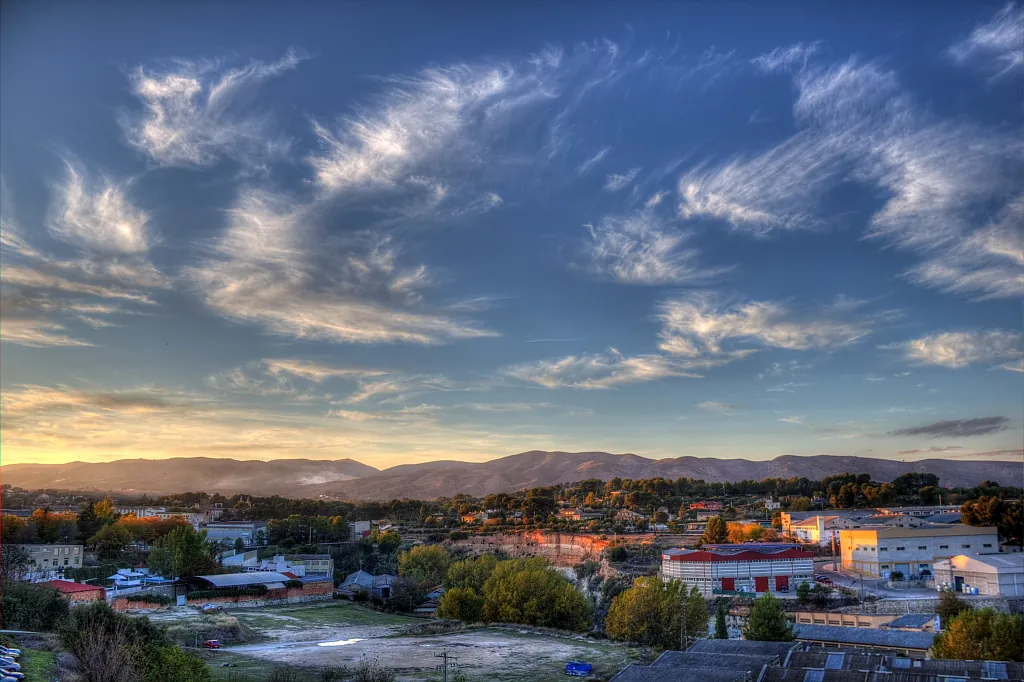
Desde algunos puntos elevados del camino, la vista se abre sobre el valle y la línea de pueblos que se suceden al pie de la sierra. El Benicadell actúa como telón de fondo constante, dando una identidad geográfica clara a la zona. En primavera, cuando la vegetación mediterránea rebrota y florecen los márgenes, es un buen momento para caminar por aquí. Sin necesidad de grandes rutas, se percibe bien la transición entre el terreno cultivado y la ladera montañosa.
Fiestas y ciclo anual
Las fiestas mayores son en octubre, dedicadas a la Virgen del Rosario. Como en muchos pueblos pequeños, estas fechas reúnen a los vecinos permanentes y a quienes regresan para la ocasión.
En enero se celebra San Antonio Abad, con la bendición de animales –una tradición en comunidades agrarias– y hogueras en la calle. Esta costumbre de encender fuego en pleno invierno se mantiene en varios pueblos del interior valenciano.
En verano, cuando la población se incrementa, el ayuntamiento suele organizar actos culturales o encuentros vecinales en los espacios abiertos del pueblo. Son citas que refuerzan el tejido social en una localidad de este tamaño.
Cómo llegar
Beniatjar se encuentra en la parte oriental de la Vall d’Albaida. Desde Valencia, lo habitual es tomar la A-7 o la A-35 hasta las proximidades de Xàtiva y después seguir por carreteras comarcales que cruzan el valle hacia el Benicadell. Los últimos kilómetros son de carretera más estrecha y con curvas, propia de esta zona.
Se llega en coche sin dificultad, aunque conviene tomar con calma los tramos finales. Según la carretera gana altura y se acerca a la falda de la sierra, la relación entre el pueblo y la montaña se hace evidente desde el primer momento.