Full Article
about Benigànim
Town with notable religious heritage and devotion to the Blessed Inés
Ocultar artículo Leer artículo completo
Where Orange Groves Replace Traffic Jams
The train from Valencia pulls into Beniganim station at 250 metres above sea level, and something feels different immediately. The air carries the faint perfume of orange blossom rather than diesel fumes. The platform is short enough to walk its length in thirty seconds, and the station building itself appears to be having a quiet nap in the afternoon sun. This is precisely what makes Beniganim remarkable: it's a working Valencian village that hasn't rearranged itself for visitors, mainly because hardly any turn up.
British tourists thunder past on the Alcoy line daily, bound for the coast or the better-known hill towns of the Costa Blanca. Those who do hop off find themselves in a place where the weekly market still dictates the social calendar, where the bakery sells out of ensaïmada by 10 a.m., and where the church bells mark time more reliably than any phone signal. At 80 kilometres inland, Beniganim sits far enough from the sea to escape the coastal circus, yet close enough for a day trip if you're staying in Valencia city.
A Town That Works for Its Living
Forget the fantasy of a medieval hilltop frozen in amber. Beniganim's old centre is compact, yes, but it's alive with the mundane rhythms of Spanish provincial life: delivery vans squeezing through streets designed for mules, elderly residents shuffling to the chemist, teenagers practising wheelies in the Plaza Mayor until the baker shoos them away. The 17th-century Església de Sant Pere rises above this everyday theatre, its blue-tiled dome catching the light like a fragment of Mediterranean sky dropped onto terracotta roofs.
Inside, the church reveals the architectural equivalent of a family patchwork quilt: late-Gothic bones dressed up with Baroque embellishments added whenever the village had spare cash. The bell tower serves as a handy landmark if you lose your bearings among the lattice of alleys, though getting properly lost is difficult when the entire historic core measures barely four streets by three.
The real charm lies in the details that no heritage board has roped off. House numbers painted directly onto plaster in fading 1920s script. A marble plaque commemorating the local boys who fought for Franco, positioned with no apparent irony next to a mural celebrating rural anarchism. Washing lines strung between balconies at improbable heights, flapping like prayer flags above your head.
Walking Through Someone Else's Office
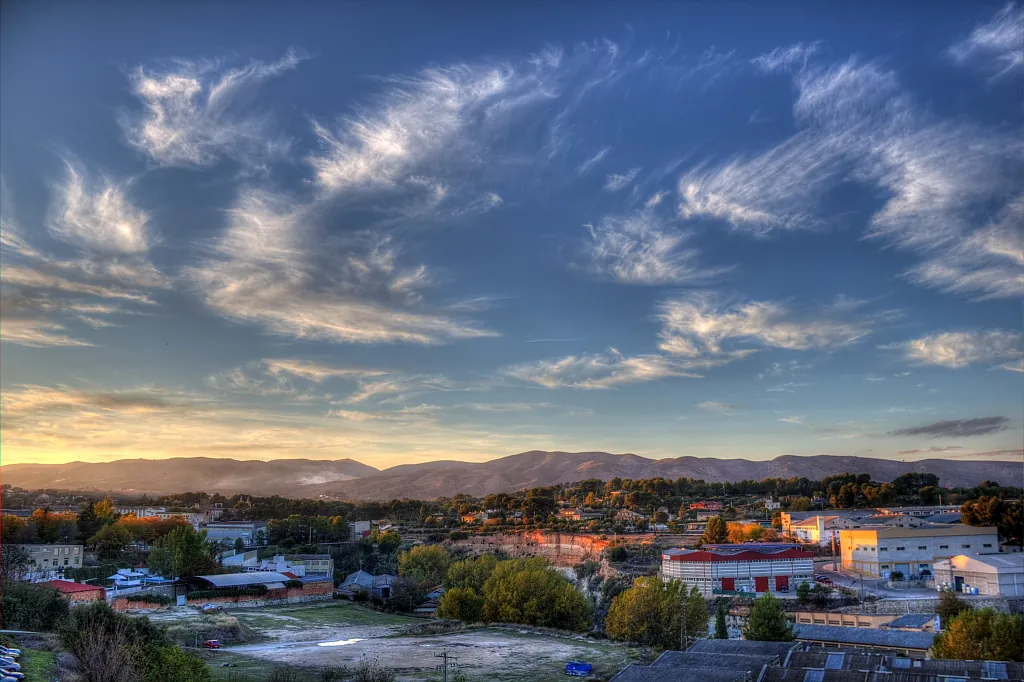
The surrounding landscape isn't wilderness—it's somebody's livelihood. Almond terraces stair-step up gentle hills; orange groves spread across the valley floor in military rows. Public footpaths follow ancient irrigation channels, so you're essentially strolling through outdoor workplaces. Farmers nod politely at walkers but clearly consider the land theirs first, Instagram's second.
Spring brings the famous almond blossom, a brief snowstorm of petals that transforms brown hillsides into bridal white for about ten days. February and March walkers get the show for free along the Ruta dels Ametlers, a gentle circuit that starts behind the football pitch and meanders for 90 minutes through flowering orchards. The Sendero de las Fuentes provides a longer option, linking the springs that once supplied the village before mains water arrived. Neither route requires hiking boots; trainers suffice, and you'll meet more locals walking dogs than tourists wielding trekking poles.
Summer is a different proposition. Temperatures regularly top 35°C, shade becomes currency, and the agricultural trails feel like wading through warm cotton wool. Early starts are essential; by 11 a.m. the sensible population has retreated indoors to wait for the inferno to pass. Winter, conversely, can surprise first-time visitors with sharp morning frosts. The village sits in a natural bowl that traps cold air, so while the coast might enjoy 15°C, Beniganim shivers at 5°C until the sun climbs over the ridge.
Food That Doesn't Photograph Well but Tastes Proper
British palates accustomed to Wahaca-style tapas will find Beniganim's cooking refreshingly un-trendy. This is farmhouse fare designed to fuel labourers, not impress food bloggers. Arros al forn arrives in a terracotta dish the size of a satellite receiver: baked rice sticky with tomatoes, chickpeas and chunks of pork that have surrendered to three hours' slow heat. One portion feeds two modest appetites or one teenager after football practice.
The Bar Central on Plaza Major serves it only on Thursdays, market day, when the place heaves with farmers comparing orange prices over carafes of local wine. There's no menu del día written in English; instead the owner recites three options in rapid Valencian while simultaneously pouring wine. Pointing works, surrender works better. The wine comes from Fontanars dels Alforins, 30 minutes inland, and tastes like Beaujolais that's been on a Mediterranean holiday—light, chilled, dangerously easy to drink at lunch.
Vegetarians face slim pickings. The village vegetarian option is tortilla, and even that sometimes arrives speckled with ham. Better to embrace the carb fest: coca de llanda (spongy olive-oil cake) for breakfast, bocadillo de longaniza (cured sausage sandwich) mid-morning, then the rice marathon. Your arteries won't thank you, but your taste buds will write sonnets.
When to Turn Up and When to Clear Off
Thursday morning delivers the full Beniganim experience. Stallholders from neighbouring villages transform the Plaza Mayor into a miniature souk: pyramids of misshapen tomatoes, buckets of snails still unsure they're no longer in a rice field, elderly women selling bunches of herbs that smell like oregano on steroids. The weekly gossip exchange happens here; tourists sticking out like sore thumbs are tolerated because they occasionally buy overpriced socks.
Late June brings the Fiestas de San Pedro, three days when the village quadruples in volume. Brass bands march at 2 a.m., firecrackers explode under bedroom windows, and the church square hosts paella cooked in pans big enough to bath a toddler. It's authentic, deafening, and impossible to sleep through. Book accommodation elsewhere unless you plan to join the 4 a.m. conga.
August fiestas are worse—hotter, louder, more crowded. Parking, normally a doddle on the wide Avenida País Valencià, becomes a blood sport. The sensible visitor avoids mid-August entirely. Late September, after the grape harvest but before the olive nets appear, offers golden light, empty paths and temperatures that make walking pleasurable rather than penitential.
Getting Here Without Losing the Will to Live
The cheapest route from the UK involves Ryanair into Valencia, then the metro to Jesús station and the C-1 cercanías train towards Alcoy. Total journey time from London: four and a half hours plus whatever delays Brexit has inspired this week. The train ticket costs €6.40 each way—so cheap it feels like fare-dodging.
Car hire slashes the transfer to 55 minutes on the A-7, then CV-60. The final approach winds through citrus groves that smell like a Lush shop exploded. Parking is laughably easy: free bays along the main drag, no meters, no traffic wardens, no complicated disc systems to decipher while jet-lagged. The only challenge is remembering where you left the hire car among identical white Fiats.
Accommodation options remain limited. Dalvaro Art Resort, three kilometres outside the village, offers six rooms in a converted farmhouse surrounded by sculpture gardens. It's quirky, quiet, and the owners speak fluent English after years dealing with bewildered tourists who took a wrong turn leaving Valencia. Alternatively, stay in Xàtiva ten minutes away and day-trip in. The castle there provides somewhere spectacular to watch sunset once Beniganim's bars have shut for siesta.
The Honest Verdict
Beniganim won't change your life. It has no world-class museums, no Michelin stars, no infinity pools overlooking olive groves. What it offers instead is the rare chance to observe Mediterranean village life unfiltered by the tourism industry. You'll see old men arguing over dominoes, mothers shouting instructions across streets, teenagers attempting to look cool while riding scooters older than they are. It's messy, noisy, occasionally frustrating—and completely real.
Come for the almond blossom, stay for the Thursday market rice, leave before the August fireworks start. And when the train pulls out, you'll realise why so few British voices echo here: Beniganim belongs to its residents first, visitors second. In an age of overtourism, that restraint feels almost radical.