Full Article
about Bufali
Small farming village surrounded by dry-land and irrigated fields.
Ocultar artículo Leer artículo completo
The morning train from Xàtiva drops just three passengers at Bufali station. One is a farmer carrying tractor parts, another a teenager with a football, and perhaps you—stepping onto a platform that sits higher than the village itself at 340 metres above sea level. That's your first clue: this isn't the coastal Spain of guidebook covers. The air carries the dry scent of almond blossom and a temperature three degrees cooler than Valencia city, even in May.
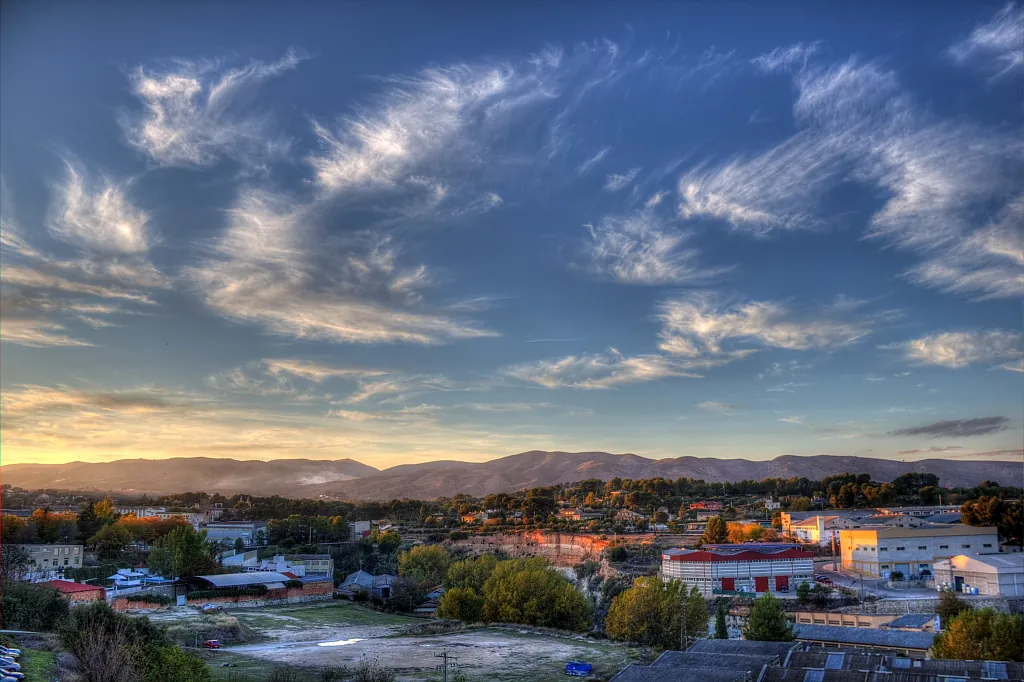
Bufali's altitude changes everything. While beach cafés swelter, afternoons here move at the pace of the Albaida River below. The village proper houses barely 150 souls, yet its municipal boundaries sprawl across 8 km² of terraced almond groves, olive terraces, and the last patches of irrigated huerta before the land tilts toward the Mariola mountains. Winter mornings bring frost that silver-plates the carob trees; summer evenings deliver a breeze strong enough to lift washing from the line.
A Village That Measures Time in Harvests, Not Hours
The agricultural calendar governs daily rhythms more than any church bell. From late February through March, almond blossom turns the surrounding slopes into a pink-tinged snowfield—photographers arrive then, tripods balanced on dry-stone walls. By June the same trees bear green husks that locals crack open for tender nuts. October means muscatel grapes drying on cane racks for mistela, the fortified wine that appears in every household at Christmas.
This isn't staged rusticity. Walk Carrer Major at 7 a.m. and you'll meet Paco loading persimmons into plastic crates stamped with Belgian supermarket codes. His family owns 14 terraces; the fruit you buy in Antwerp might have left Bufali 48 hours earlier. The village cooperative, a breeze-block warehouse on the southern approach road, handles 300 tonnes of produce annually—modest by agricultural standards, yet enough to keep younger residents from migrating to Ontinyent's textile factories.
The built environment reflects this working reality. Houses cluster along a ridge for maximum arable space below; many have ground-floor bodegas where tractors share courtyards with children's bicycles. Iron balconies support satellite dishes pointing toward Astra 19.2°E, and 1970s breeze-block extensions sit comfortably beside 18th-century stone. It's honest architecture, neither restored for tourists nor left to crumble photogenically.
Walking Tracks Where Romans Once Measured Wheat
Three marked footpaths radiate from the village, each following-millennia-old drove roads. The green-and-white PR-CV 147 route drops 200 metres in 4 km to the Albaida River, passing an olive press that operated until 1982; its granite millstones now serve as garden tables for weekend barbecues. Yellow way-marks lead east toward the station tunnel, built in 1885 by the same British contractors who laid the Alcoy line—brickwork still carries "H. S. Foulkes & Co. Birmingham" stamps.
Serious hikers link Bufali with Bocairent's Moorish cave houses via a 17-km ridge trail. The route climbs to 900 metres, crossing from Valencia province into Alicante amid rosemary-scented scrub where boot prints outnumber tyre tracks. Spring walkers should carry water; the sole fuente at Font de la Foia runs reliably only after October rains. Mobile reception dies halfway up, so download offline maps before leaving the village bar.
Cyclists favour the CV-660 that traces the valley floor between Albaida and Ontinyent. Traffic averages 14 vehicles per hour on weekdays, making it safer than many British B-roads. Hire bikes in Ontinyent's indoor market (€18 per day; closed Monday) and combine Bufali with a loop through Rugat's 12th-century bridge—total 28 km with 350 metres of climbing, achievable on hybrid tyres.
Eating When There's No Menu Del Día
Bufali has no restaurants. None. The single bar, Ca Vicent, opens at 6 a.m. for field workers and closes when the last customer leaves—sometimes 3 p.m., sometimes midnight. Order a café amb llet and you'll likely receive homemade almond biscuits wrapped in kitchen paper. Thursday is tortilla day; arrive before 11 a.m. or it sells out to plasterers renovating the town hall.
Serious dining happens 3 km away in Albaida. Restaurant All i Oli occupies a former 19th-century pharmacy; its arroz al horno arrives in the same glazed cazuela used to feed agricultural labourers decades earlier. Expect to pay €14 for three courses including wine—half Valencia's coastal prices. They'll adapt recipes for vegetarians if you telephone ahead, something the chef learned whilst working in Stoke-on-Trent.
Buy supplies at the Co-op on Calle Alicante: local chacinas (cured sausages) vacuum-packed for transport, and litre bottles of extra-virgin oil pressed from village olives. British customs allow 2 kg of meat products; oil is unrestricted. The shopkeeper, Maria, spent six months in Norwich as an au pair and enjoys practising English—ask her which almond variety travels best (answer: Marcona, kept in the freezer).
Fiestas That Aren't for Sale
August's patronal fiestas transform the village utterly. Population triples as emigrants return; streets fill with portable sound systems blasting Valencian rumba until 4 a.m. The highlight is Entrada de Toros y Vacas—not bullfighting, but guided cattle released at a gentle trot while teenagers prove valour by touching flanks. Health & Safety would faint; participants sign insurance forms at the town hall, €5 for the weekend.
October's Virgen del Rosario involves less adrenaline and more calories. Each household erects a temporary kitchen in the church square, competing to produce the finest oven-baked rice. Visitors are welcome to taste, but bring your own spoon and expect to wash it in the fountain afterwards. The priest blesses the pots before anyone eats—agricultural roots showing through religious ritual.
Timing matters. Visit during fiestas and you'll find accommodation scarce, cafés overflowing, and earplugs essential. Come in February for almond blossom and you'll share the village with six German photographers, one travel writer, and absolute silence by 9 p.m. Both experiences are authentic; choose according to tolerance for noise and ability to book beds months ahead.
Getting There, Staying Somewhere Else
The practical truth: Bufali works as a day trip, not a base. The last train leaves for Xàtiva at 21:38; miss it and you're hitch-hiking 18 km on unlit roads. Road access closes briefly during heavy snow—January 2017 saw 30 cm drifts that isolated the village for 48 hours. Even in April, night temperatures drop to 6 °C; pack layers regardless of coastal forecasts.
Stay in Ontinyent, nine kilometres south. Hotel Kazar offers rooftop pools and double rooms at €70 including breakfast, cheaper than Valencia's city hostels. Early risers reach Bufali by 08:15, when mist pools in valley folds and the first agricultural vans rattle toward the cooperative. Evening returns coincide with tapas hour in Ontinyent's medieval centre—order a zurito of local craft beer at Bar Munich while reviewing photos of blossom against stone.
Bufali won't change your life. It might, however, recalibrate what you expect from rural Spain: fewer lace curtains, more agricultural invoices pinned to bar walls; less flamenco, more Valencian dialect bouncing between neighbours who've known each other since primary school. Bring curiosity, sturdy shoes, and space in your suitcase for a kilo of almonds. Leave the phrasebook Spanish behind—here, "bon dia" opens more doors than "buenos días" ever will.