Full Article
about Fontanars dels Alforins
The Valencian Tuscany, known for its vineyard landscapes and quality wineries.
Hide article Read full article
A different rhythm in the Vall d'Albaida
Some places you visit because they are on the way. Others you visit because someone says, “Go there, and take your time.” Fontanars dels Alforins belongs firmly in the second group.
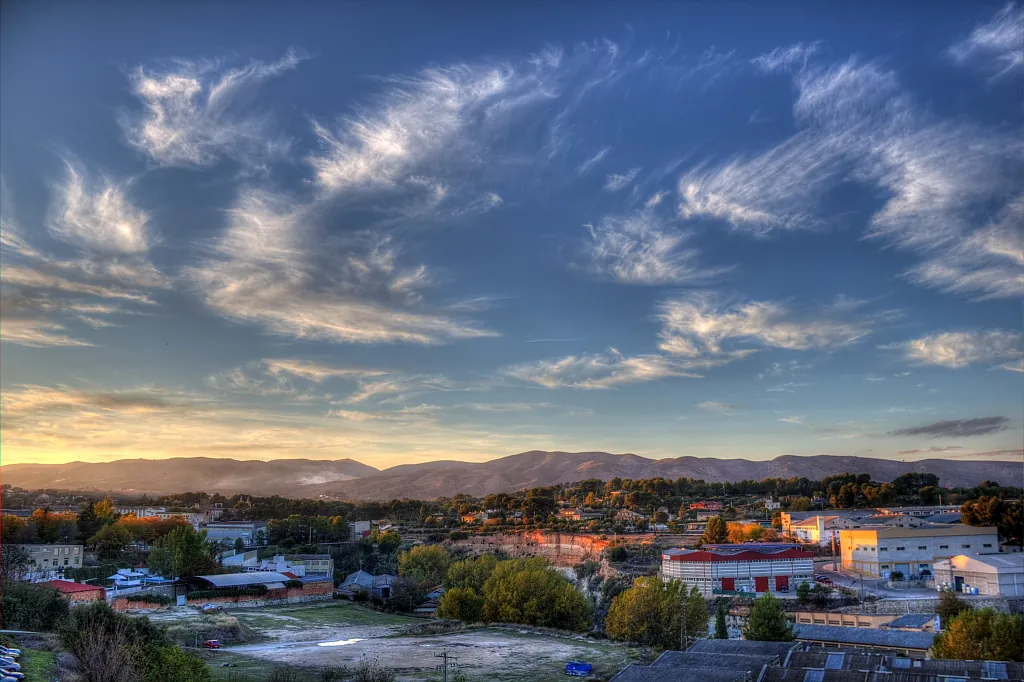
This small village sits inland in the Vall d'Albaida, in the province of Valencia, surrounded by vineyards and dry farmland. As you arrive by car, the first impression is simple: life moves more slowly here. With a population of around a thousand, the scale shapes everything. There is little traffic, no rush, and the loudest sounds are often doors opening and neighbours chatting across the street.
Beyond the houses, the landscape sets the tone. Vineyards stretch out alongside almond and olive trees, forming the agricultural patchwork typical of the Valencian interior. The view changes with the seasons. Spring brings green fields and fresh growth. Autumn turns the vines golden. In the height of summer the land looks harsher, bleached by the sun.
Fontanars dels Alforins is not a place of grand attractions or headline sights. Its appeal lies in its atmosphere and surroundings. It is somewhere to wander without hurry and to let the landscape do most of the talking.
San Pedro and the heart of the village
In Fontanars dels Alforins, most roads seem to lead to the Iglesia Parroquial de San Pedro Apóstol. The parish church is not monumental and does not try to be, yet it acts as the village’s main reference point. Some sources trace its origins back to around the 15th century, although the building has undergone several renovations over time.
The square in front of the church is one of those places where time slips by unnoticed. People pass through, a neighbour stops for a conversation, and the day unfolds without drama. The atmosphere is calm and distinctly that of a small rural community.
A short walk from the square reveals thick-walled houses with large wooden doors and sloping tiled roofs. Nothing feels designed to impress. The architecture suggests practicality and durability instead. Calle Mayor gathers many of the older homes, though the truth is that the entire urban centre can be covered quickly. Even at an unhurried pace, with stops along the way, you can see it all in under an hour.
That compact size is part of the experience. There is no need for a detailed plan. A simple stroll is enough to understand the layout and character of the place.
Walking through vines and dry fields
The real interest often begins once you leave the village behind. Agricultural tracks circle Fontanars dels Alforins, cutting through vineyards, almond groves and areas of low pine forest that appear on higher ground.
These are not dramatic mountain trails. The appeal is more understated. Walk between cultivated fields, notice how the light shifts across the valley, and take in wide, open views. It is the kind of outing where you do not check the time and where the route matters less than the surroundings.
There are a few practical considerations. In summer, the sun is strong and shade is scarce. Bringing water, wearing a hat and setting out early in the day make a clear difference. Winter brings the opposite challenge. Once the sun drops, temperatures fall quickly.
Throughout the year, the agricultural setting remains central. Tractors move along the tracks for much of the calendar, and the fields show visible signs of the changing seasons. The valley feels active rather than ornamental.
A landscape shaped by wine
Wine defines this corner of the Valencian interior. Fontanars dels Alforins forms part of a small wine-producing triangle where vines are a constant presence. They line the roads and frame the approaches to neighbouring villages.
Several local bodegas organise visits or tastings, often on estates surrounded by vineyards. The atmosphere tends to be informal and conversational rather than theatrical. Visitors hear about how the land is worked, how each harvest unfolds, and why one year’s wine differs from the next. It is an insight into a rural economy that still depends heavily on the rhythms of agriculture.
Even for those without a particular interest in wine, driving or walking along these roads has its own appeal. In autumn, especially, the changing colours of the vine leaves alter the look of the valley. Greens give way to warmer tones, and the fields take on a softer light.
The grape harvest, la vendimia, sets the pace of the season. It does not fall on exactly the same dates every year, since it depends on the condition of the grapes. When it begins, the shift is noticeable. There is more activity in the fields and sometimes a sweet scent drifts from trailers loaded with freshly cut fruit.
Festive dates and practical notes
Fontanars dels Alforins keeps to a traditional village calendar. The patron saint festivities in honour of San Pedro usually take place towards the end of June. During those days the atmosphere changes. Music fills the streets, religious events are held, communal meals are organised and the square becomes busier than usual.
In August, celebrations linked to the Virgen de la Asunción bring back many residents who live elsewhere and return for the occasion. It is when the village feels at its fullest.
Reaching Fontanars dels Alforins from the city of Valencia involves a journey of just under one hundred kilometres. The usual route follows the A-7 towards the area of Xàtiva, then continues along regional roads in the direction of Ontinyent and the Vall d'Albaida. The final stretch passes through agricultural landscapes and small towns before arriving in the village.
Spring is often a good time to visit. The fields are greener and the weather is well suited to walking. Autumn has its own draw because of the harvest and the colour of the vineyards. Summer visits are possible, though planning the day around the heat is advisable.
The approach that works best here is a simple one: arrive without rushing, park near the centre, walk through the village and then head out along one of the tracks between the vines. Fontanars dels Alforins rewards an unstructured visit. It is closer to a long, easy stroll after lunch than to a tightly scheduled trip.