Full Article
about La Pobla del Duc
A farming town with civil-war air-raid shelters you can visit
Hide article Read full article
A village shaped by water and power
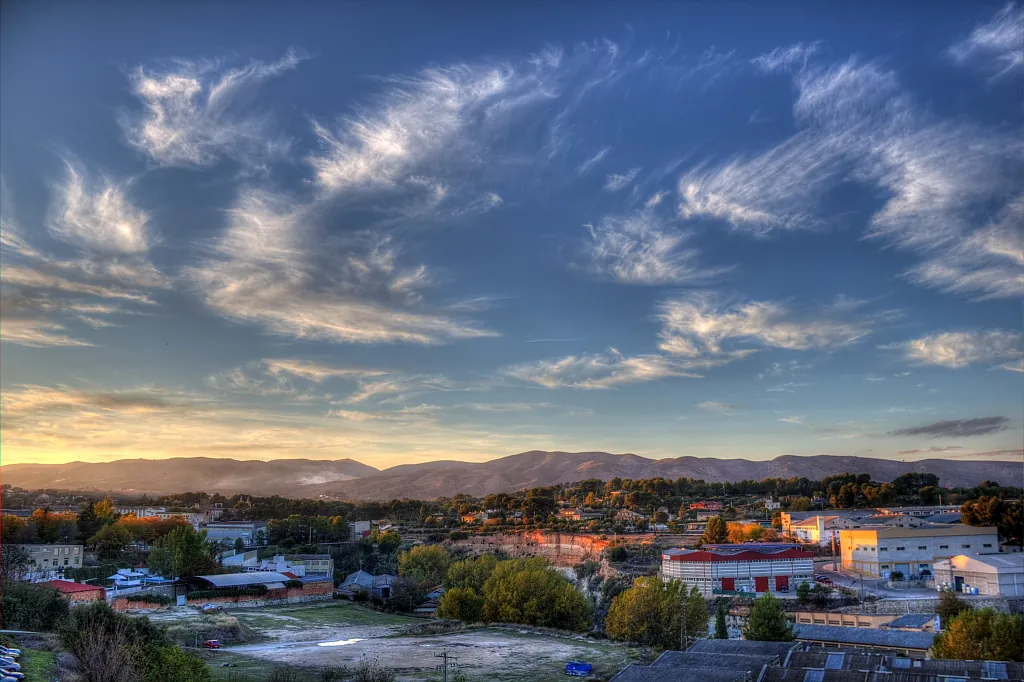
La Pobla del Duc sits at the centre of the Vall d’Albaida, within a strip of fertile farmland sustained by the Albaida river and a network of irrigation channels. Part of that system dates back to the Andalusi period, and it still defines how the surrounding land is used today.
The name itself points to centuries of authority. “Del Duc” refers to the Duke of Gandía, a title linked to the Borja family from the late 15th century. Earlier records mention the settlement as Vilanova de Rugat, but over time it became known as “la pobla del duc”, literally the settlement under the duke’s control.
That shift in name reflects its wider history. The village began as a Christian resettlement in the 13th century, later developed as an agricultural community under feudal jurisdiction, and by the 20th century it had organised itself around farming and a cooperative established after the Civil War.
From medieval charter to cooperative chimney
After the conquest led by Jaume I, this area became part of the lordship of Bellvís. A carta puebla was granted in 1273 to organise a Christian settlement. The chosen location was practical. It lay close to the aljibe de la Poassa, a large reservoir with likely Andalusi origins that ensured access to water in a landscape where irrigation was essential.
The layout of farmland today still reflects those early decisions. New settlers built their church, the current structure dates largely from the 17th century, and arranged fields around irrigated plots. The church bell tower, with its hexagonal base, stands out when viewing the village from the road and remains one of its most recognisable features.
The most visible symbol of the 20th century is a brick chimney near the entrance to the village. It belongs to the agricultural cooperative founded in 1939, which continues to organise much of the local production. Surrounding fields are now dominated by fruit trees such as plum, peach, apricot and persimmon. Vineyards were more prominent until the late 19th century, when phylloxera reshaped the landscape. Even so, small plots still produce wine for private consumption, keeping that tradition alive on a modest scale.
Shelters that recall 1938
Several air-raid shelters remain in the area, particularly in the Pla de Missena and nearby zones. They were dug into the rock around 1938 during the Spanish Civil War, when aviation targeted infrastructure in the Valencian rear.
These shelters consist of simple galleries extending for several dozen metres, with stone benches running along the sides. Some include evidence of small ovens or spaces used for cooking. Their construction is straightforward, but their significance lies in what they reveal about daily life during the conflict.
La Pobla del Duc was not on the front line. However, its proximity to industrial and railway targets in the Vall d’Albaida meant residents took precautions. People sought refuge in these spaces during periods of uncertainty and threat. In recent years, interpretive panels have been installed to explain their use and the broader wartime context.
A walking route connects several of these points. It offers a way to understand how the village fits into the wider map of the war across the region.
Time traced on walls
The historic centre preserves a number of sundials painted on the façades of 18th-century houses. These are not modern recreations. Some remain visible on south-facing walls and still indicate solar time, even if few people stop to check it now.
The same façades often display small devotional ceramic tiles. Some include painted ex-votos, depicting body parts or animals, which represent promises or expressions of gratitude. These modest elements reflect a form of domestic religious practice that was once widespread in Valencian towns.
The parish church, altered at different moments in its history, contains a neoclassical-style altarpiece. It is not a monumental building, yet its position helps explain how the village developed. From the atrium, the view opens onto the plaza Mayor, where several streets converge near the town hall. That building dates from the 20th century, when agricultural prosperity allowed the earlier council house to be replaced.
At the lower end of the town stands the aljibe de la Poassa. Today it functions mainly as a reminder of the village’s hydraulic past. For centuries, it played a central role in collecting rainwater and ensuring supply.
Autumn traditions and local food
The main festivities take place in September in honour of Cristo del Amparo, San Blas and the Divina Aurora. They retain a distinctly local character, with processions, band music or charanga groups, and shared meals in the square. Dates can vary depending on the year.
Autumn also brings a gastronomic fair known as “Bon profit i bona gana”, when it is held. Over the course of a weekend, local agricultural produce is turned into simple dishes. One example is coca de mida, a baked dough topped with vegetables or cured meats. The event reflects the close link between the village and its surrounding fields, as well as the continuity of everyday culinary traditions.
La Pobla del Duc does not present itself through grand landmarks or large-scale attractions. Its identity emerges through irrigation systems, cooperative work, small architectural details and traces of more recent history. Each of these elements contributes to a place where the past remains visible in ordinary settings.