Full Article
about L'Olleria
Known for its glass industry and historic craft tradition.
Ocultar artículo Leer artículo completo
The morning shift at the glass factory ends at 2pm, and within minutes the bar on Carrer Major fills with workers still dusted with silica. Their orange juice comes from fruit harvested less than two kilometres away. This is Lolleria in miniature: an agricultural town that learnt to manufacture, where the smell of azahar blossom competes with industrial emissions depending on which way the wind blows.
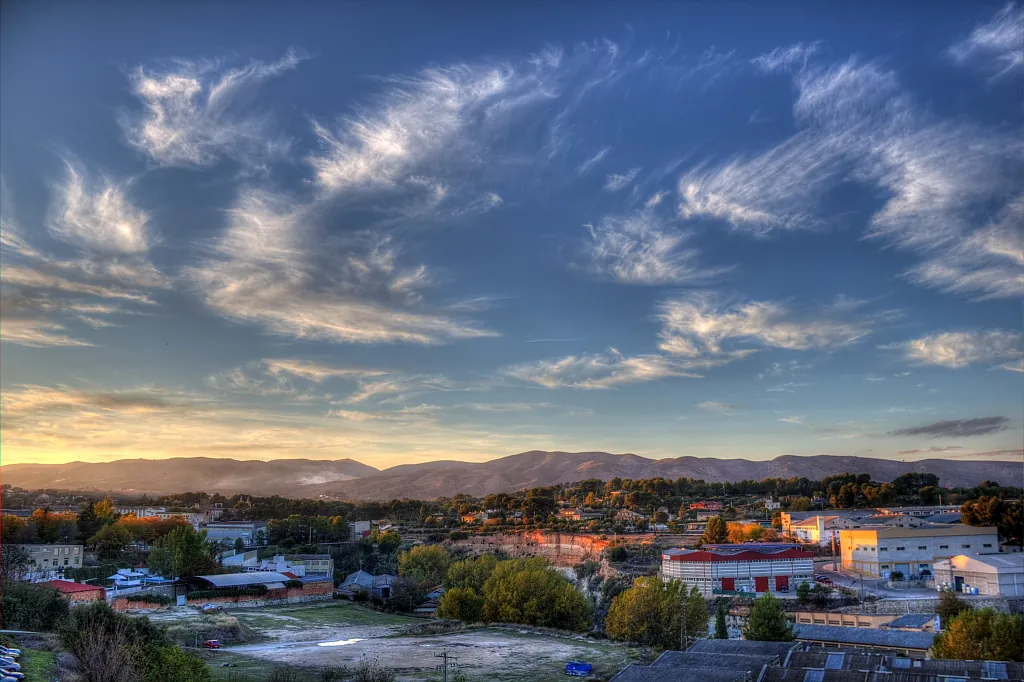
At 425 metres above sea level in the Vall d'Albaida, Lolleria sits too high for the coastal breeze but low enough to avoid mountain extremes. The result is a climate that treats British visitors kindly—winters hover around 12°C, while August peaks at 32°C without the humidity that makes Valencia city unbearable. Rain falls mainly in April and October, brief bursts that green the surrounding terraces of citrus before clearing to blue sky.
The town's dual personality emerged during the 1950s when local entrepreneurs transformed traditional glass-blowing workshops into proper factories. Today those plants employ over 2,000 people, meaning Lolleria functions year-round rather than emptying outside tourist season. The upside for visitors is authentic activity—shops stay open in January, restaurants don't shutter for winter. The downside is that the northern approach road passes the industrial estate, so first impressions involve warehouses rather than rolling hills.
What the Buildings Actually Look Like
The 18th-century church tower rises above a roofscape of red terracotta and satellite dishes. Inside the Asunción parish church, the baroque retablo gleams with recent restoration paid for by factory profits. It's usually open 10am-1pm, though the caretaker locks promptly at lunchtime—rural Spanish timekeeping applies even with an industrial payroll.
Behind the church, two streets of 19th-century townhouses survive despite 1960s rebuilding. Number 12 on Carrer de la Sang features the original blue-and-white azulejos depicting orange harvests, while the corner house displays wrought-iron balconies heavy enough to suggest their owners grew wealthy on exports rather than local sales. These mansions aren't museums; laundry hangs from the balconies and elderly residents watch passers-by from ground-floor windows.
The Convent of San Roque squats at the edge of the old centre, its 17th-century cloister now serving as municipal offices. The interior courtyard reveals proper Renaissance proportions—stone columns, central well, the sort of hush that makes footsteps echo. Entry is free during office hours; the security guard barely glances up from his mobile.
Three rural chapels dot the surrounding slopes. Santa Bárbara, ten minutes' climb up a concrete track, rewards effort with views across the valley's patchwork of orange groves and almond terraces. The building itself is locked except on her feast day (4 December), but the stone bench outside provides perfect shelter for a sandwich lunch. San Cristóbal chapel, reached via a signed footpath from the sports centre, sits lower and stays open. Inside, the single nave smells of beeswax and dust—the scent of country worship unchanged for centuries.
Walking Through Worked Land
Lolleria makes no pretence of wilderness. The surrounding footpaths skirt agricultural plots, irrigation channels, and the occasional abandoned greenhouse. This is walked-in, worked-over countryside, but that makes it honest. Spring brings blossom that drifts across paths like snow, while autumn means the thunk of falling oranges and the mechanical hum of picking platforms.
A straightforward circuit starts from the tourist office (open Tuesday-Thursday mornings only). Head past the football ground, follow the signed track to Santa Bárbara chapel, then drop down through almond terraces to the river Albaida. The return follows an irrigation ditch back into town—total distance 6km, mostly flat, boots optional except after heavy rain. Allow two hours including photo stops and the inevitable chat with a farmer inspecting his irrigation.
For something stiffer, the GR-236 long-distance trail passes through Lolleria on its traverse of the Vall d'Albaida. Eastwards it climbs towards the Benicadell ridge (proper mountain walking, 800m ascent). Westwards the route gentles through olive groves to the neighbouring town of Ollería—5km on decent track, ideal for an evening stroll when temperatures drop.
Eating What Grows Nearby
British expectations of paella-by-the-sea don't apply here. Lolleria's rice dishes favour rabbit and local beans rather than seafood, served in deeper plates that blur the line between paella and stew. Restaurant L'Estació, opposite the Renfe stop, does a reliable arròs amb conill (€12 weekday lunch menu) using meat from the butcher two doors down. Their wine list extends to two reds and one white—acceptable rather than exciting, but the house pour comes from Requena, 40km inland.
Bar Central on Plaza Major offers the Spanish equivalent of pub food: tortilla thick as your wrist, chorizo cooked in cider, padron peppers that taste of green capsicum rather than Russian roulette. A plate of three tapas plus bread costs €8-10, portions designed for workers not dieters. They open 6am for the early shift; kitchen closes 4pm sharp.
For self-catering, the Friday market stocks seasonal produce at prices that make British supermarkets look extortionate. December brings sacks of just-picked mandarins (€1.50/kg), while spring offers broad beans so fresh they squeak. The cheese stall sells queso de cabra wrapped in chestnut leaves—transport it wrapped in clothing, not plastic, if you want it to survive the flight home.
Getting There, Staying Over
Lolleria sits on the Valencia-Alicante railway line. Regional trains depart Valencia Nord every two hours, journey time 55 minutes, fare €6.35 each way. The station lies ten minutes' walk below town centre—uphill all the way with luggage, though taxis wait when trains arrive. Drivers take the A-7 motorway, exit 61 Ontinyent, then follow CV-660 for 12km through orange groves.
Accommodation remains limited. The three-star Hotel L'Estació occupies a converted railway building; rooms €55-70 including basic breakfast, walls thick enough to mask both train noise and Saturday-night processions. Alternative options lie in neighbouring towns—Ontinyent offers proper hotels 15 minutes' drive away, while rural casas rurales dot the valley for self-catering stays.
When to Visit, When to Avoid
March delivers the orange-blossom spectacle without summer heat, though nights drop to 8°C—bring a jumper. Late May combines warm evenings with still-green countryside before the summer burn sets in. September sees locals return from coastal holidays, meaning fuller bars but also more atmosphere.
August brings fiestas and 35°C temperatures. The Assumption celebrations (around 15 August) fill streets with brass bands and fireworks until 4am—book accommodation early or stay elsewhere. Mid-winter stays quiet; factories operate but restaurants reduce hours, some closing Sunday-Monday.
Lolleria won't change your life. It offers no Instagram sensation, no bucket-list tick. What it does provide is a glimpse of inland Spain continuing its centuries-old negotiation between soil and commerce, between growing food and making things. Watch the factory workers emerge at lunchtime, smell the orange blossom on the same breeze that carries glass-furnace heat, and you understand this is a place that solved the puzzle of surviving without selling its soul to tourism. That alone makes it worth the detour.