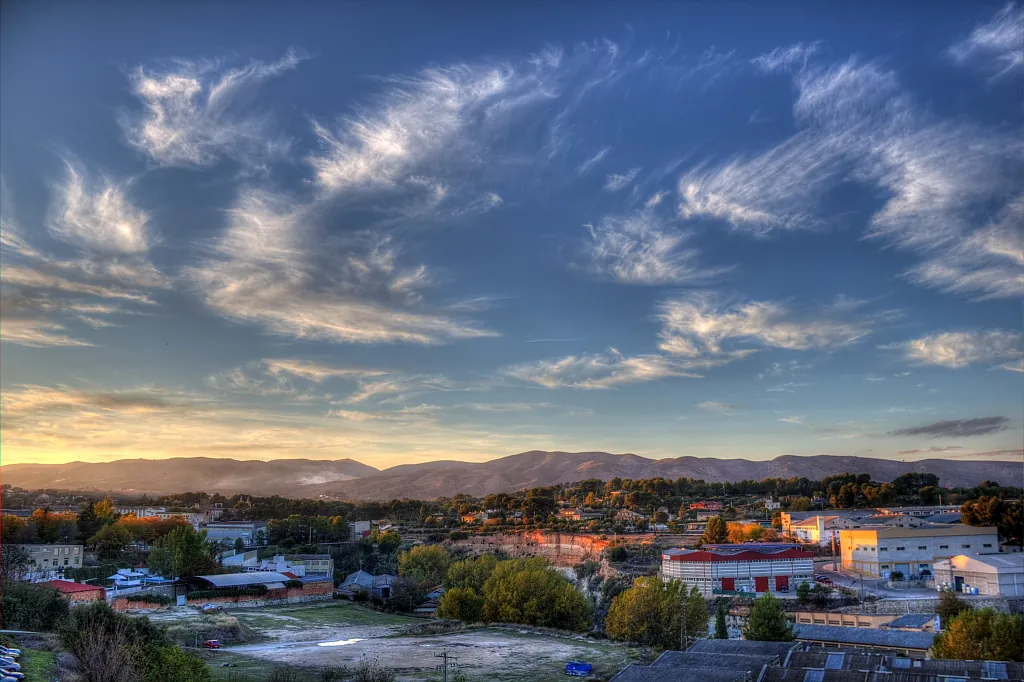
Vista aérea de Montitxelvo/Montichelvo
Instituto Geográfico Nacional · CC-BY 4.0 scne.es
Comunidad Valenciana · Mediterranean Light

Montitxelvo/Montichelvo

The church bell strikes eleven and nobody stirs. Not the two old men on the bench outside the bar, not the woman hanging washing from her first-flo...

556 inhabitants · INE 2025
270m Altitude

Why Visit

Church of Santa Ana Riuraus Route

Best Time to Visit

summer

Rosary Festival (May) mayo

Things to See & Do
in Montitxelvo/Montichelvo

Heritage

  • Church of Santa Ana
  • Riuraus (raisin-drying sheds)

Activities

  • Riuraus Route
  • Hiking

Festivals
& & Traditions

Fecha mayo

Fiestas del Rosario (mayo)

Las fiestas locales son el momento perfecto para vivir la autenticidad de Montitxelvo/Montichelvo.

Full Article
about Montitxelvo/Montichelvo

Small farming village known for its raisins and rural setting

Ocultar artículo Leer artículo completo

The church bell strikes eleven and nobody stirs. Not the two old men on the bench outside the bar, not the woman hanging washing from her first-floor balcony, and certainly not the ginger cat sprawled across the warm bonnet of a dusty Seat Ibiza. In Montitxelvo, time keeps its own lazy rhythm, governed more by the ripening of citrus than by anyone's itinerary.

Perched 350 metres up the southern flank of the Vall d'Albaida, this knot of 550 souls sits high enough to catch the breeze that carries orange-blossom scent from the terraces below, yet low enough that the Mediterranean—25 kilometres away—still softens winter frosts. The result is a working agricultural village that happens to have a horizon-wide view back towards Gandia and, on very clear days, a silver glint of sea.

A village that works, not one that poses

British drivers arriving from Valencia airport expect the postcard Spain: white cubes, geraniums, maybe a donkey. What they find is stone portals blackened by tractor exhaust, a bakery whose window displays baguettes alongside tractor diesel filters, and streets just wide enough for one Citroën Berlingo—provided the mirrors are folded. Montitxelvo never remodelled itself for visitors; it simply carried on growing oranges, almonds and the odd patch of vegetables between houses. That honesty is what makes a half-day stop worthwhile.

Park at the entrance by the football pitch; the lanes beyond are single-track and locals reverse faster than you would believe. From here the village climbs gently towards the parish church, its bell tower acting as a landmark you can still spot two kilometres out in the orchards. The gradient is gentle but constant—enough to make you realise why every garage opening faces downhill and why the weekly delivery van leaves its handbrake in first gear as well as on.

Coffee, coques and the art of doing very little

The only certain place for refreshment is the bar attached to the Casa de la Cultura, open when the handwritten sign says so—usually 08:00–14:00, then 17:00–21:00. Inside, the menu is printed on a single laminated sheet: café amb llet €1.40, bocadillo de jamón serrano €3.50, a slice of coca (Valencia’s thin, oval answer to pizza) another euro. The coffee is decent, the ham carved from a haunch balanced on the bar, and payment is cash only—notes preferably smaller than twenty, because change is an honour system involving a biscuit tin.

Order a coca de tonyna i tomaca (tuna and tomato) and carry it to the tiny mirador outside the Ayuntamiento. From the railing you look south across a chessboard of terraces: dark green citrus, paler almond, and the occasional tin roof of a caseta where workers shelter at midday. Swallows cut diagonals across the view and, somewhere below, a dog barks once, then thinks better of it.

Walking without way-markers

There are no gift shops, no ticketed attractions, no brown tourist signs—deliberately so. What Montitxelvo offers instead is a network of farm tracks that fan out into the orchards. Pick any concrete lane that passes between stone terraces and within five minutes the village hum is replaced by bees and the squeak of a rusty irrigation pivot. Spring brings waist-long grass poppies and the smell of orange blossom so heavy it sticks to the back of your throat; autumn smells of damp earth and fallen mandarins fermenting in the shade.

Serious hikers after GR blazes will be disappointed. These are working paths: one minute you’re admiring a 300-year-old olive, the next you’re overtaken by a farmer on a quad bike with a crate of fertiliser. That said, a circular route of about 6 km heads east past the tiny Ermita de Sant Miquel and drops into the Barranc de la Fos, where limestone cliffs give just enough shade to make summer walking bearable. No map exists in English; screen-grab the Wikiloc trace while you still have 4G at the bar, or simply ask. Paco, who keeps the keys of the church, enjoys sketching directions in biro on the back of a lottery ticket.

When the village decides to party

Go in August and you’ll wonder where everyone was hiding. The fiestas patronales turn 550 into 2,000 overnight: paella pans the diameter of satellite dishes appear in the plaza, a fairground ride wedges itself between two houses, and teenagers who left for university in Valencia suddenly reappear with new beards and opinions about reggaeton. For visitors the highlight is the verbena—the evening dance held under strings of coloured bulbs powered by a generator that sounds like a Massey Ferguson. Foreigners are welcome, expected even, but don’t anticipate choreographed folklore; it’s more a Valencian take on a village disco, with warmer night air and worse beer.

Outside fiesta week the calendar is quiet. Christmas means a living nativity that winds through the streets, the baby Jesus played by whichever new-born weighs closest to four kilos. January brings the blessing of the animals outside the church—expect tethered goats, nervous terriers and one bemused British expat with a leadless cat.

Beds, petrol and other practicalities

There is nowhere to stay within the village boundary. Nearest beds are fifteen minutes away by car: the functional Hotel Kazar in industrial L’Olleria (handy for the A-7, rooms €55–€70), or, in the other direction, Casa Rural La Drova in Barx, where stone cottages start at €90 and the pool actually sees sun. Petrol stations close at 20:00; if your hire-car needle hovers near red, fill up in Ontinyent before the mountain road.

The single grocery shop keeps Spanish hours: open 09:00–14:00, 17:00–20:30, closed Sunday afternoon and all day Monday. Bread arrives at 11:00, sells out by 13:00. There is no cash machine; the bar will reluctantly give cashback with a €20 purchase, otherwise it’s a 12 km drive to the nearest Santander branch in Benigànim.

Weather wisdom

Altitude tempers summer heat, but only just. July and August can still nudge 36 °C by 15:00; the difference is that nights drop to 20 °C, so sleep comes easier than on the coast. Winter surprises first-timers: frost is common in January, occasionally snow, and the Tramontana wind whistles up the valley loud enough to set the church bell rocking. Spring—late March to early May—is the sweet spot: blossom, 22 °C afternoons, and terraces still green from winter rain.

Rain itself arrives in short, theatrical bursts, usually in April and October. The stone lanes channel water downhill like toboggans; wear shoes with grip, not flip-flops, and expect the smell of wet earth to mingle with diesel from the generator the council drags out for street lighting.

A parting shot, honestly

Leave Montitxelvo by 18:00 and the place slips back into its private rhythm. Shutters close, the bar’s metal grille rattles down, and the mirador bench hosts the same two old men who were there at eleven. You could call it sleepy, even dull after dark, yet that is precisely the point. Come for the view, stay for a coffee, walk one farm track and then move on—refreshed, slightly scented by orange blossom, and reassured that pockets of Spain still exist where tourism is an afterthought, not an industry.

Key Facts

Region
Comunidad Valenciana
District
Vall d'Albaida
INE Code
46175
Coast
No
Mountain
No
Season
summer

Livability & Services

Key data for living or remote work

2024
ConnectivityFiber + 5G
TransportTrain nearby
HealthcareHospital 17 km away
EducationElementary school
Housing~5€/m² rent · Affordable
January Climate9.7°C avg
Sources: INE, CNMC, Ministry of Health, AEMET

Planning Your Visit?

Discover more villages in the Vall d'Albaida.

View full region →

More villages in Vall d'Albaida

Traveler Reviews