Full Article
about Ontinyent
Textile capital with the stunning Pou Clar and a medieval quarter
Hide article Read full article
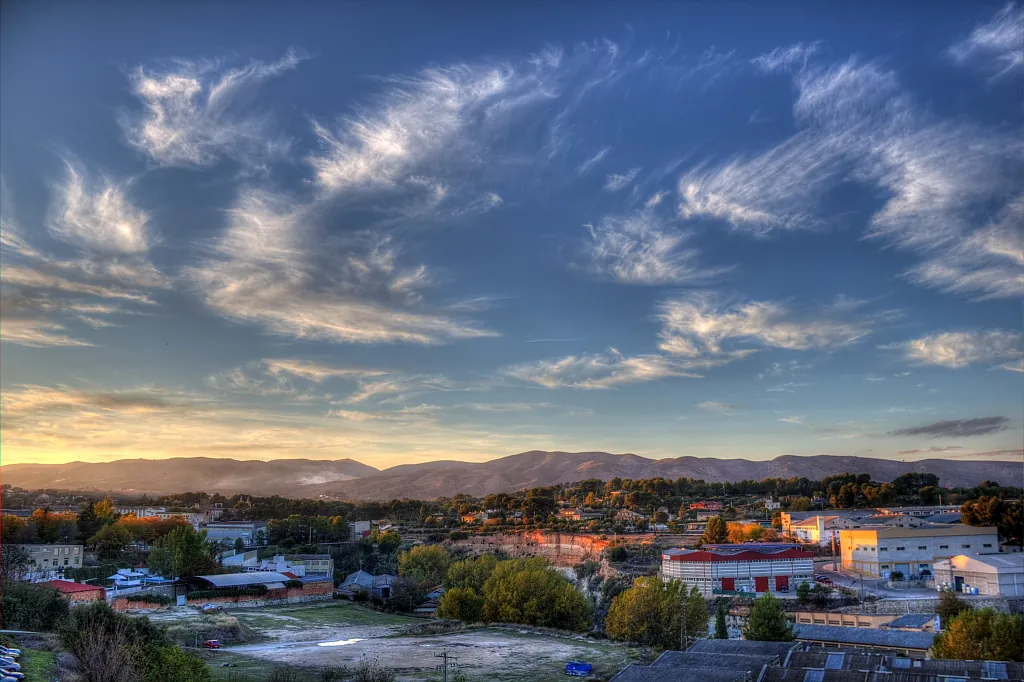
At nine in the morning, the sun has yet to reach the narrow Callejón de la Virgen. The stone walls still hold the night’s coolness and the river Clariano runs quietly along the bottom of the ravine. From a nearby terrace comes the smell of freshly made sofrito, tomato, onion, rosemary, mixing with damp earth and the sharp cleanliness of Marseille soap still used in some old washhouses. Ontinyent smells of clean laundry, low mountain scrub and a town that wakes before the light properly arrives.
La Vila, clinging to the hillside
Climbing up to La Vila feels like stepping into an old house where everything has been in place for centuries. Steep streets end in walls of rammed earth and stone that have watched generations pass without much haste. In Plaça de la Vila, the paving stones have been smoothed by thousands of footsteps. In the past, this was a lookout point over the valley and the road towards Xàtiva. Today the figures arriving are hikers with small rucksacks and residents still walking up with a bag of bread.
The Conjunto Histórico, the historic quarter, does not function as a stage set. It is a neighbourhood with visible seams. Houses almost touch at roof level, washing lines stretch from one side of the street to the other and behind half-open doors there may be a courtyard with an orange tree and an old wash basin. Pause for a moment and the faint hum of a sewing machine can still be heard. The textile industry shaped the town for a long time and Ontinyent became one of the key manufacturing centres in inland Valencia. That domestic rhythm, at times, is still present.
The river that turns into a swimming spot
Around three kilometres from the centre, the Clariano widens into a chain of clear-water pools. The Pou Clar is where half of Ontinyent learned to swim. Several natural basins link together, each with a name that locals have known since childhood: the Petitxol, the Nevera, the Toll de la Mota.
The water tends to run cold even in the height of summer. In August, when the valley heat presses down, stepping in feels like a jolt back to reality. The chill rises up your legs and for a few seconds it takes your breath away.
It is worth wearing footwear with a good grip. The rocks are smooth with moss and in some places they are very slippery. During the week the atmosphere is calm. On summer Sundays the access road fills quickly and parking nearby can become frustrating if you arrive late.
The factory that is no longer there
In the nineteenth century and much of the twentieth, Ontinyent lived to the rhythm of its looms. Dozens of factories were spread across the Clariano valley. Today a few tall chimneys of dark brick remain, rising above the rooftops as reminders of that era.
Many of those industrial buildings have changed purpose over time, yet the craft has not disappeared completely. In warehouses on the outskirts, textile work continues, and at the weekly market you still find tablecloths, cloths and table sets with traditional embroidery.
The town has not been left frozen in nostalgia. On a Monday morning the centre is busy: people heading into work, vans unloading, schools open. Ontinyent remains a working town, even if the sound of looms no longer echoes down every street.
When the town dresses for battle
At the end of August, the Moros y Cristianos festivities arrive. For several days the pace shifts. Brass bands play on every corner, the smell of gunpowder lingers and parades stretch long into the night.
The filàs, the different groups that take part, spend months preparing their costumes. When the festival begins, neighbours who during the year lead ordinary lives appear transformed in capes, turbans or gleaming armour. The change is complete.
If you want to watch the parades with a bit more breathing space, look for sections of the route where the street narrows. There, the procession slows and details of the costumes and choreography are easier to see. One practical note: the gunpowder is loud. If you are sensitive to noise, it is best to keep some distance when the volleys begin.
Getting lost without a map
Ontinyent makes sense on foot and without hurry. Start at the Pont Vell, the old stone bridge crossing the Clariano ravine, its steps worn by centuries of use. From there, simply follow the streets that climb upwards.
On reaching Plaza Mayor, look up. The bell tower of Santa María stands at around seventy metres high and is visible from many points in the valley. If you happen to be there at midday when the bells ring, the sound bounces between the façades and takes a few seconds to fade.
Continue along Carrer Major and let the layout guide you out of the historic centre. Small shops appear, old-style grocers, bars where coffee is served in thick cups. Further on, the walk opens out beneath the plane trees of El Llombo. Life moves more slowly here: older residents playing cards, teenagers with bicycles, long conversations unfolding on benches.
What they will not tell you at the tourist office
In November, when the festivities of the Purísima arrive, Ontinyent changes its atmosphere once again. The streets are lit up and the town takes on a different tone, as it does each time its calendar of celebrations comes around.
Ontinyent does not try to impress at first glance. It reveals itself in textures and sounds: stone that keeps the cool of the night, water that runs clear and cold, the echo of a bell tower at noon, the distant memory of looms. It is a place best understood by walking, pausing and letting the town’s ordinary rhythms come into focus.