Full Article
about Otos
The village of sundials with a unique tourist route at the foot of Benicadell
Hide article Read full article
A Small Village on the Southern Slope
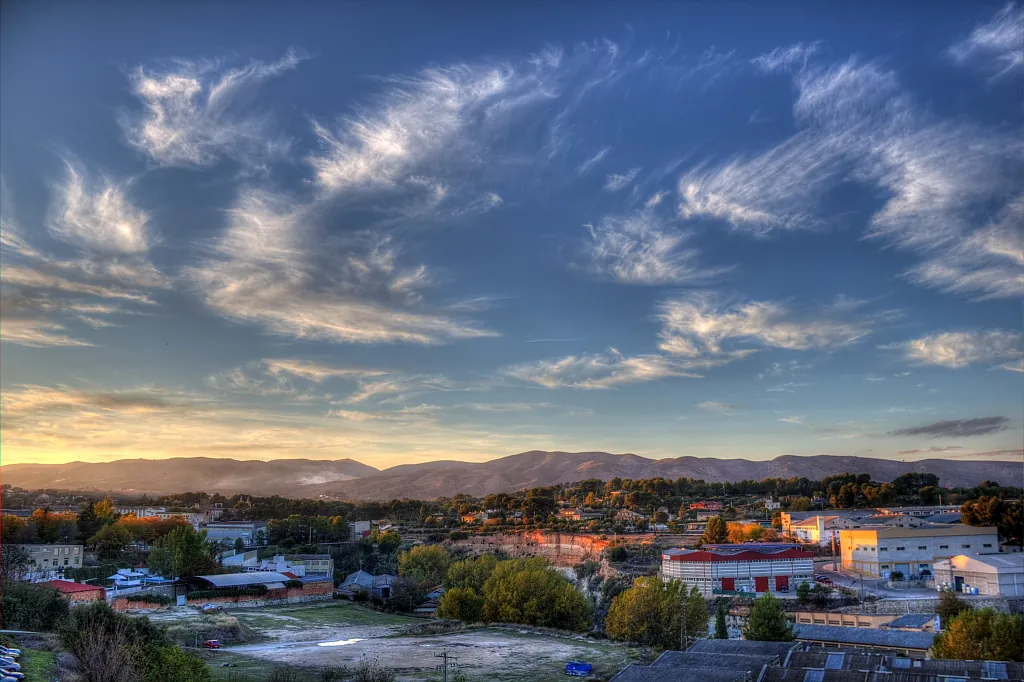
Set on the southern slope of the Vall d’Albaida, Otos is closely tied to a landscape shaped by dry-stone terraces, olive groves and small vegetable plots. With around 440 residents, the village retains a layout and rhythm clearly marked by its agricultural past.
The streets are narrow and sloping, adapted to the hillside rather than imposed upon it. Many houses still show masonry walls and traditional curved terracotta roof tiles, a reminder of how building techniques have been repeated here for centuries. There is no sense of expansion beyond what the terrain allows. Instead, the settlement feels compact and contained, closely connected to the fields that begin almost as soon as the houses end.
The heart of Otos gathers around its main square, where the most recognisable buildings stand and where much of daily life unfolds. It is not a place designed for a long city break. Rather, Otos works well as a calm stop on a wider route through the Vall d’Albaida or as a base for visiting nearby villages.
The Church and the Shape of the Village
At the centre of the old quarter stands the Iglesia de la Purísima Concepción. Like many parish churches in small Spanish villages, the current building reflects successive alterations and additions over time. Its importance lies less in grandeur and more in how it organises the surrounding space.
Around it, the square acts as a meeting point. From here, the scale of Otos becomes clear: a handful of streets, short distances and a very direct relationship with the agricultural landscape beyond. Step away from the square and within minutes the built environment gives way to terraces and fields.
This closeness between village and countryside is one of Otos’s defining features. There is no clear separation between urban centre and rural outskirts. The transition is immediate and easy to grasp on foot.
Terraces, Irrigation Channels and Worked Land
The surroundings of Otos make visible how land has been managed in this part of the Vall d’Albaida. Dry-stone terraces structure the hillsides, allowing cultivation on slopes that would otherwise be difficult to use. Each level represents a practical response to uneven ground, built and maintained over generations.
Between plots, old irrigation channels known as acequias still run through the terrain. These narrow waterways, historically used to distribute water to crops, connect fields and scattered farmhouses. Alongside them, small agricultural tracks link one parcel to another.
Walking these paths helps make sense of the territory. Every terrace carved into the hillside reflects sustained labour over time. The logic is straightforward: maximise cultivable land while adapting to the contours of the mountain.
Several local routes cross this landscape without major changes in altitude. They follow dirt tracks through olive groves, almond trees and vegetable plots. In some sections, the dry-stone walls stand close to the path, offering a clear view of their construction. Stones are carefully placed without mortar, relying on balance and weight to hold them together.
The dominant tone for much of the year is the grey-green of olive trees. Seasonal crops add variation depending on the time of visit, but agriculture remains the visual thread tying everything together.
Font de la Salut and Local Walks
A short distance from the village lies the Font de la Salut. This modest stone fountain has traditionally served as a stopping point for local residents. It is usually shaded, and during the summer months it offers a welcome pause before continuing along nearby paths.
It is not a large recreational area or a site designed for spending an entire day. Instead, it functions as a simple landmark within the network of walks around Otos, a place to rest briefly before heading back or pressing on.
From the village itself, several rural paths lead out towards other parts of the Vall d’Albaida. Most are agricultural tracks or traditional footpaths with moderate gradients. They are suitable for unhurried walking rather than demanding hiking.
The character of the landscape shifts noticeably with the seasons. In winter and early spring, almond trees in blossom introduce pale tones across the hillsides, and seasonal crops bring patches of colour to an environment usually dominated by olive trees. In summer, the heat becomes intense in the middle of the day, making early starts advisable for those planning to walk. During winter, the pace of life in the village slows further, and the countryside feels especially quiet.
Festivities and the Village Calendar
The local calendar revolves around the Purísima Concepción, patron saint of Otos. Her feast day is celebrated in December with religious events and gatherings among residents. In small communities like this, such occasions serve as key moments of social connection.
August brings the summer festivities, when many people who live elsewhere return to the village. During these days the streets regain more movement than usual, and Otos feels temporarily busier.
Semana Santa, or Holy Week in the lead-up to Easter, is also observed on a local scale. Processions are small and the atmosphere is close-knit rather than formal or elaborate. The focus remains on community participation rather than spectacle.
These events punctuate the year, marking shifts in season and in the rhythm of village life.
Getting There and Moving Around
From Valencia, the usual route is to take the A‑7 southbound and then join the CV‑60 towards Ontinyent. From that area, several regional roads lead to Otos.
The historic centre is small and can be covered on foot in a short time. For those arriving by car, it is advisable to park in designated areas at the entrance to the village and avoid blocking agricultural tracks or access to fields.
Spring and autumn tend to be the most pleasant seasons for exploring the surroundings, with moderate temperatures and fields in activity. Summer requires adjusting plans to the heat, especially at midday. In winter, the village becomes even quieter, reinforcing the sense that Otos moves to an agricultural rhythm shaped more by seasons than by visitor numbers.
In the end, Otos is defined less by individual monuments than by its relationship with the land. The terraces, irrigation channels and modest paths tell a consistent story of adaptation to terrain and climate. For travellers moving through the Vall d’Albaida, it offers a clear, compact example of how rural settlements in this part of the Comunidad Valenciana have evolved in step with their landscape.