Full Article
about Ráfol de Salem
Small village at the foot of Benicadell with a chapel and nature.
Hide article Read full article
An Andalusi Name in the Vall d'Albaida
Ráfol de Salem appears in local records linked to the Andalusi heritage of the Vall d'Albaida, a valley in the interior of the Comunidad Valenciana. The very word ráfol comes from the Arabic raḥl, a term usually used to describe a small farmhouse or agricultural holding. The name offers a clue to the area’s past.
For centuries, this valley was organised into scattered rural settlements. These small communities relied on irrigation systems and close-knit farming networks to survive. Ráfol de Salem emerged from that landscape of cultivated plots and modest dwellings, shaped by agriculture and water management rather than by large-scale urban planning.
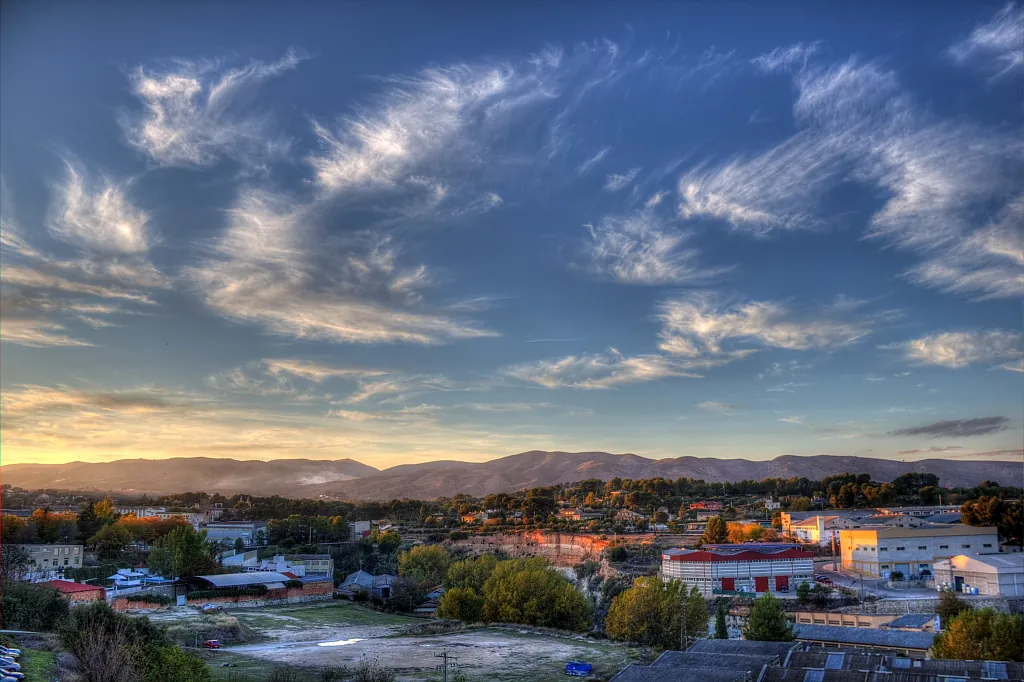
Today the village stands in the inland part of the comarca at around 200 metres above sea level. It is set among gentle hills and farmland, with a population of just over four hundred people. Agriculture still defines both the scenery and much of daily life. Citrus groves and market gardens spread out around the built-up area, reinforcing the sense that this is a working landscape rather than a decorative one.
The early seventeenth century marked a turning point. After the expulsion of the Morisco population, many small settlements in the Vall d'Albaida were left almost empty. Repopulation followed, with families arriving from other parts of the Kingdom of Valencia. From that moment, Ráfol de Salem grew slowly, remaining a small agricultural community.
Streets Shaped by Climate and Work
The layout of Ráfol de Salem is compact. Narrow streets run between two-storey houses with whitewashed façades. The design responds to climate and agricultural routines more than to any modern urban scheme. There are no grand squares or monumental avenues. The village keeps the scale of a place intended to be crossed on foot.
At its centre stands the parish church dedicated to San Miguel Arcángel. The current building largely reflects alterations carried out between the eighteenth and nineteenth centuries. This pattern was common in rural Valencian parishes, where older and smaller churches were replaced or remodelled as communities became more stable after repopulation.
The architecture of the church is restrained. It has a single nave, a bell tower integrated into the façade and limited decoration. Inside, devotional imagery linked to the parish tradition of the valley is usually preserved. The building’s importance is more historical than artistic. It marks the point at which the settlement functioned as an established community in the early modern period.
Around the church lie the oldest streets. A slow walk reveals practical details tied to everyday life over generations. Wide doorways were designed to store tools and equipment. Some houses include small inner yards or simple iron balconies. Former washhouses can still be identified, recalling a time when water sources were part of daily social life as well as domestic routine.
A Cultivated Landscape
Beyond the last houses, the agricultural mosaic of this part of the Vall d'Albaida begins almost immediately. Irrigation channels, farm tracks and citrus plots structure the territory. In spring, the scent of orange blossom drifts across the low hills that surround the village.
Paths leading out from Ráfol de Salem cross this cultivated terrain before climbing gently to higher ground. From certain points there are open views over the valley, where other villages are scattered among fields and small mountain ranges.
Along the edges of the tracks grow species typical of the Mediterranean environment. Pines and carob trees appear beside rosemary and thyme. This is not a wild or untouched setting. It is land worked for centuries, where farming and scrubland exist side by side and have long influenced each other.
The arrangement of fields, irrigation ditches and access paths helps explain why the settlement developed here. The relationship between village and farmland remains clear. Even for a short visit, the surrounding landscape provides essential context.
Local Life and Festive Calendar
As in many small villages in the Vall d'Albaida, the main celebrations in Ráfol de Salem revolve around the parish and the traditional Valencian calendar. Festivities dedicated to San Miguel Arcángel bring together residents and former residents who return for the occasion. Religious ceremonies form part of the programme, alongside processions and popular activities.
Throughout the year, other events linked to particular seasons or local customs also take place. These are generally organised by associations within the municipality itself. In a village of this size, festivities are above all neighbourhood gatherings. They are less about attracting outsiders and more about maintaining bonds among those who live there or have family ties to the area.
The rhythm of agricultural work still influences the tempo of daily life. Fields and orchards are not a backdrop but an active presence. This continuity between past and present is visible in both the calendar and the built environment.
Practical Orientation
Ráfol de Salem lies a short distance from other municipalities in the Vall d'Albaida and around twenty kilometres from Ontinyent, one of the main towns in the comarca. Access is via local roads that wind through farmland and low mountain areas.
The village itself can be explored on foot in a short time. Its modest scale is part of its character. To understand it more fully, attention should turn to the surroundings. The irrigation channels, the pattern of agricultural paths and the layout of the plots reveal much about why this community took root here rather than elsewhere in the valley.
Ráfol de Salem does not present grand monuments or dramatic landmarks. Instead, it offers insight into the long continuity of rural life in the interior of the Comunidad Valenciana. The Andalusi origin of its name, the early modern repopulation, the parish church of San Miguel Arcángel and the enduring agricultural landscape all form part of the same story.