Full Article
about Rugat
Quiet farming village in Vall d'Albaida
Ocultar artículo Leer artículo completo
The church bell strikes noon, and for a moment the only sound across Rugat's 300-metre ridge is a tractor grinding through distant orange terraces. With 138 permanent residents, this hamlet in Valencia's interior has roughly one inhabitant for every three hectares of citrus groves. Numbers matter here: the altitude keeps summer nights bearable, the population count keeps streets silent, and the lack of cash machine keeps visitors on their toes.
A Village That Measures Time in Harvests
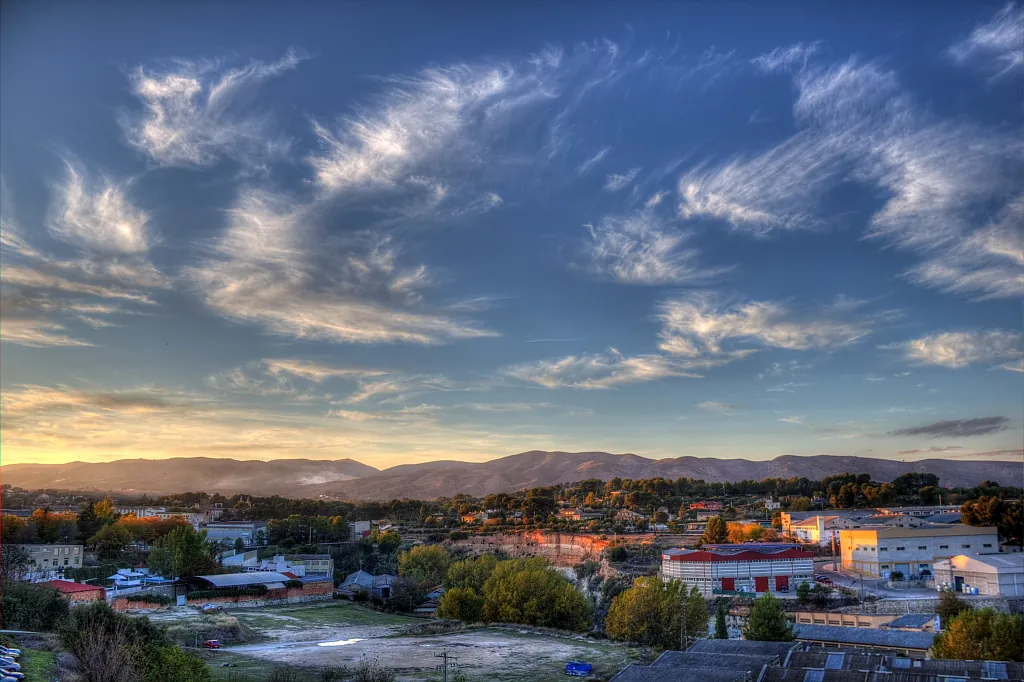
Rugat sits high enough—300 m above the neighbouring Vall d'Albaida—to catch the Levante breeze, so even in August the air carries a dry mountain edge rather than the coast's sticky humidity. The ridge position once served as a lookout for Moorish farmers; today it gives walkers 30-km views towards the Benicadell massif without requiring serious climbing. A gentle 45-minute circuit leaves the church plaza, drops past almond plots, then climbs back through terraces where the season dictates the colour palette: white azahar petals in April, green fruit by June, chrome oranges from October until Christmas.
Winter brings a different rhythm. When the gota fría storms sweep in, the unpaved agricultural lanes turn slick; hire cars accumulate a clay crust that even the village car-wash hose struggles to remove. January's feast of Sant Antoni is the social highlight: locals parade pets and tractors for blessing outside the stone-built church of Nuestra Señora de Gracia. Visitors are welcome, but space is tight—folding chairs appear from neighbours' garages, and the priest keeps the service brisk before the free mistela is poured. Sweet, chilled and stronger than it tastes, the grape-moscatel drink is dispensed in medicine-size glasses; three is plenty before the downhill walk.
Walking Without Waymarks
Forget laminated route cards. The best paths are the farmer's shortcuts that link Rugat with Aielo de Rugat five kilometres south. They aren't signed, yet the logic is simple: keep the barranco on your left, the orange lines on your right, and you'll emerge opposite Bar Casa Vieja in time for lunch. Mid-week, the owner, Charo, prepares a fixed-price menú del día (€14, cash only) that rarely strays from rice baked with pork rib and chickpeas. Brits who baulk at unfamiliar cuts can ask for costillas de cordero—lamb chops grilled with nothing more than rock salt and lemon, flavours that need no translation.
Serious hikers use Rugat as a launch pad for the Benicadell ridge, a limestone spine that separates Valencia from Alicante province. The trailhead at Font de Partegàs is 20 minutes' drive; from there a six-hour return haul climbs 600 m to the 1,404 m summit, where buzzards ride thermals and, on clear days, the coastline glints 40 km away. Summer starts early here—by 10 a.m. the rock is too hot for dog paws—so aim to set off at dawn, rewarding yourself later with an ice-cold clara (lager with lemon) at Oasis Country Park back in the village.
The Only Pub for Miles
Oasis isn't a metaphor; it's the solitary British-run touring site on the southern edge of Rugat. Eleven static pitches, a small pool and, crucially, the only bar within 8 km pouring Tetley's and screening Premier League. Wednesday and Saturday evenings, owner Dave fires up the caravan oven for a roast-beef dinner (€16, book before 2 p.m.). The appeal is less haute cuisine than convenience: after a day on mountain tracks, Yorkshire pudding and gravy taste better than another bowl of paella. Mobile reception is patchy for Vodafone and O2; the bar's Wi-Fi code is written on a pump clip and cuts out when more than three devices connect. Download offline maps before you leave the airport and save yourself a scramble up the terrace to catch a signal.
Accommodation options stop there unless you count two village houses occasionally let by London expats. Most overnight visitors base themselves in Xàtiva, 25 minutes' drive, where a handful of boutique hotels occupy restored palaces along Calle Montcada. Rugat works as a half-day detour: long enough to walk the grove loop, short enough to be back for a shower before the castle sound-and-light show begins.
When Nothing Opens
Sunday shutdown is total. The bakery in neighbouring Aielo locks its shutters at 1 p.m. Saturday; the village shop closed for good in 2019. If you're self-catering, stock up in Xàtiva's Consum supermarket on the ring road—prices are markedly lower than the coastal English-language stores. Fuel follows the same rule: the single garage in Rugat opens irregularly, so fill the tank on the A-35 before you turn off. These aren't hardships, merely the rhythm of a place whose economy still depends on what can be coaxed from soil and trees rather than from tourists' pockets.
The Wrong Rugat
Sat-nav confusion catches many. Type "Rugat" and some devices suggest Castelló de Rugat, a larger agricultural town 15 minutes north-west. The two share a medieval landlord, little else. Likewise, the Castle of Aielo de Rugat is less castle, more crumbled watch-tower; the climb is pleasant, the ruin itself a single wall with nesting jackdaws. Manage expectations and you'll enjoy the panorama rather than lament the missing turrets.
Arriving and Leaving
Valencia airport is the smoother drive: out of the car park, onto the A-7 south, peel off at junction 61 for Xàtiva, then follow CV-619 through orange warehouses until the road narrows and the first stone houses appear. Allow 75 minutes, more if Google flags the inland toll. Alicante is viable too, but Friday-afternoon coastal traffic can add 30 minutes to the journey. There is no railway, and the twice-daily bus from Xàtiva coincides with school runs; miss the 2 p.m. return and a taxi costs €40. Hire cars start around £30 a day in Valencia if booked off-airport—look for the shuttle van to the industrial estate opposite, where smaller firms keep keys in a kitchen drawer and don't upsell insurance.
Worth the Detour?
Rugat won't keep adrenaline addicts busy, nor will it satisfy anyone seeking tapas trails and souvenir tea towels. What it offers is a measured slice of rural Valencia where agriculture still dictates the clock, where a walk among irrigation ditches explains more about Mediterranean life than any museum panel, and where a cold beer tastes better because you drove up the winding road to get it. Turn up on market day and you'll find silence; arrive during fiestas and you'll dance in the plaza until the generator-powered lights dim. Both versions are authentic; neither pretends to be anything grander than a village that knows exactly how many people it can feed, water and shelter. If that sounds like enough, Rugat is ready—just remember to bring cash, download the map and fill up before Sunday.