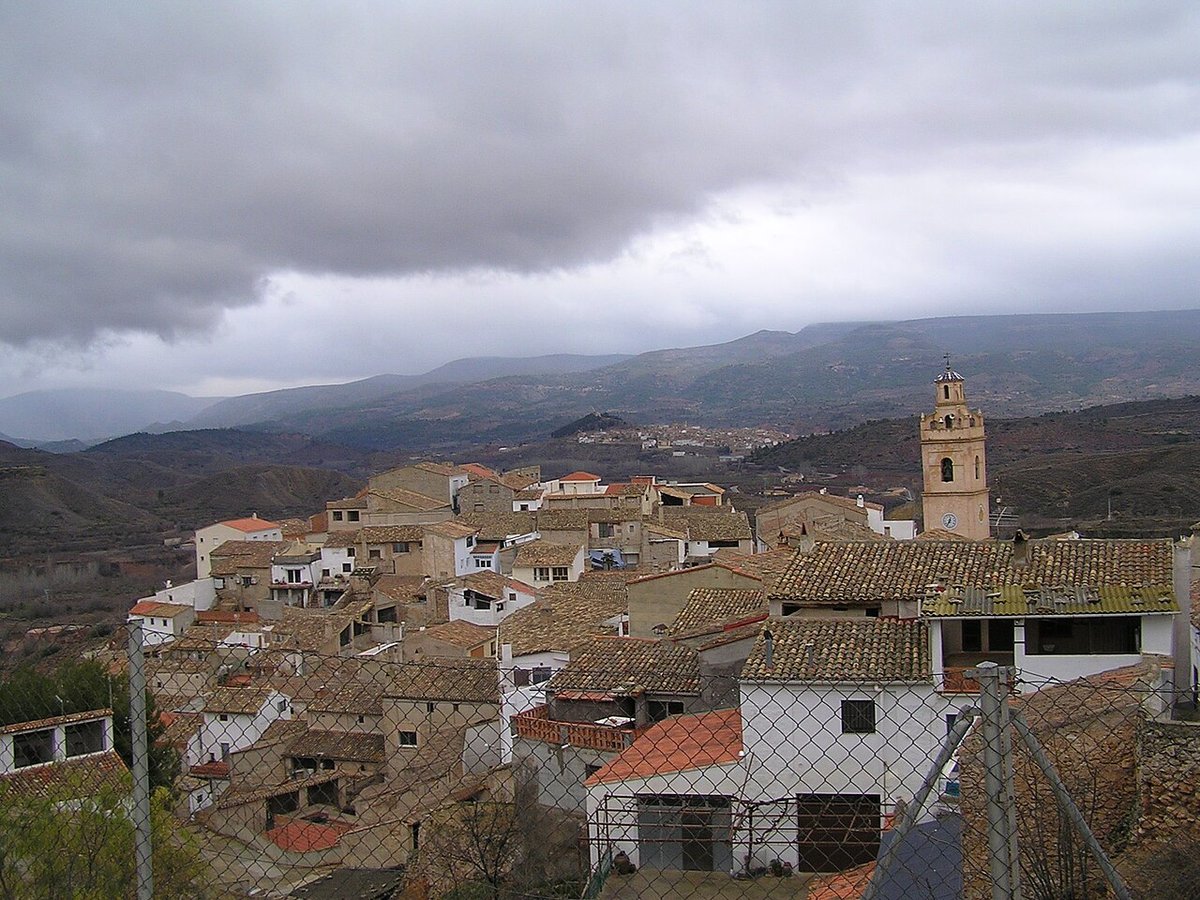
Vista aérea de Cortes de Pallás
Instituto Geográfico Nacional · CC-BY 4.0 scne.es
Comunidad Valenciana · Mediterranean Light

Cortes de Pallás

The petrol gauge is nudging red and the road is still climbing. Thirty-five kilometres ago you left the A-3 motorway behind; since then the tarmac ...

727 inhabitants · INE 2025
450m Altitude

Why Visit

Mountain Cortes Reservoir River cruise

Best Time to Visit

summer

August Festival (August) agosto

Things to See & Do
in Cortes de Pallás

Heritage

  • Cortes Reservoir
  • Chirel Castle
  • Corbinet Waterfall

Activities

  • River cruise
  • Route to Chirel Castle

Festivals
& & Traditions

Fecha agosto

Fiestas de Agosto (agosto)

Las fiestas locales son el momento perfecto para vivir la autenticidad de Cortes de Pallás.

Full Article
about Cortes de Pallás

Spectacular Júcar canyon landscape with reservoir and river routes

Ocultar artículo Leer artículo completo

The petrol gauge is nudging red and the road is still climbing. Thirty-five kilometres ago you left the A-3 motorway behind; since then the tarmac has narrowed, the crash barriers have disappeared, and the only company is a goat staring from a limestone ledge. This is the CV-428, the final approach to Cortes de Pallás, and it explains why the village still counts barely 750 souls. The mountains act as a bouncer: anyone who arrives really wants to be here.

At 450 m above sea level the village is high enough to shave five degrees off Valencia’s coastal heat, but low enough to keep orange trees happy. They terrace the slopes below the houses, green platforms stitched together by dry-stone walls. Look up and the ridge known as La Muela blocks the sky like a slab of unfinished castle. The Júcar river, dammed just downstream, winds a slow emerald loop around the settlement, providing both the postcard view and the local swimming pool.

River first, village second

Most visitors come for water rather than bricks. The boat trip that chugs upstream from Cofrentes is marketed, with un-Spanish modesty, as “the most beautiful river cruise in Spain”. The claim is hard to dispute: the gorge narrows to 30 m, walls dripping maidenhair fern, while griffon vultures tilt overhead. The 90-minute journey runs only when ten people pre-book (ring Su-Aventura the evening before), so spontaneity is punished. One-way tickets can be combined with a 7 km riverside walk back to the village; the path is obvious but rocky, so decent footwear is non-negotiable.

Closer to home, the Pozas del Ral offer wild-swimming without the Lake District crowds. These natural basins are five minutes downstream by car, signed “Área Recreativa”. The rocks are sharp—bring the neoprene shoes you last used in Cornwall—and there are no changing rooms; most people towel-change behind the open tailgate. On summer Sundays the spot fills with Valencian families, yet by 6 p.m. you can have a pool to yourself and the echo of kingfishers.

A street map written by a goat

The village centre obeys topography, not town-planning. Streets wriggle uphill, flatten for three houses, then drop abruptly. The only building you cannot miss is the parish church of La Asunción, its bell tower patched with mismatched stone after an 18th-century collapse. Inside, the nave is refreshingly plain—no gilded excess here—though a small Flemish panel of the Virgin draws the occasional art historian.

Otherwise the pleasure is aimless drift: peer into courtyards where lemons glow like light bulbs, sniff wood smoke from a chimney even in June, listen for the clack of petanca balls beside the communal washing trough. A five-minute scramble north of the church brings you to a concrete platform that once supported a water tank; locals call it “el mirador inglés” because British hikers always ask for directions. The view south frames the Júcar gorge, the reservoir’s silver wedge and, on very clear days, the distant glint of the Mediterranean 70 km away.

Eating: three doors, three choices

Cortes is not the place to restaurant-crawl. The tally stands at three, and none opens before 20:30 for dinner. Casa Fortunato occupies a stone house opposite the church; its grilled entrecôte tastes of charcoal rather than technique, but the chips are proper hand-cut slabs and the house red arrives chilled, Valencian style. Book before noon or the proprietor shrugs and closes the kitchen.

Asador El Mirador, halfway down to the river, does half-raciones of roast lamb—useful if you baulk at Spanish portion inflation. The terrace hangs over the gorge; ask for a table on the wall and watch the light fade from chalk to apricot. The third option is the bar attached to the bakery; lunch is whatever has been slow-cooked in the oven after the bread comes out—rabbit with bay, perhaps, or lentils emboldened by morcilla. They shut on Sunday afternoons, so buy bread and milk on Saturday evening or prepare for a very British diet of crisps.

Breakfast is easier. The bakery opens at seven; the village loaf, pan de pueblo, has a crust British farmhouse bread can only dream of. Local honey and vacuum-packed almonds cost half the Valencia market price and survive the Ryanair baggage police.

Walking: choose your punishment

The tourist office—one desk inside the town hall—hands out a free topo-map that looks reassuring until you notice the 500 m contour lines kissing each other. A gentle introduction is the CV-428 river walk: 6 km downstream to the hamlet of Tres Ponts, mostly flat, kingfishers and terrapins for company. The path starts beside the yellow road barrier at the village exit; no bus back, so either retrace steps or thumb a lift—locals usually stop.

For something sterner, follow the signposted PR-V 147 towards Chirel Castle. The ruin itself is a heap of masonry, but the route crosses three ecosystems in 90 minutes: riverside reeds, rosemary-scented hillside, finally a wind-scoured ridge where eagles ride thermals. Start at dawn between May and September; there is zero shade and the limestone reflects heat like a pizza oven.

The full Muela circuit is 14 km with 800 m ascent—think Dartmoor tors dipped in olive oil. The trailhead lies 4 km above the village on a track passable to ordinary cars if you enjoy reversing round hairpins. From the tabletop summit the view stretches from Cuenca’s saw-tooth horizon to the coastal plane, proof that Valencia is far more than paella and promenades.

When to come, when to stay away

April and late-October are the sweet spots: daytime 22 °C, nights cool enough for the duvet provided in most rentals. Almond blossom colours the slopes pale pink during the first half of March; British photographers arrive with long lenses and leave with memory cards full of bee close-ups.

August brings fiestas—processions, brass bands, outdoor paella for 600—and also 35 °C heat that lingers at midnight. Accommodation is booked out by returning emigrants from Valencia and Barcelona; if you must come, reserve in May and request a room facing north. Winter is quiet, occasionally snowy, and charming for exactly 24 hours. After that the village’s single grocery opens only three mornings a week, restaurants close “for family reasons”, and the sun drops behind La Muela at four o’clock.

Getting here, getting out

No trains, no buses, no apologies. The closest railway station is 35 km away at Requena-Utiel, served by twice-daily regional trains from Valencia-Nord. Hire a car there; the A-3 is motorway all the way to Venta del Aire, after which the CV-428 demands full attention and a full tank. Electric-car drivers should know the last charger is back on the motorway—plan accordingly.

Leaving is easier: the same winding road that filters arrivals delivers you to Valencia airport in 75 minutes, assuming you don’t get stuck behind a citrus lorry. The contrast is brutal: from goat bells to boarding gates in the time it takes to watch a Netflix episode.

Cortes de Pallás will not suit everyone. Mobile signal flickers, vegetarian options are thin, and the nearest Tesco is a concept, not a building. Yet if you measure holiday success by the number of swifts rather of selfies, this is one of the few places within two hours of a major European city where the night sky still drowns the streetlights. Bring sturdy shoes, a phrase book and a sense of self-sufficiency. The mountains will do the rest.

Key Facts

Region
Comunidad Valenciana
District
Valle de Cofrentes-Ayora
INE Code
46099
Coast
No
Mountain
Yes
Season
summer

Livability & Services

Key data for living or remote work

2024
ConnectivityFiber + 5G
HealthcareHospital 24 km away
Housing~5€/m² rent · Affordable
Sources: INE, CNMC, Ministry of Health, AEMET

Official Data

Institutional records and open data (when available).

  • Castillo de la Pileta
    bic Monumento ~0.5 km
  • Castillo de Chirel
    bic Monumento ~4 km
  • Castillo de Ruaya
    bic Monumento ~0.9 km

Planning Your Visit?

Discover more villages in the Valle de Cofrentes-Ayora.

View full region →

More villages in Valle de Cofrentes-Ayora

Traveler Reviews