Full Article
about Jalance
Known for its castle and the Cueva de Don Juan, a visitable geological gem.
Hide article Read full article
A slow start in the valley
Early in the morning, before the sun clears the hillside, Jalance is almost silent. A car passes now and then, its sound echoing off the façades. Tourism here often begins with that feeling: arriving somewhere that runs at its own pace, far from the traffic of the motorway that crosses the Cofrentes-Ayora Valley a few kilometres away.
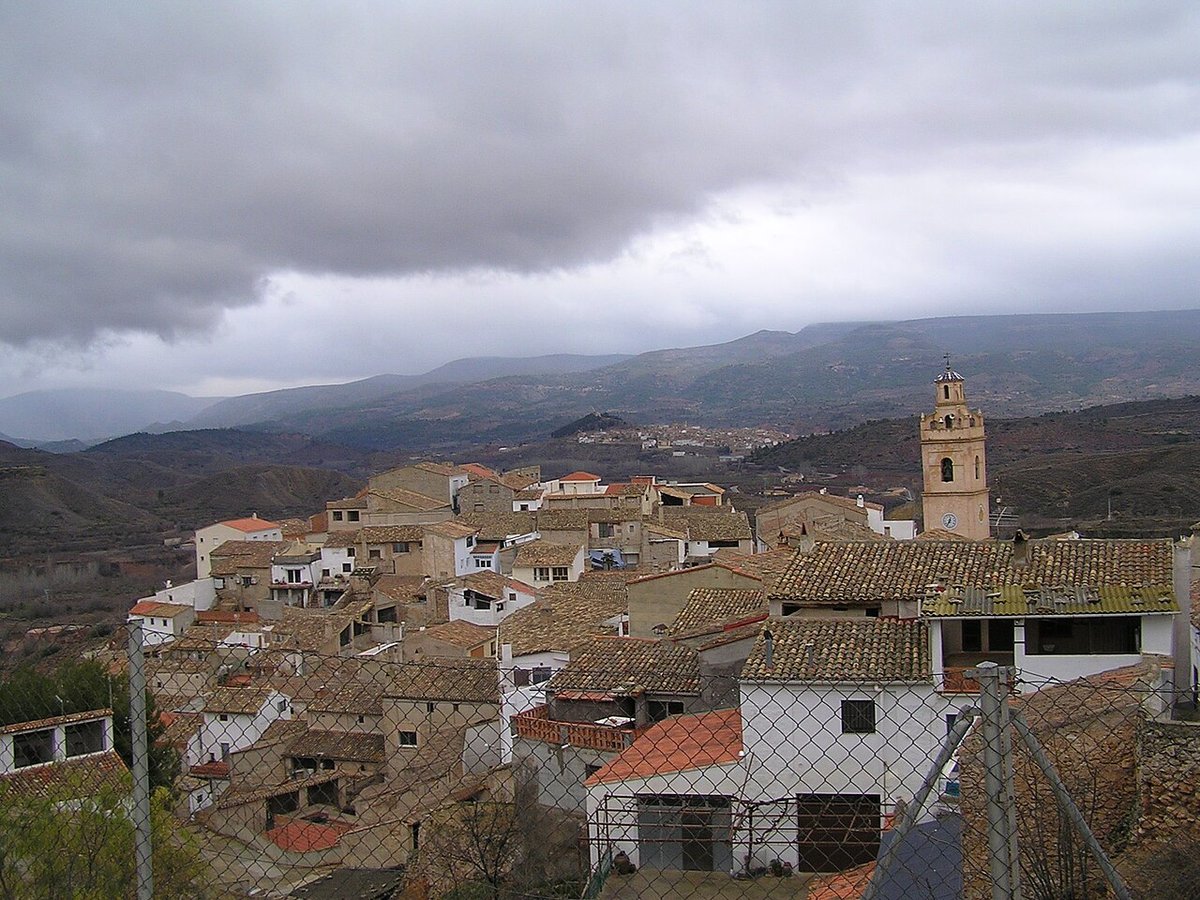
The village climbs the slope in a compact cluster of stone and whitewashed houses. Streets rise towards the upper part, where the land tightens and views begin to open. The bell tower marks the centre and works as a reference point from almost anywhere in town. Just over eight hundred people live here, and daily life still revolves largely around the surrounding countryside.
A village shaped by the slope
Jalance sits at around 450 metres above sea level and follows the natural form of the terrain. Streets are narrow, with unexpected bends and short climbs that appear without warning. Small squares appear here and there, barely large enough for a bench and a single lamppost.
The façades show their age without much attempt to conceal it. Plaster peels in places, dark iron grilles guard the windows, and heavy wooden doors open straight onto the street. Laundry sometimes hangs from balconies, shifting in the dry afternoon air.
A walk through the old centre rewards patience. The layout does not lend itself to quick routes or straight lines. Parking near the centre can be tricky due to the tight streets, so many visitors leave the car in the lower part of the village and continue on foot.
The castle hill and the Júcar below
Remains of an old castle sit on the hill above the village. The structure is no longer complete, but the position still defines the skyline. From the top, the landscape opens suddenly. The river Júcar traces a wide curve through the valley, bordered by slopes covered in Aleppo pine and low scrub.
At the end of winter, if the season has been mild, almond trees in the surrounding fields begin to bloom. February or March can bring patches of white and pale pink across the valley. The display is brief and sometimes lasts only a couple of weeks.
The walk up to the hill is not long. It is better tackled later in the day, as the sun can be intense at midday in summer and shade is limited along the way.
Streets, houses and the parish church
In the centre of the old quarter stands the parish church of San Miguel Arcángel. Its origins are usually placed in the 16th century, though it combines elements from different periods. The bell tower rises above the rooftops and marks the passing hours with a sound that carries across the whole village.
Nearby, several larger houses from the 17th and 18th centuries stand out from the rest. Carved doorways and stone coats of arms on their façades make them easy to recognise. Some remain private homes, while others have been adapted for municipal or cultural use.
It helps to look up while walking through these streets. Details appear between balconies and rooflines that are easy to miss when attention stays at ground level. The character of the place reveals itself in these small elements rather than in any single landmark.
Paths through fields and terraces
Just beyond the edge of the village, agricultural tracks begin almost immediately. Dirt paths link old farmhouses and terraces supported by dry stone walls, a traditional way of shaping the land for cultivation.
One of the most common routes runs between almond trees and small plots of olive trees or vines. In early spring, petals cover the ground in places. At other times of year, the landscape becomes more austere: pale soil, warm stones underfoot, and the resin scent of pine in the air.
These paths are generally easy to follow, though carrying water is advisable. Shade is scarce in summer, and the heat of the valley is noticeable even on short walks.
Festivities and home cooking
Local festivals mark the rhythm of the year. In September, Jalance celebrates its patron saint, San Miguel. During these days, the village fills with music, processions and evening festivities. Many people who live elsewhere return at this time.
January brings the celebration of San Antón. Bonfires light up parts of the village, and animals are blessed in a custom that reflects the area’s past links to livestock and rural life.
Food at home continues to reflect that connection to the land. Dishes often include stews made with rabbit or partridge, slow-cooked pulses, and migas during the colder months. Wild herbs gathered from the nearby hills, such as chamomile or wild oregano, are also commonly used.
A place that keeps its rhythm
Jalance does not try to present itself as anything other than what it is. It remains a small village in the interior of the Valencian region, surrounded by fields and shaped by a steady, unhurried pace. The sense of place becomes clear early in the day, when sunlight reaches only the upper parts of the façades and the streets are still quiet.
That first impression tends to stay. The village moves gently through the hours, guided by routines that have changed little over time, and by a landscape that continues to define how life unfolds here.