Full Article
about Teresa de Cofrentes
Quiet village in the Ayora valley with a 17th-century church
Hide article Read full article
A Hillside Village in the Valle de Cofrentes-Ayora
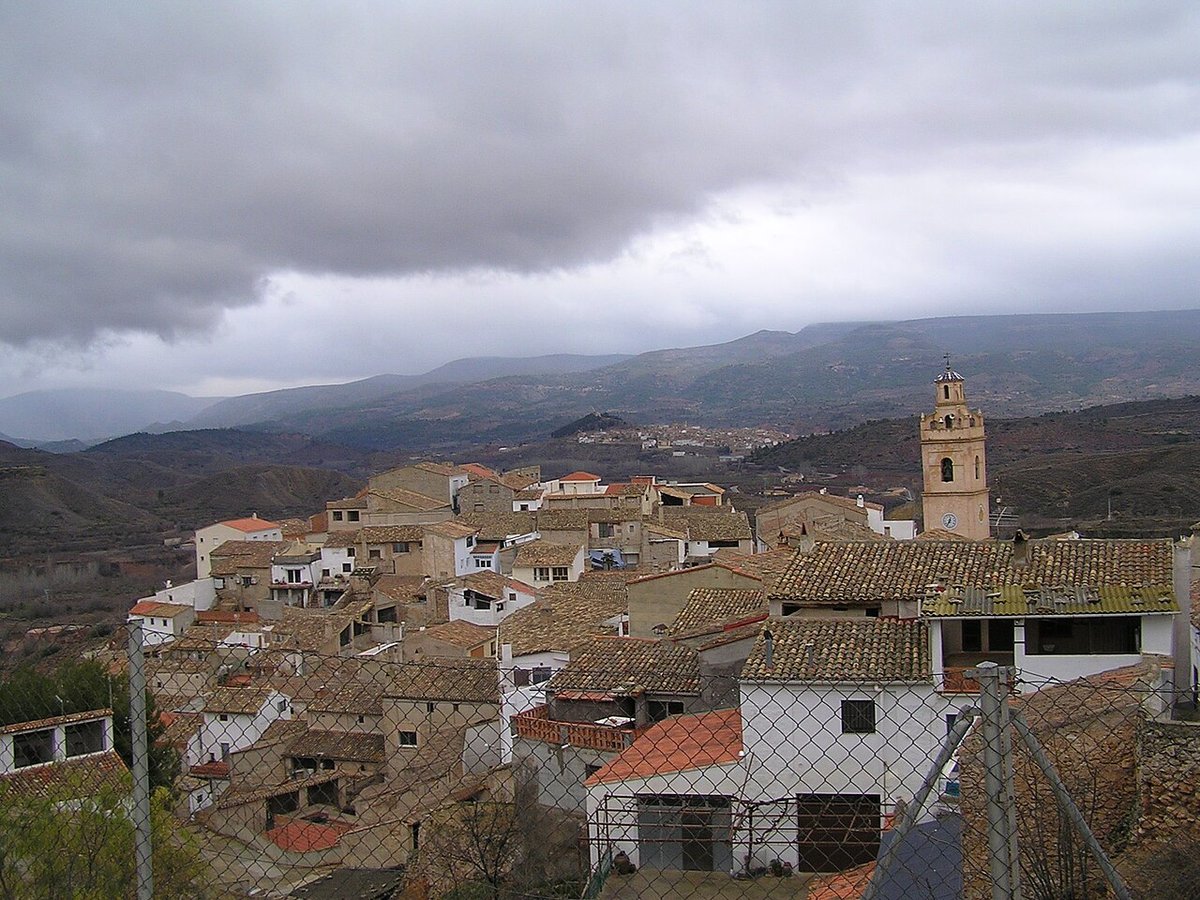
At first light, before the sun clears the low hills, Teresa de Cofrentes is defined by small, precise sounds. Pine branches shift with a dry crackle. Hoopoes call from the edges of fields. A faint thread of woodsmoke drifts from a chimney that has been lit early. The village sits on a gentle slope, its white houses and reddish roofs surrounded by almond trees, olive groves and scrubland. This is the Valle de Cofrentes-Ayora, inland territory in the Comunidad Valenciana where life moves at a slower pace, especially outside the height of summer.
The streets climb gradually uphill, bending just enough to follow the contours of the land. Whitewashed façades bounce back the fierce midday light. Many houses still have wrought-iron balconies and small windows, designed to keep out the heat rather than invite in a breeze. There is no grand, monumental old quarter. Instead, the centre is a collection of modest homes built with agricultural logic, practical spaces shaped by work in the fields. The rhythm of the countryside has long set the tone here.
Santa Cruz and the Heart of the Village
Near the middle of the village stands the parish church of Santa Cruz. It is a sober building that has been part of everyday life for centuries. In front of it lies a slightly sloping square, typical of settlements in this area, paved in pale stone and dotted with a few benches. Towards evening, as the heat begins to ease, neighbours gather here to talk while the light softens across the façades.
Not far away are several old fountains. In summer, when dry air descends from the sierra, the sound of water falling into stone basins can be heard before the fountains themselves come into view. Their flow is not constant throughout the year. It depends largely on winter rainfall, and in drier seasons the trickle can be noticeably reduced.
These small details give shape to daily life. A bench in the shade, the echo of water against stone, the gradual cooling of the square after sunset. Teresa de Cofrentes does not overwhelm with landmarks, but it leaves a clear impression through atmosphere.
Paths Through Almond Groves and Pinewoods
Beyond the last houses, agricultural tracks stretch outwards and slowly turn into footpaths. The terrain alternates between cultivated terraces and low limestone hills covered with pines. In spring, after rain, small flowers push up between stones and the scent of thyme hangs in the air when boots brush the edges of the trail.
One of the most common walks leads up to the ermita de la Santa Cruz, a small hermitage perched on a nearby rocky outcrop. The ascent is not long, though some sections are stony underfoot. From the top, the valley of the Júcar opens out in a wide view. Almond groves and olive trees spread across the landscape, and depending on the time of day their leaves take on a distinctive silvery sheen.
Summer here can be intense. The sun falls directly onto the slopes and there is little shade outside the pinewoods. Early morning or late afternoon are the most comfortable times to head out, when the light is lower and the air less heavy.
The network of tracks around the village can be confusing. Several agricultural routes cross each other and signage is not always clear, so it helps to have a good sense of direction before setting off.
Springs and Shifting Landscapes
Water sources are woven into the surrounding countryside. Some springs hold water for most of the year, while others depend closely on rainfall. They are often found in small ravines or beside old livestock paths. The atmosphere changes abruptly in these spots. There is more humidity, thicker vegetation and the steady sound of water moving between stones.
Local residents usually know which springs are active in each season. For visitors, it makes sense to ask before heading out in search of them, or to follow a clearly planned route. The landscape may look open, but distances can be deceptive under a strong sun.
Seasonal change is particularly visible after the first autumn rains. The scrubland shifts in colour and the pinewoods can produce wild mushrooms. Gathering them is common practice for those who know what they are doing, though caution is essential and only well-identified varieties should be picked.
Food Rooted in the Land
Cooking in Teresa de Cofrentes is closely tied to what the surrounding land provides. Slow-cooked legume stews are typical, prepared over a steady heat. Migas, made from day-old bread and often cooked with vine shoots, appear on many tables. When the season allows, small game features in local dishes.
Olive oil from the area is used generously, forming the base of most recipes. Almond trees, so visible across the valley, also make their way into simple sweets.
This is not elaborate cooking designed to impress. It is food meant to be shared around a long table, best appreciated after a morning spent walking the paths or working outdoors.
Festivities and the Best Time to Visit
The main celebrations are usually held in August. Many families who live elsewhere return to the village at that time, and the streets fill with flags, music and processions that move through the centre and climb in pilgrimage to the ermita de la Santa Cruz.
Outside these weeks, the atmosphere is much quieter. Autumn and late winter are particularly appealing for those seeking calm. There is less movement in the streets, the air is fresher and walks through the countryside feel more unhurried. The light changes too, softening the tones of the hills and drawing out the textures of stone and pine.
From Valencia, the drive takes around an hour and a half. The route begins on motorway before narrowing into smaller roads that cross the valley. The final stretch runs between fields and low sierras. Tractors or animals may appear on the road, so an unhurried approach suits the setting.
At the start and end of the day, Teresa de Cofrentes looks different. Roof tiles glow orange, shadows lengthen across the streets and the village returns to that early morning stillness. It is in those hours, between cool air and fading light, that the character of this inland corner of the Comunidad Valenciana becomes most apparent.