Full Article
about Zarra
Quiet village in the valley with geological trails and nature
Hide article Read full article
A Village That Reveals Itself Slowly
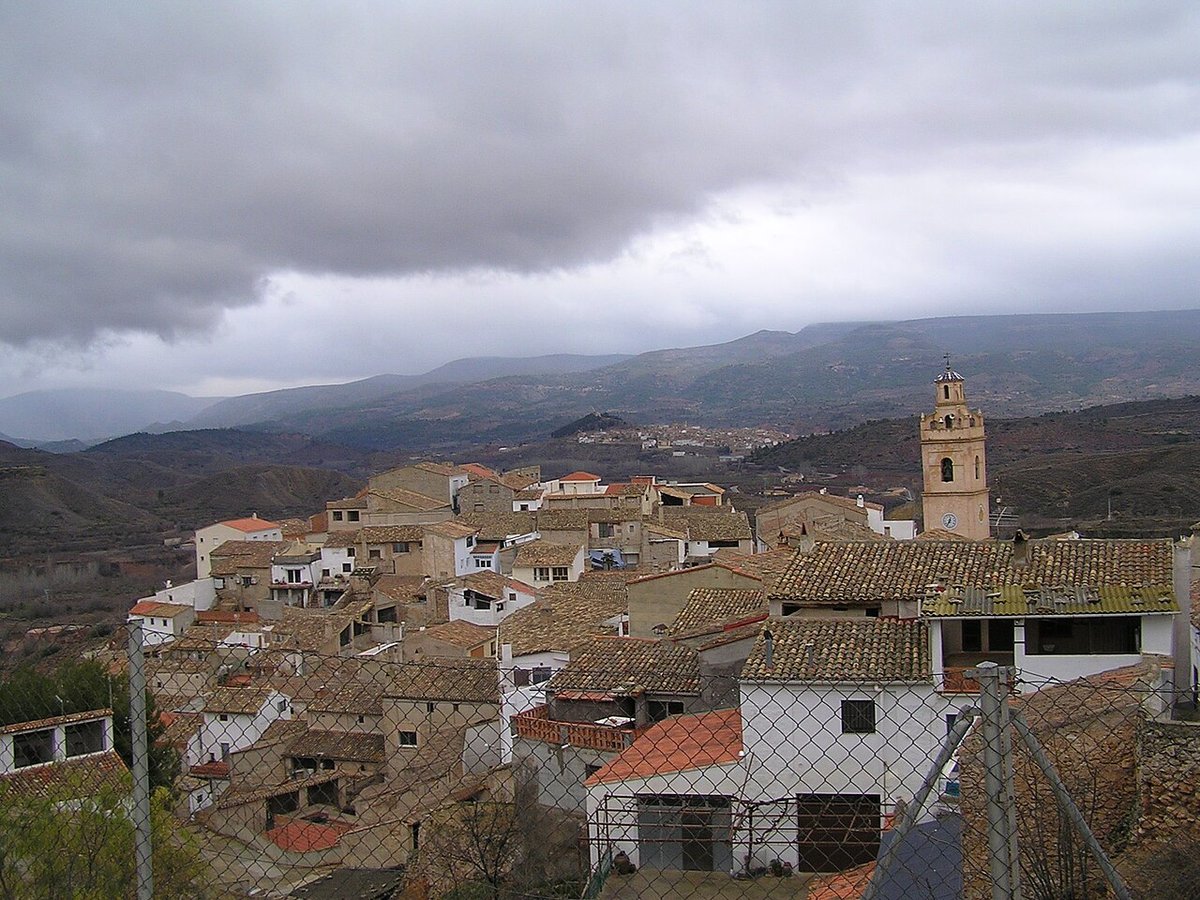
Some villages look like stage sets. Zarra does not. Zarra feels more like a grandparent’s house in the countryside. At first glance, nothing demands attention. Sit for a while, however, and the details begin to appear.
Tourism in Zarra revolves around that quiet shift in perspective. This is a small village in the Valle de Cofrentes-Ayora, home to just over 370 people. The size shapes everything. There is no rush and no grand statements. Life moves like an old clock: slow, steady, never stopping.
Zarra rests on the first slopes of the Sierra de Ayora, around 600 metres above sea level. The landscape blends dry farmland with pine trees and rocky outcrops. In summer, the ground turns ochre, like a wall left in full sun. When the rains arrive, the countryside changes colour within days.
A walk around the outskirts feels like a long stroll after lunch. There is no particular goal. Just walking and looking. A ravine appears here, a path between pines there. Quite often, there is no one else around.
Traces of the Past in the Streets
The old centre of Zarra follows the pattern seen in many inland Valencian villages. Narrow streets wind between houses built in stone or pale render. Some façades have been restored, others show the wear of decades.
A walk through these streets feels like searching through an old drawer. Small details turn up one by one: an antique wooden door, an ornate iron grille, a façade that seems unchanged for years.
The Iglesia de San Miguel Arcángel shapes the village skyline. It is not a vast building. It simply fulfils its role, much like the village square where things tend to happen. Inside, there are usually simple altarpieces and images linked to local devotion.
Public washhouses and fountains still remain. These features tell the story of daily life in earlier times, when water was carried in buckets and routines revolved around such tasks. Today they survive as visible reminders of that rhythm.
Between Ravines and Pine Slopes
The surroundings are what draw the more curious visitor. Ravines cut through the terrain. Slopes of Aleppo pine stretch out across the hills. Paths cross the area, some of them in place for decades. Many were created out of necessity rather than leisure.
Certain trails follow old routes between vegetable plots and scrubland. Walking along them is like tracing the faint line of a former track on a wall. It is clear that many people passed this way before.
Some routes are short and easy to follow without much thought. Others demand more effort. The ground rises and falls gently, like a calm rollercoaster.
Rosemary and thyme appear between the pines, along with other aromatic plants. When the sun is strong, their scent lingers in the air. At times it recalls the smell from a kitchen when herbs are crushed in a mortar.
Birds of prey are often seen circling above the ravines. Eagles, buzzards and other species take advantage of the air currents. If you stop for a moment, the silence feels serious. The only sounds come from the wind or the faint crackle of movement in the undergrowth.
Autumn brings another activity. People head out with baskets in search of mushrooms. The season draws many local residents into the countryside. Those unfamiliar with the terrain or the species are advised not to improvise.
Festivals That Shape the Year
The main celebrations in Zarra revolve around San Miguel Arcángel, towards the end of September. These days include processions, religious events and gatherings among neighbours. They form a key point in the village calendar.
August also brings festivities linked to the Asunción, the Assumption of Mary, an important date in the Catholic calendar. Many families return to the village at this time. The streets become noticeably busier, rather like a house filling up at Christmas.
Christmas itself carries its own traditions. Some residents speak of small nativity re-enactments and carols passed down from one generation to the next. They are simple affairs, closer to a family gathering than a staged production.
Reaching Zarra
Travelling to Zarra from Valencia usually involves taking the A‑7 south towards the area of Ayora. From there, quieter regional roads lead onwards.
The final stretch includes gentle bends rather than dramatic turns. It is the sort of road that encourages a slower pace and a glance at the surrounding hills, as if driving through a mountain range without hurry.
The journey takes around an hour and a half, depending on traffic and any stops along the way.
Zarra does not try to attract attention. That may well be its appeal. Park the car, walk for a while and the village reveals itself gradually. It is like a long conversation that begins without a clear topic and ends up becoming the best part of the day.

