Full Article
about Benferri
Small Vega Baja town with a noble past, ringed by citrus groves and quiet.
Hide article Read full article
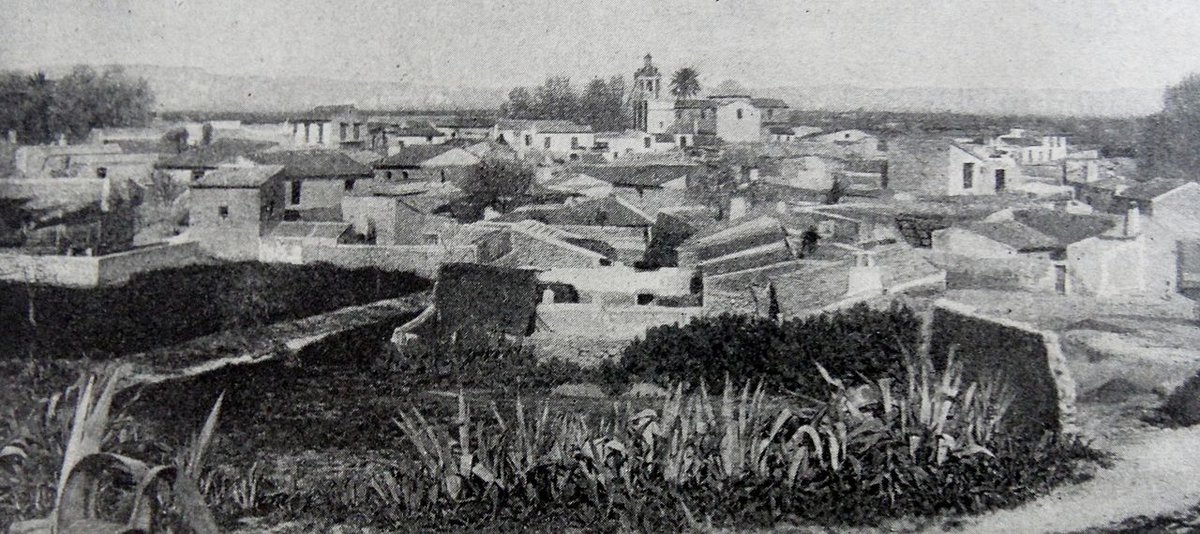
The bells of San Jerónimo ring at eight in the morning, their echo drifting across the orange groves. In the square, where neighbours are already setting out long tables for a shared meal, the early sun turns the pale walls of the tower a soft gold. Benferri wakes slowly, as if aware the day will be long and that rushing rarely serves much purpose here.
Crossing the local road from the Vega Baja, distance is measured as much by scent as by space: orange blossom from late winter into spring, turned earth after the harvest, and a faint saline note that arrives when the wind shifts towards the coast. Along Calle Mayor, a woman steps out in slippers to take out the rubbish. A tractor passes at half speed, its driver raising a hand while keeping an eye on a front wheel that seems to be losing air.
A church left on its own
San Jerónimo has the air of a church that has somehow been left behind. Built in the 17th century and altered over time, it still keeps a toasted stone façade with an empty niche and a coat of arms belonging to the Condes de Parcent, often overlooked. Inside, the smell is of warm wax and old wood, the kind that lingers in pews worn smooth over the years. The ceiling sits low, crossed by dark beams. Above the altar stands a life-sized Christ known locally as “el Cristo de la Procesión”, carried out during the celebrations of San Jerónimo at the end of September, lowered with ropes through a side door.
From the atrium, the Vega Baja opens out: orange trees arranged in near-perfect grids, the occasional farmhouse with a hipped roof, and beyond, the outline of the Sierra de Orihuela against the sky. There is a story often told here. During the war, the church escaped bombing because pilots mistook lights from elsewhere. “There was nothing here worth knocking down,” goes the conclusion, offered with a shrug.
Water, stone and domino tiles
La Fuente del Parque marks the point where asphalt ends and a dirt path begins. It is a simple spring: an iron spout, a stone basin, and a steady flow that locals say rarely dries up, even in harsh summers. Some older women still fill large containers here.
The park acts as a communal living room. Stone tables sit beneath pine trees that cast dense shade. Around midday in summer, when temperatures climb into the thirties, large aluminium pots filled with rice appear on those tables. There is no kiosk and no music. The sound comes from domino tiles clicking on stone, children running between trees, and conversations that grow louder as the moment comes to divide the cost of the meal.
If you walk up past it, an old tower includes a stretch of spiral staircase so narrow it has to be climbed almost sideways. From the top, Benferri reveals its scale: four main streets, the bell tower, the cemetery in the distance.
Festivals held in memory of the fields
Los Santos de la Piedra are celebrated at the beginning of August. The procession usually sets out at dusk, when the ground still holds the heat of the day and the air carries the smell of dust and recent irrigation. Older residents recall when images were taken along rural paths into neighbouring areas for kilometres.
Today’s route is shorter but many farmers still leave citrus fruit at their door as a gesture towards a good harvest—a custom called la plegà. If rain falls during this August procession—which is uncommon—some take it as a sign that land has accepted offering.
In October come festivities for Virgen del Rosario. Some still remember an edition decades ago when strong wind brought down fireworks structures forcing pyrotechnician improvise with what was at hand; it’s recalled not because everything went plan but because did not.
Light and scent instead of timetable
Benferri has no gates to mark its rhythm. In winter fog settles low among orange trees; smell firewood drifts from chimneys after four o’clock. In May orange blossom noticeable even from roadside with windows down.
Time here marked less by hours than small shifts: angle light on church wall changes; scent irrigation channels replaces scent dry earth; sound tractors fades leaving only crickets by eight evening during summer months—that’s when park fills again but now with cooler air drifting up from orchards below village line where streetlights haven’t reached yet