Full Article
about Benijófar
Small farming town in the Vega Baja; it has an Arab waterwheel and traditional irrigated fields.
Hide article Read full article
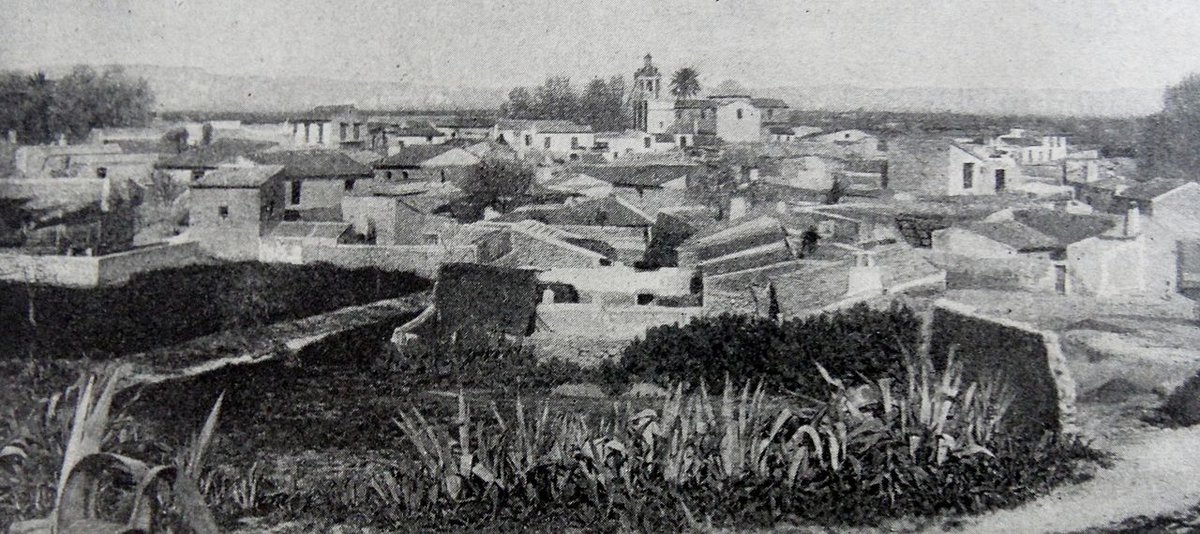
Benijófar covers just four and a half square kilometres. It is the smallest village in the Vega Baja, and it feels like it. You cross the river Segura, spot the waterwheel turning, and within moments you are in the main square. Everything sits within a couple of streets.
This is not a place of long itineraries or headline sights. It is compact, flat and easy to grasp at a glance. For some, that is precisely the appeal.
Park Up and Walk
Access is via the CV-920. There is a car park behind the town hall and another beside the football ground. During the week there is usually space. Once parked, walking is the only thing required. The streets are level, with no hills to contend with.
The noria, the traditional waterwheel, is around five minutes away on foot. Distances are short and the layout straightforward.
July requires a bit of strategy. By midday the asphalt can be scorching underfoot. An early start makes the short stroll more comfortable.
A Church, a Square and a Waterwheel
The Iglesia de Santiago stands in the centre. It is a Baroque church dating from the 17th and 18th centuries, with gilded altarpieces inside. The door is usually open in the mornings. It is the sort of parish church found across this part of Spain, familiar in style and scale.
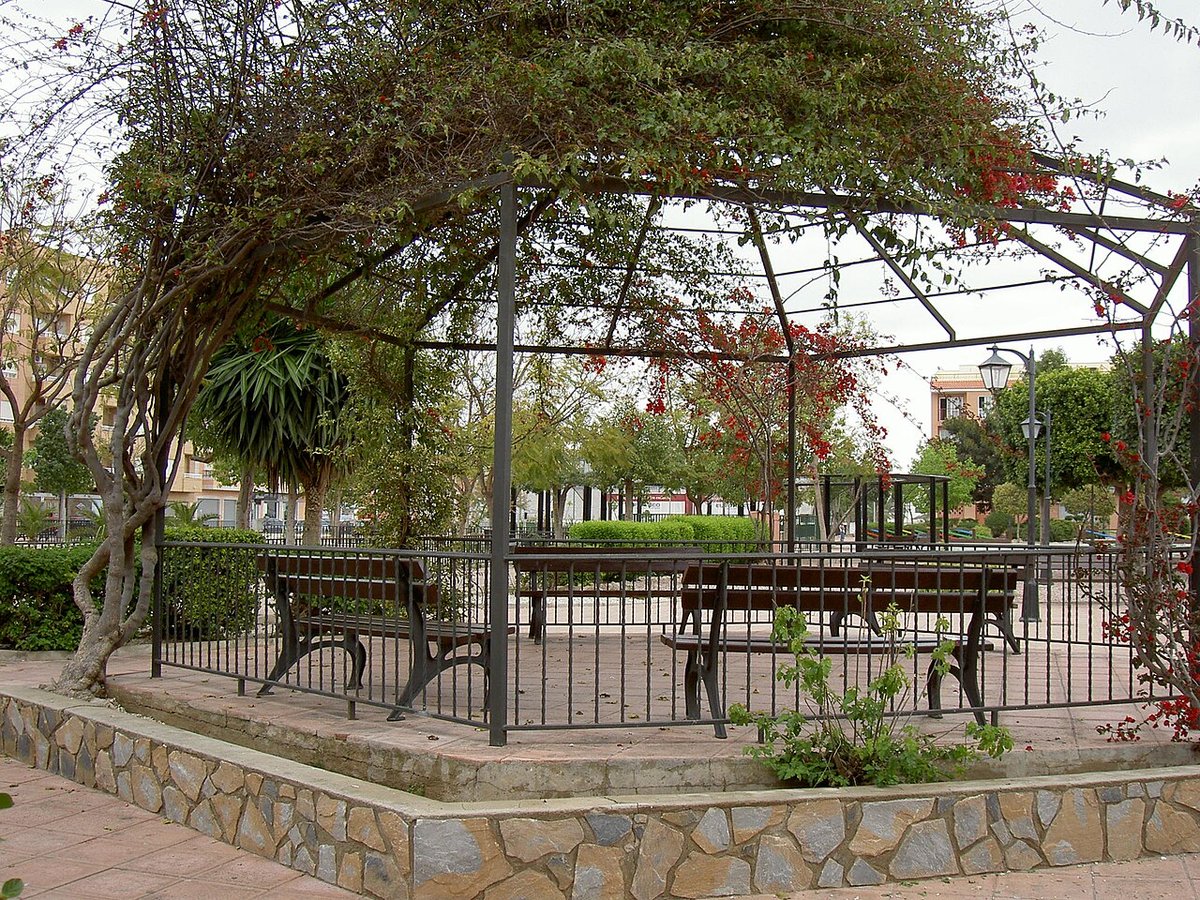
Outside, the square offers some shade and a couple of benches. A noticeable group of foreign retirees gather here, many of whom settled in the area when property was still affordable. The atmosphere is unhurried. Conversations drift, people come and go, and little seems to disturb the rhythm.
The real point of interest is the noria. Local tradition says it was already operating when the surrounding farmland was irrigated using systems of Andalusi origin. Today it still lifts water from the Segura and channels it into a small stretch of huerta between orange trees. The mechanism is simple to grasp and easy to approach. There is very little in the way of barriers, so visitors can stand close to the turning paddles. A nearby information panel explains how it works. It does not take long to read.
The setting is modest rather than staged. The paseo runs close by, and access is free. There are no elaborate visitor facilities. What you see is a working piece of irrigation heritage that continues to serve a practical purpose.
On Calle de la Huerta there is a short, signposted section of the Vía Augusta. The reference comes from a Roman plaque discovered in the 18th century. Today there are no visible ruins, only signage marking the memory of the route. Expectations should be adjusted accordingly. It is a historical trace rather than a site to explore in depth.
Straightforward Local Food
Benijófar does not present a tourism-driven food scene. Many residents still eat at home, and if asked where to dine out, more than one local may point towards nearby Rojales or Formentera del Segura.
That said, a few traditional specialities are closely associated with the area. Coca de mollitas is one of them. It consists of a crisp base topped with fried breadcrumbs, garlic and paprika. It is sliced like a pizza and eaten cold.
Arroz con costra is a more substantial option. The rice is baked in the oven with morcilla and butifarra, then finished with a set layer of egg on top. It is filling and better suited to winter.
Sweet pumpkin jam often appears in glass jars in local bakeries. It is very sweet and unmistakably traditional in style.
There is no single menu designed around visitors. The food culture remains domestic and practical.
Small-Scale Celebrations
Festivities in Benijófar are low-key. Santiago Apóstol is usually celebrated around 25 July, with a procession, a traca of firecrackers and a communal meal. It is a village gathering rather than a spectacle.
Moros y Cristianos normally takes place at the beginning of September. There are only a few comparsas, or participating groups, and the parade is short. It reflects the broader Valencian tradition but on a reduced scale.
The romería of Santa Isabel involves walking up to the hermitage on the hill with a sandwich and spending the morning there. It has the feel of a shared picnic more than an organised event.
San Juan sometimes brings a bonfire near the area of the noria. Again, it is more of a neighbourhood get-together than a large festival.
Nothing here aims to impress on a grand scale. The tone is that of a small village marking its calendar in its own way.
A Direct Tip
Benijófar is not a destination in itself. It is a stop. If travelling towards Orihuela or Guardamar, it is worth a ten-minute detour. See the noria, take a turn around the square, then continue on.
There is no beach and no major monuments. The walk around town does not take long. What it does offer is quiet. At times, that is more than enough.