Full Article
about Jacarilla
A town with a unique stately palace-and-garden complex; an oasis in the Vega Baja.
Hide article Read full article
Jacarilla is the kind of place where the practical details come first. Parking is straightforward. There is usually space near the Palacio and along the surrounding streets. The village is small and completely flat, so in half an hour you can walk from one end to the other without effort.
With around 2,000 inhabitants, Jacarilla has a noticeable British presence. It is often said that close to one in five residents comes from the United Kingdom. That shapes the atmosphere. This is a village in the Vega Baja where many foreign buyers purchased homes years ago when prices were low. It is neither better nor worse than others nearby. It is simply more mixed than it first appears.
The palace that makes you stop
The Palacio de los Marqueses de Fontalba is the clear reason to slow down and pull in. The building is painted pink, framed by tall palm trees in its gardens, and feels slightly out of place in such a small village. It almost looks like a film set.
The gates are usually closed. Even so, much of the exterior can be seen from outside. If a municipal event or activity happens to be taking place, the grounds are sometimes opened. If not, visitors tend to pause, take a couple of photos and move on.
There is little competition for attention. Jacarilla does not have a medieval old quarter, nor defensive walls, nor a castle on a hill. The palace and a few large houses linked to the era of the marquises are what remain of that period. Several of those properties are now used for administrative purposes, while others have been closed for some time.
Flat land between orange groves
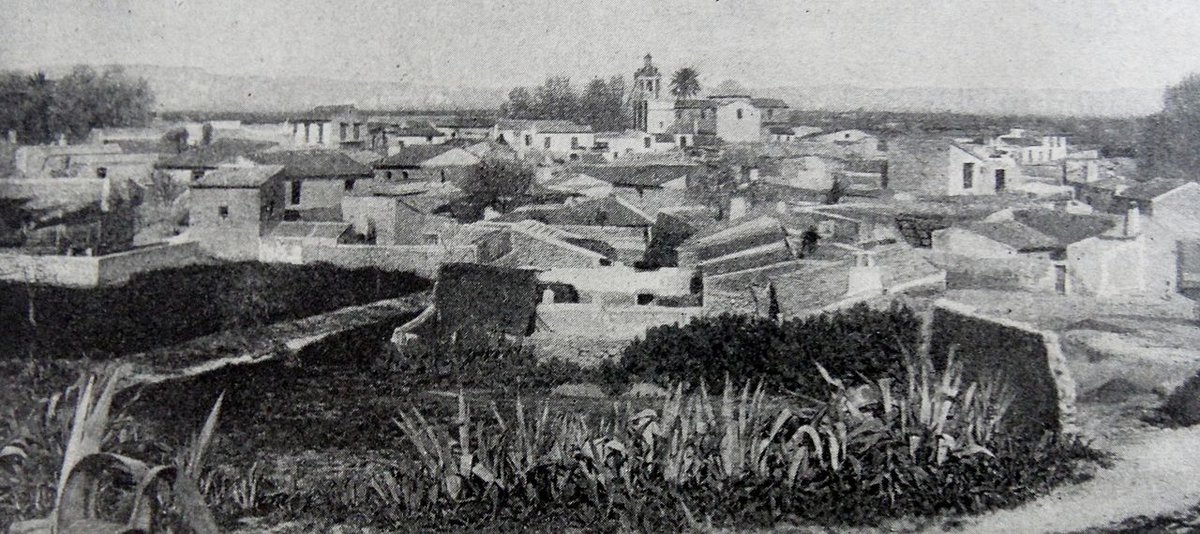
Everything here is flat: the village, the surrounding fields, the approach road as you drive in. The landscape belongs to the huerta of the Vega Baja, the irrigated farmland that defines this part of southern Alicante province.
The streets run straight between low houses, with the occasional more recent chalet breaking the line. In spring, the scent of orange blossom hangs in the air. During the rest of the year, the dominant smell is damp soil from irrigation. Acequias, the traditional irrigation channels introduced centuries ago, cut across the farmland. Tractors pass slowly with trailers stacked high with crates.
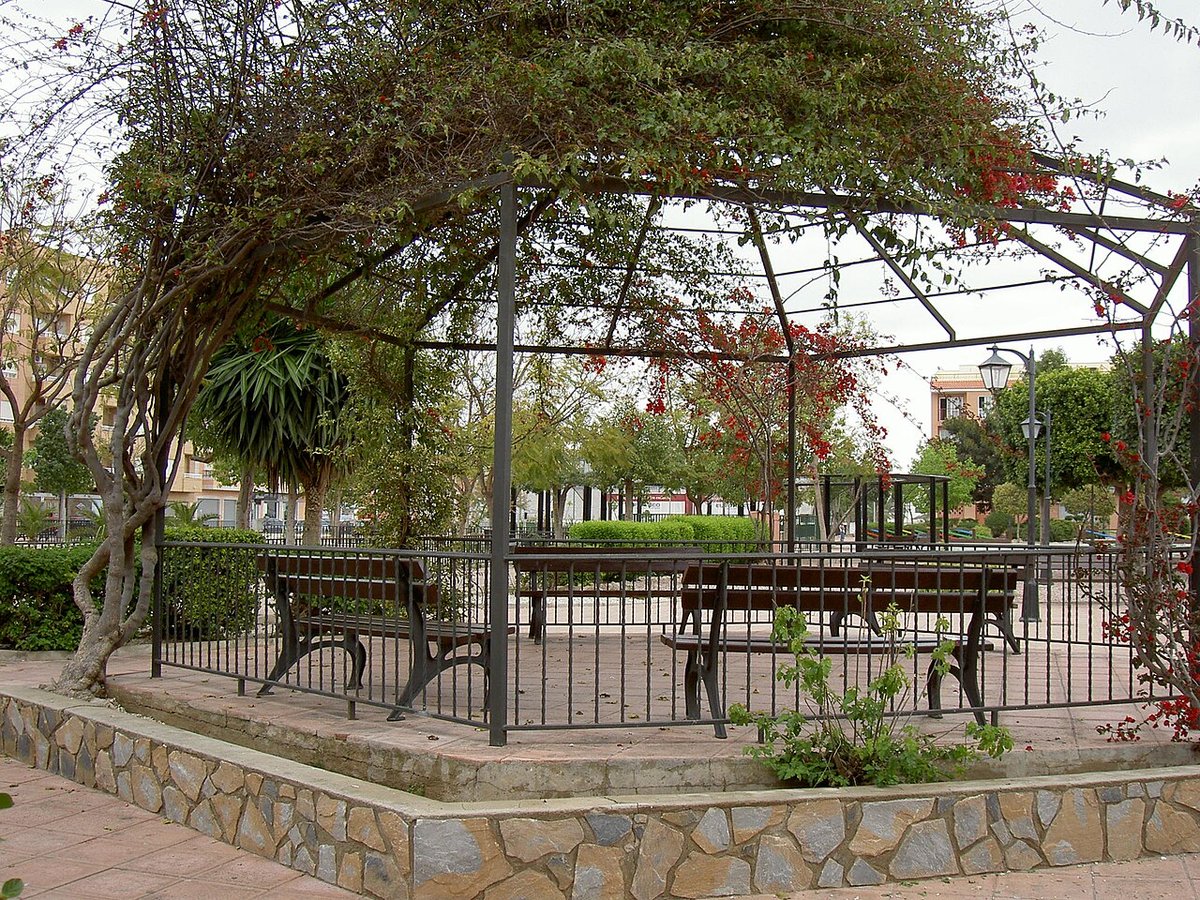
There is no historic centre in the classic sense. Instead, Jacarilla feels practical and lived in. The town hall stands in a simple square with a few benches and a kiosk that is almost always closed. Daily life revolves around agriculture and routine rather than tourism.
This agricultural identity carries through to the food. In local kitchens, rice with vegetables from the huerta takes priority: habichuelas, acelgas, whatever is in season. It is a straightforward dish, tied to what the land produces, and it tends to appear on the menú del día in the village bars.
Getting there and getting around
Reaching Jacarilla is uncomplicated. From the AP‑7 motorway, the usual route is to exit at Orihuela and continue along the CV‑91. It only takes a few minutes from there. If arriving via the N‑340, the approach is through the area of Dolores before continuing towards the farmland. The roads are direct and easy to follow.
Once in the village, parking is simply a matter of taking the first available space. There is often room beside the palace. If not, a short loop around the nearby streets usually solves it. Given the size of the place, there is no need to think much about distances. Everything lies within a brief walk.
A village shaped by new neighbours
The British presence is noticeable from the start. English can be heard in the supermarket, on the pavement and in the village bars. Some residents live here throughout the year. Others stay for long periods, returning seasonally.
Many were drawn by affordable housing in the past. Over time, small renovation and service businesses have appeared with this community in mind. Even so, the rhythm of the village remains that of an agricultural settlement in the Vega Baja.
This mix gives Jacarilla a slightly different feel from neighbouring towns. The façades, the palm trees and the orange groves suggest one thing. The conversations drifting across the square suggest another. Yet daily life continues at a steady, local pace. Farming, irrigation and the cycle of the seasons matter more than passing visitors.
A brief and honest stop
Jacarilla works best as a short stop rather than a destination in its own right. The Palacio de los Marqueses de Fontalba justifies a pause. A walk through the straight, quiet streets fills out the visit.
In about an hour, most of it has been seen. For those already travelling through the Vega Baja, it may be worth the small detour. For anyone planning an entire afternoon around it, there may not be enough to hold the attention.
That is part of its character. Jacarilla does not try to impress. It offers a pink palace behind closed gates, flat land stretching into orange groves, and a village life that carries on much as it has for years, albeit with more English voices than before.