Full Article
about Pilar de la Horadada
The southernmost municipality; it offers quality beaches, Roman history, and hiking.
Hide article Read full article
First Light by the Tower
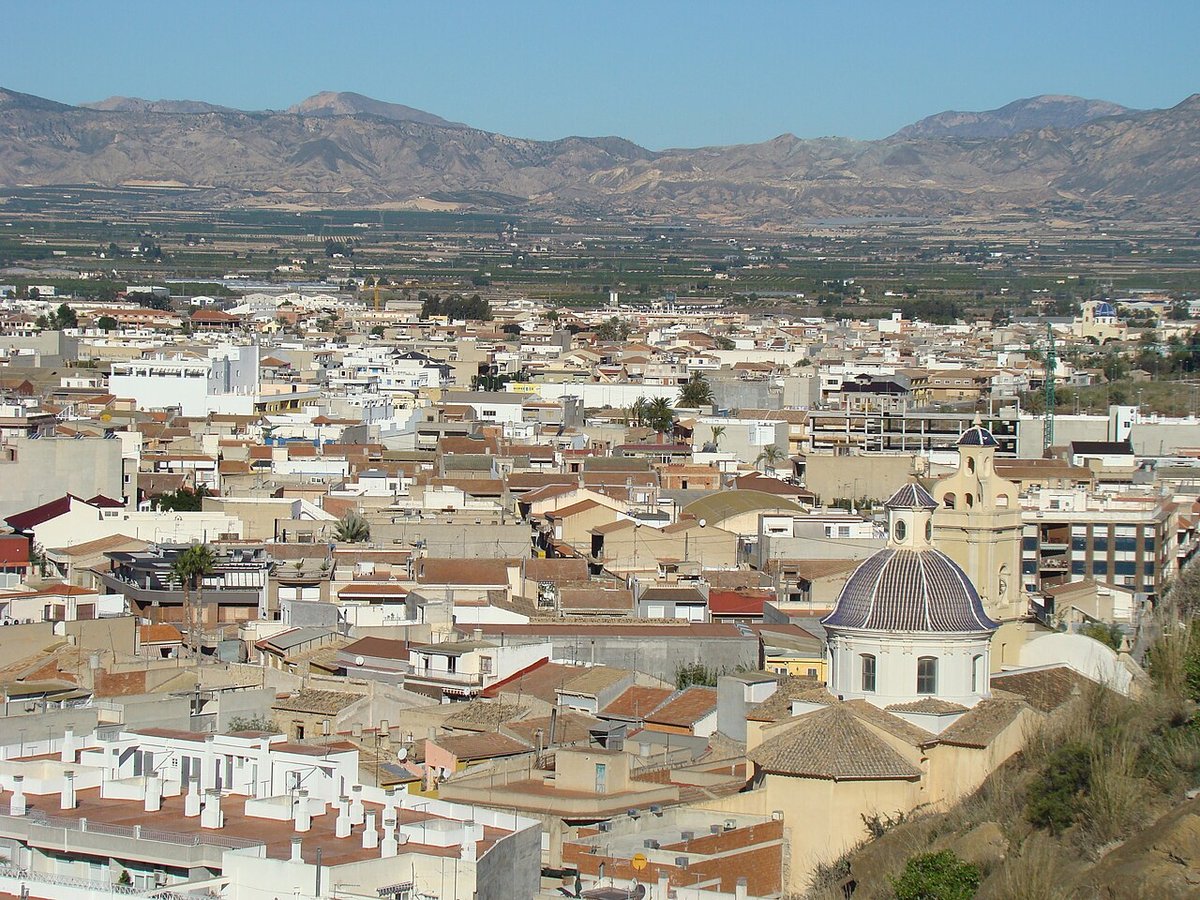
The first church bells on Sunday ring out from the tower while Calle Mayor still smells of fresh bread and the lemons being unloaded into the square. In Pilar de la Horadada, dawn feels purposeful. The sky often clears early, and the horizon stretches in a straight line, uninterrupted by high-rise buildings. By eight there is enough light from the seafront promenade to make out the outline of the Torre Vigía. By nine the sun is already so strong that the streetlamps look almost theatrical.
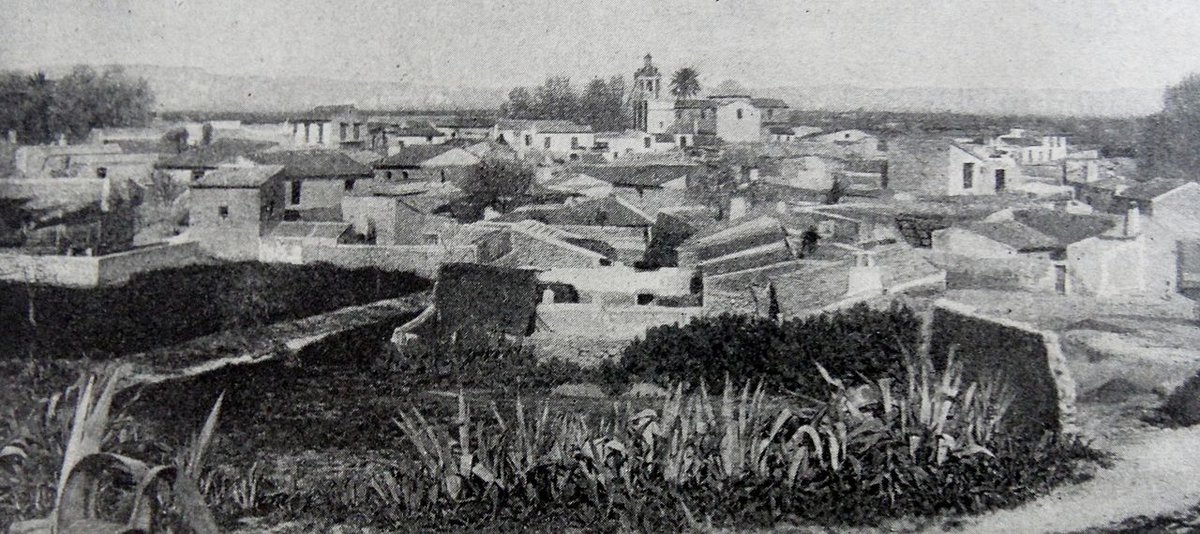
This is the southernmost municipality in the province of Alicante, right on the border with Murcia. That sense of edge, of being at a threshold, shapes both its landscape and its history. Sea and farmland meet without fuss, and daily life still begins early, before the heat settles in.
The Sea That Drilled the Rock
The town takes its name from the Torre de la Horadada, the stone watchtower that stands beside the sea. Horadada means pierced, a reference to the rock shaped by cannon fire and centuries of erosion. The coastal tower was built at the end of the 16th century to watch for possible incursions from the Mediterranean. Today, instead of hostile sails, it looks out over windsurfers launching themselves from the cove at El Puerto.
At low tide, especially towards sunset, the rock platform reveals round pools carved out by the sea. These clear water basins become natural aquariums where children search for tiny crabs and fish. Older residents recall swimming here “before the road”, when reaching this stretch of coastline was already a small excursion.
Inland, the route of the ancient Vía Augusta once passed through this area. Much of it is now hidden beneath modern roads and agricultural plots, yet traces have surfaced: Roman remains and evidence of the old settlement of Thiar. They amount to little more than low walls and reddish soil, but they point to a corridor that has linked Murcia and southern Alicante for centuries. This has long been a place of passage.
That same reddish earth supported one of the municipality’s defining activities for decades, the cultivation of carnations. Greenhouses still dot the landscape. At midday their plastic coverings reflect the light, and from a distance they resemble sheets of water laid across the fields.
The Dry River’s Labyrinth
To the west, the Río Seco has carved out a small labyrinth of ochre ravines. For most of the year no water flows, yet the riverbed continues to shape the terrain. Tree roots protrude from clay walls, and small birds shelter in the hollows of the embankments.
A footpath winds between rosemary and cantueso, a type of wild lavender. On the rocky faces it is common to see kestrels hovering. Sit quietly for a while and the steady sound of crickets seems to rise from the cracked earth itself.
In summer it is wise to set out early. From midday onwards the stone radiates accumulated heat and the trail becomes harsh underfoot. Water, a hat and a patch of shade to pause in are essential. In September, after the first rains, wild boar tracks sometimes appear, descending from the area around Sierra Escalona.
The landscape here is dry, open and exposed. It contrasts with the seafront yet belongs to the same rhythm: intense light, long mornings, and evenings that cool gradually rather than suddenly.
Carnations and Gunpowder
Around 12 October the main square fills with mounds of flowers. For several days carnations return to their town in transformed form. Local cooperatives and neighbours contribute thousands of stems, placing them carefully onto wooden frames until they create an image of the Virgin. The streets nearby end up carpeted with petals, and the air smells green and freshly cut.
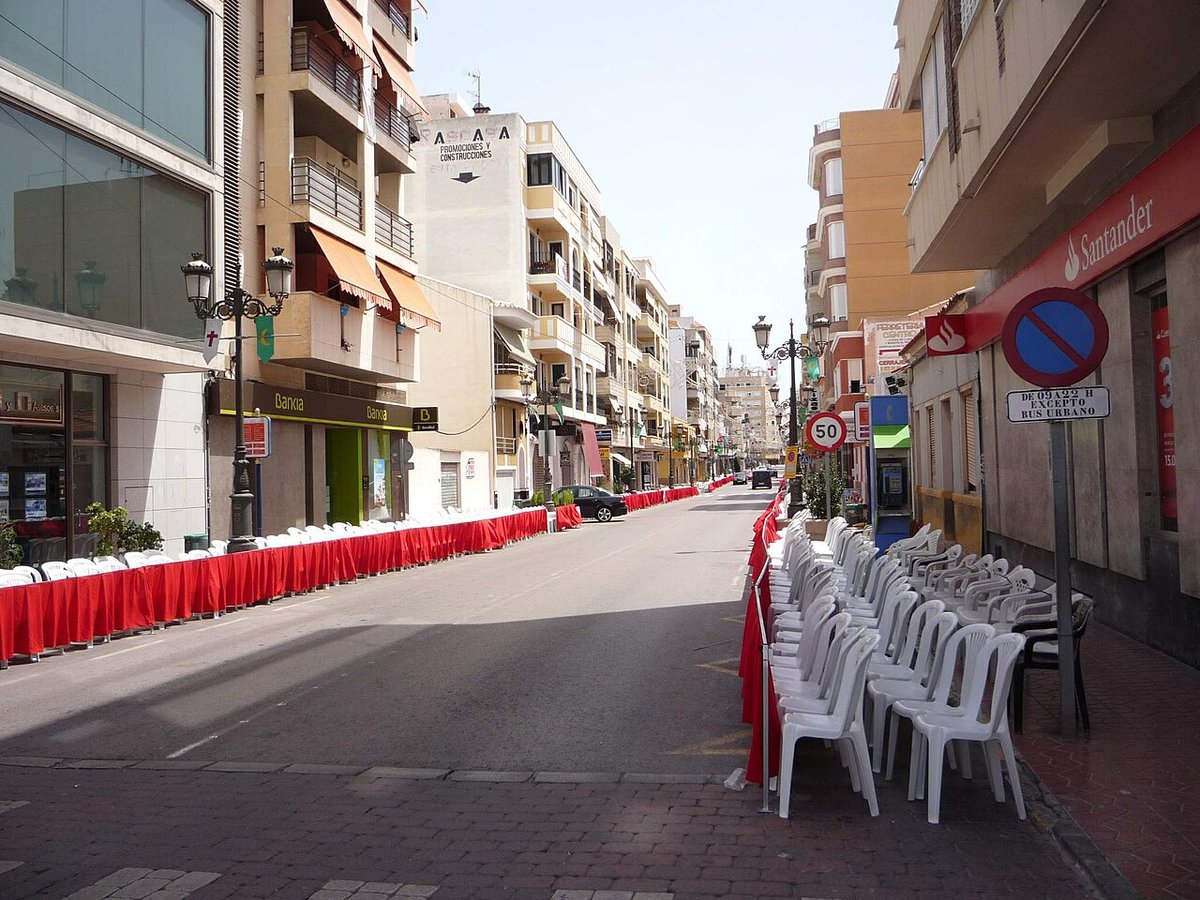
Another significant date usually comes at the end of July, marking the municipality’s separation from Orihuela. It is not a celebration designed for vast crowds. Families bring tables out onto the pavements, share dinner in the street and play music late into the night while the warm evening air moves between the buildings. It has the feel of a community marking its own calendar rather than staging a spectacle.
These festivities reflect two strands of local identity: devotion and independence. The carnation, once an economic staple, becomes an offering. The anniversary of segregation recalls a relatively recent chapter in which Pilar de la Horadada defined itself administratively and socially.
From Sea to Field: What’s on the Table
Around the Torre area, cooking looks towards the sea, yet it also draws heavily from the countryside. When fishing has been good, rice dishes and calderos de pescado, a rich fish stew traditionally cooked in a single pot, appear on the table. Still, in many households the dish that anchors the week is migas: soaked breadcrumbs fried with garlic and served with pieces of longaniza sausage and panceta.
Another local favourite is coca de cebaola. It is made with a thin dough base, topped with dried tomato and red onion confit in olive oil. It is eaten with the hands and inevitably drips down the wrist.
On Sundays, many families continue to prepare a stew of potatoes with meat and pelotas. These pelotas are balls of minced pork simmered in a thick broth. As they cook, the kitchen fills with the scent of thyme and toasted bread.
The cooking here reflects the same dual character as the landscape. There is fish when the sea provides it, and there is hearty, bread-based fare rooted in fieldwork and long mornings outdoors.
Getting There and Choosing the Moment
Pilar de la Horadada does not have a train station. The nearest high-speed AVE stop is usually Orihuela-Miguel Hernández. From Alicante Airport, the journey via the AP‑7 takes around three quarters of an hour. From Murcia, it is a straightforward drive along the motorway.
October tends to bring clear days and mild temperatures. In August, by contrast, the heat presses down and the sand can remain scorching well into the afternoon. If dates are flexible, it is worth avoiding the second half of that month. Summer concerts coincide with the highest influx of visitors, and parking in areas such as Mil Palmeras demands patience.
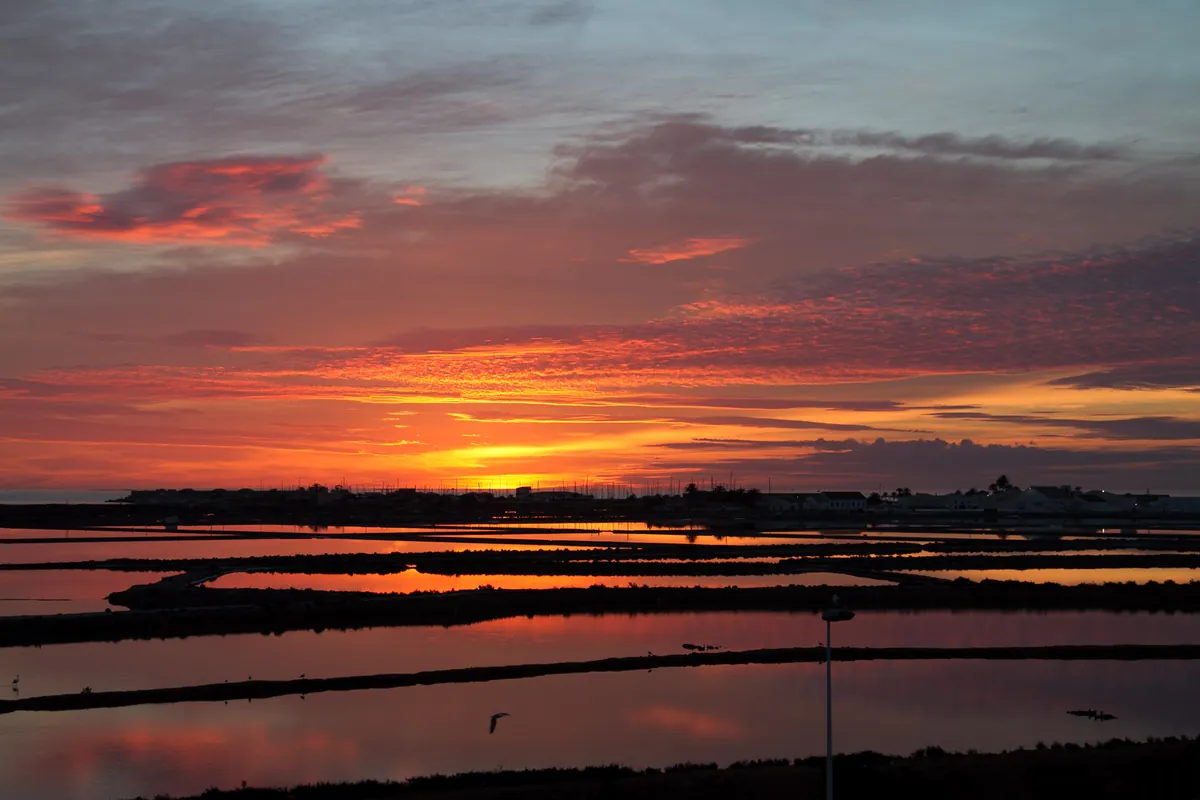
As evening approaches and the sun begins to drop, the open fields around the town offer a final change of tone. The light turns pink over the dry earth and swallows fly low. The day, which began with bells and bread on Calle Mayor, eases to a close in warm air scented faintly of dust and sea salt.