Full Article
about Torrevieja
Tourist and salt-producing hub; known for its pink lagoons, habaneras, and city beaches
Hide article Read full article
The air on the seafront at nine carries two distinct layers: a base note of dry salt from the inland lagoons, and a top note of sun cream from the early walkers. Pensioners with dogs discuss the previous evening’s prices in English, while in the distance, the Laguna Rosa flashes a pink so intense it feels like an optical trick. That colour is the first honest fact of the place. It comes from microscopic algae, and it means business—this water is so saline it buoys you up with an unnatural lightness, as if the sea itself has forgotten how to let you sink.
Torrevieja is built on that salt. The white pyramids of it are visible from the road, and lorries move steadily through the flats. The Parque Natural de las Lagunas is a vast, surreal plain of pink and green water, a landscape that feels transplanted from another continent. Paths skirt the lagoons, made for walking or cycling. Go late. When the sun drops in the west, the water shifts to a fluorescent fuchsia and the air smells of damp salt crust and earth warming all day.
For context, the Museo del Mar y de la Sal holds the practical history: photographs, salt pans in miniature, a model of the frigate Virgen del Carmen. That model matters. Each July, during the festival of the Carmen, its real-life counterpart leads a procession of dozens of boats out to sea. It’s one of the few days where the seasonal rhythm pauses, and the town feels whole.
A walk between watchtowers
The Torre del Moro at Cabo Cervera is made of rough stone pitted by wind. It was built to watch for pirates, and it still serves as a lookout. The view south is a frank chronology of the coast: small coves give way to the orderly lines of the harbour, and beyond that, the apartment blocks. The light here is clear and harsh, bleaching the rock.
From the port begins the Dique de Levante, a long concrete breakwater that points straight into the Mediterranean. Walking its length has a hypnotic rhythm—the wind pushing back, gulls lined up on lampposts like spectators, the water shifting from a clear blue to a deep navy near the end. It’s always windier than you expect.
Further north, the Torre de la Mata is lower and more solid. The atmosphere here is quieter. A paved path runs along the coast, used by locals on bikes and on foot during the week. By Saturday, it slows to a shuffle, shared with scooters and families heading to the beaches.
The taste of salt and basil
The central market still smells of the sea. Look for peix sec, fish split open and dried until it’s leathery, its aroma sharp and unmistakable. It’s used for grilling or for giving depth to a stew.
The surprise comes from the bakeries. Cocas are topped with fresh basil, pine nuts, and a scattering of sugar. Here, basil isn’t an herb for pasta; it’s from the garden plot out back, its scent mixing with hot dough in a way that makes sense after one bite. On Sundays, homes cook caldero, a rice dish from nearby Tabarca that uses rock fish and a dark, concentrated stock. For dessert, borrachos sit in bakery windows—sponge cakes sodden with syrup, rum, and cinnamon, almost too substantial to finish.
Finding a quieter rhythm
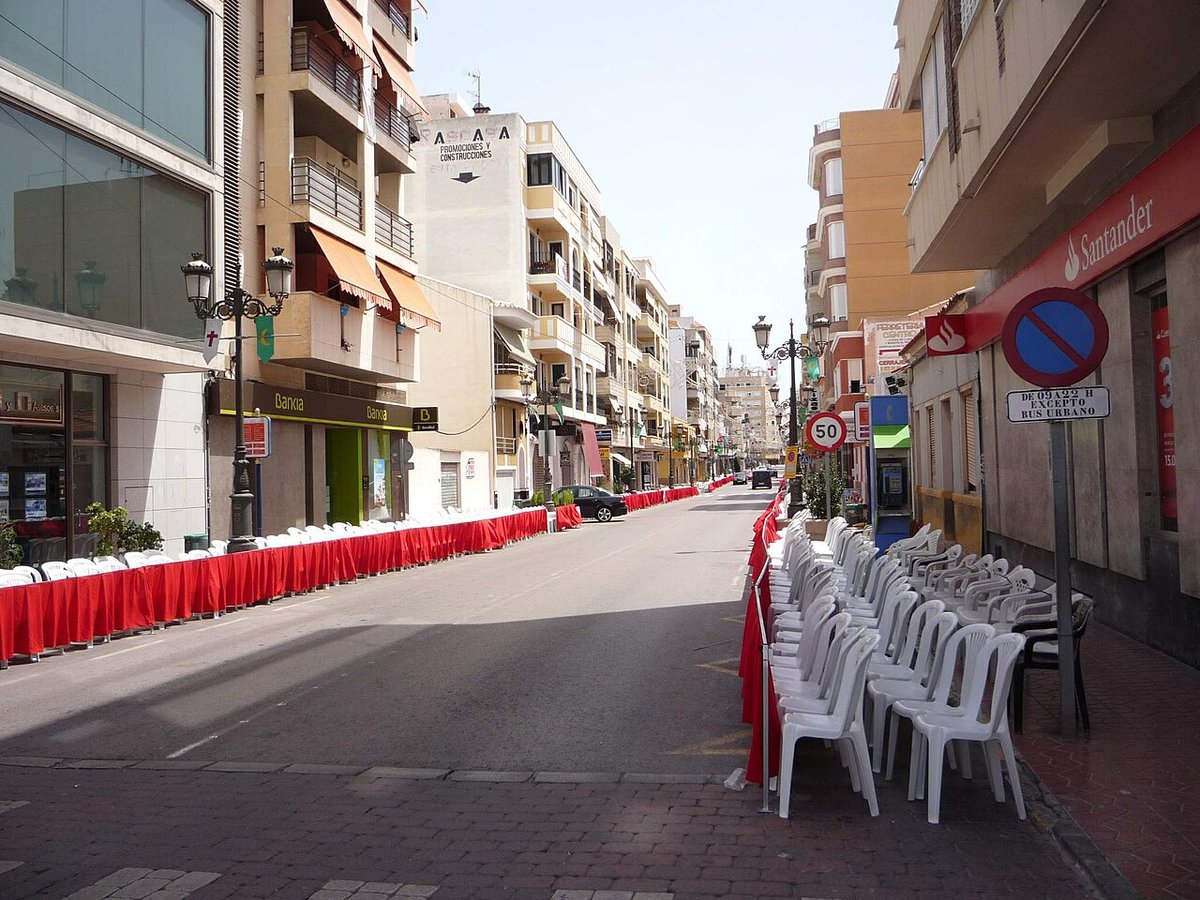
Come in spring, May if you can. The patron saint festivals fill streets with brass bands and neighbours who bring their chairs out to the pavement. It’s noisy, but it’s a local noise.
August is a different equation. The population swells, traffic thickens, and a parking spot near sand becomes a minor victory. If you’re here then, get up early. Before eight, the sea is flat and the promenade echoes with footsteps and soft talk.
Another marker is the Habaneras festival in summer. Choirs gather on the beach at Playa del Cura as night falls. People bring folding chairs onto the sand. When the most familiar songs start, whole sections of the crowd join in—a low, resonant hum over the water.
What stays with you afterwards is sensory. A fine dust of salt sticks to your sandals for days. There’s a faint scent of dried algae that seems to have woven itself into your clothes. Torrevieja leaves that trace: part mineral, part memory of pink water at dusk.