Full Article
about Monforte del Cid
Historic municipality that grows table grapes; it holds a major Iberian treasure (replica).
Hide article Read full article
A practical stop near Alicante
If you are considering tourism in Monforte del Cid, it helps to be clear about what it is and what it is not. This is an agricultural town about twenty minutes from Alicante airport. Vineyards surround it, the landscape is dry and hilly, and many of the streets slope upwards. There is no beach, no seafront promenade, no long list of attractions. It is somewhere to pause briefly, look around, and then continue your journey.
Monforte del Cid sits slightly elevated above the surrounding plain. Approaching from the A‑31, you leave the motorway towards the town and within a few minutes you are entering the urban area. From a distance, it appears compact, gathered on a small rise above the Vinalopó valley.
Parking is usually straightforward. Spaces can often be found along Avenida de la Constitución and in the streets near the health centre. There are no paid blue zones. During local festivals and in August it can take a little longer to find a spot, but for most of the year it is not a problem.
Once parked, the centre is easily explored on foot. The streets climb towards the upper part of town, so expect a short uphill walk if you want the best views.
Castle remains and the heart of town
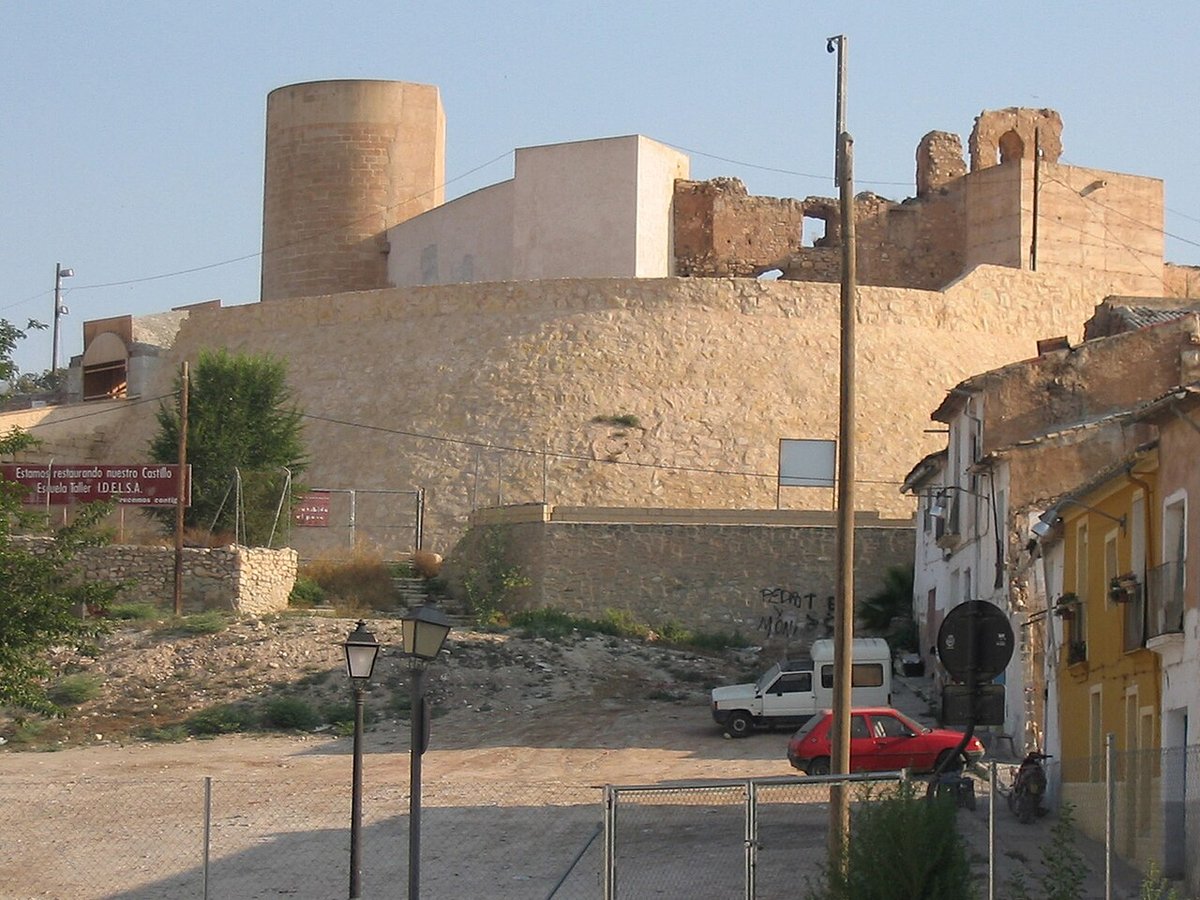
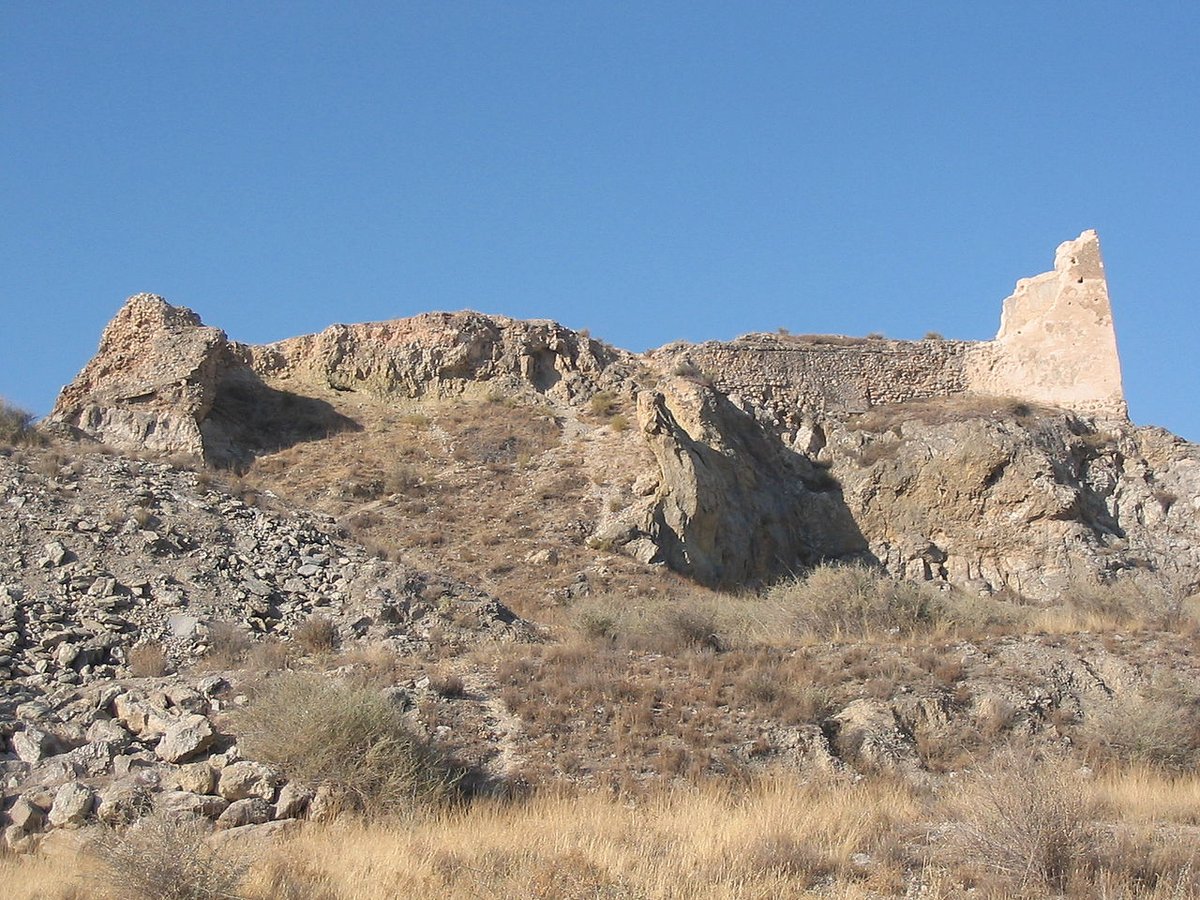
At the highest point are the remains of the castle. Expectations should be realistic. What survives are sections of wall and restored areas rather than a large, intact fortress. The structure itself is modest.
What makes the climb worthwhile is the setting. From here, there are clear views across the Vinalopó valley and over the vineyards that define much of the municipality. The ascent from the main square takes only a few minutes, and it is more about the panorama than the monument.
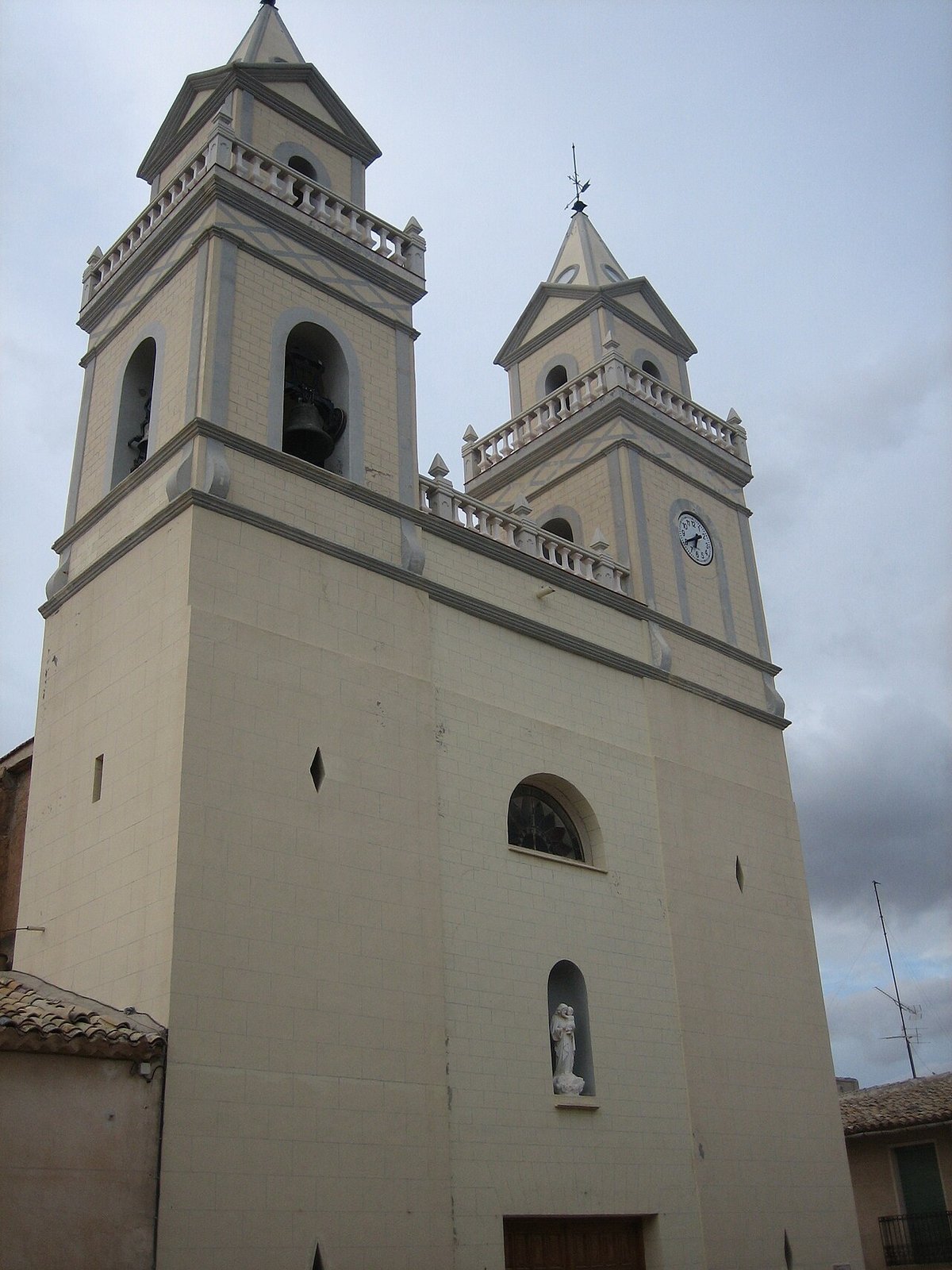
Back in the centre stands the Iglesia de Santa María, an 18th‑century church with a simple Baroque façade. Its bell tower is visible from almost any street in the old quarter and acts as a useful point of reference while walking around. It is sometimes open in the morning. In the afternoon, access depends very much on the day.
Near the town hall there is usually a small display of archaeological remains found in the area. It is something modest rather than a formal museum, and at times it can only be viewed if municipal staff are present. As with much in Monforte del Cid, it rewards a quick look rather than a long visit.
The uva embolsada and the Vinalopó landscape
Much of daily life in Monforte del Cid revolves around the uva embolsada del Vinalopó. This is a distinctive way of growing table grapes. As the bunches develop, they are covered with individual paper bags to protect them while they mature.
If you drive or walk along the rural roads around the town in late summer or autumn, the vineyards are dotted with white points where each bunch has been wrapped. It is a striking sight once you know what you are looking at.
These are the grapes that many Spanish families buy for New Year’s Eve. In Spain it is traditional to eat twelve grapes at midnight on 31 December, one for each chime of the clock. The grapes from the Vinalopó area are often chosen for that night. They usually contain pips and are known for their sweetness.
There is no need to search out specific walking routes. Simply heading out along the local roads that encircle the town is enough to see the fields. In season, some cooperatives sell directly to the public, though details vary and it is best to check locally.
The agricultural setting explains much about Monforte del Cid. This is not a resort town but a working place shaped by the cycle of the vines and the surrounding dry hills.
Moros y Cristianos in December
At the beginning of December, around the feast of the Immaculate Conception, Monforte del Cid holds its Moros y Cristianos celebrations. These festivals, common in parts of the Comunidad Valenciana, commemorate historical conflicts between Muslim and Christian forces during the Middle Ages. Each town has its own version.
During these days, the atmosphere changes noticeably. There are parades with comparsas, or groups representing different sides, and in the mornings the sound of arcabuz gunfire echoes through the streets. Participants dress in elaborate costumes, and much of the activity takes place in the centre and the higher streets.
This is not a festival designed primarily for tourists. Most of those taking part are from the town itself or from nearby localities. Visitors are welcome to watch, but the focus remains local.
Early December in this part of the Vinalopó can be cold. Wind often funnels up from the valley and is especially noticeable in the upper streets near the castle remains. Warm clothing is advisable if visiting during the festivities.
Traditional dishes in the square
Around the main square and in the nearby streets there are several long‑established bars. Menus are usually short and centred on traditional, hearty dishes.
One of the most typical is cocido con pelotas. This is a broth with chickpeas and large balls made from minced meat and spices. It is filling and closely associated with the area. It does not appear on the menu every day, so it is worth asking if it is available.
Another dish that often appears is gazpacho manchego. Despite the name, this is not the cold tomato soup found elsewhere in Spain. Here it is served as a hot stew, made with game meat or rabbit and pieces of flatbread. It reflects the inland character of the region rather than any coastal influence.
The food, like the town itself, is straightforward and rooted in local habits.
A short pause between larger destinations
Monforte del Cid does not require a long stay. A walk through the centre, a climb to the upper part to look over the Vinalopó valley, and a brief look at the church and archaeological display can comfortably fit into a short stop.
Its appeal makes more sense during grape season, when the vineyards are at their most distinctive and the uva embolsada is visible across the fields. At other times, it works as a pause between larger destinations such as Alicante, Elche or other towns in the interior of the Vinalopó.
This is a place to stretch your legs, take in the dry landscape and the ordered rows of vines, and understand a little of the agricultural life that shapes this part of the Comunidad Valenciana. An hour or two is enough. After that, the road continues.