Full Article
about Novelda
Modernist city of marble; its Gaudí-inspired sanctuary stands out.
Ocultar artículo Leer artículo completo
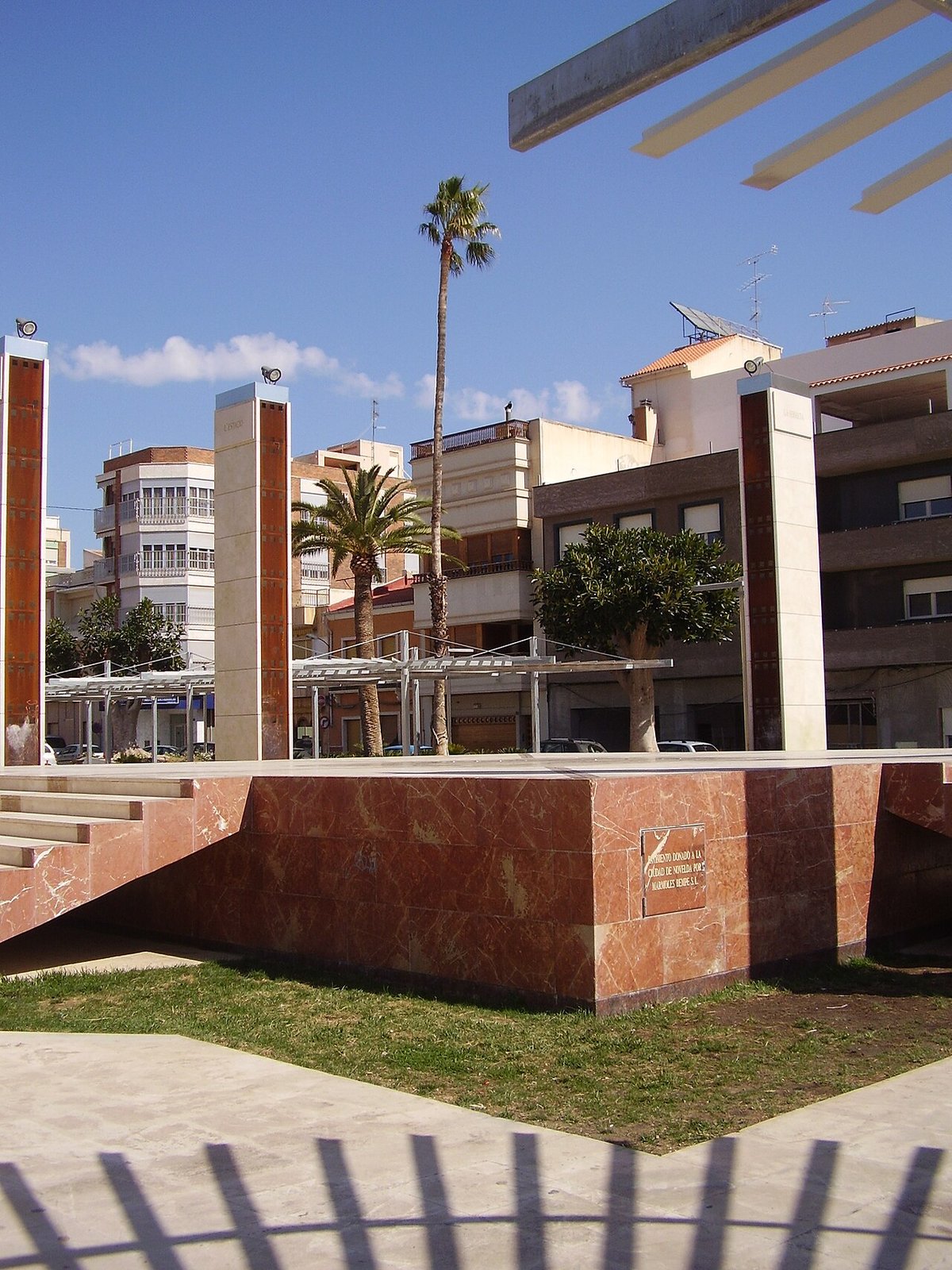
The first clue is the pavement. It glints faintly, speckled with carrara and crema marfil, the off-cuts of a town that saws, ships and exports stone to five continents. Few British visitors notice on the short walk from the free car park beneath Plaza Mayor to the tourist office, but by the end of the morning they are kicking the dust, impressed that even the kerbstones here look expensive.
Novelda sits 25 minutes inland from Alicante–Elche airport, beyond the last ring of golf resorts and strawberry tunnels. At 241 m above sea level the air is a degree or two cooler than the coast, enough to make afternoon walking bearable between late March and mid-May, when the almond blossom has blown away and the vines are still tiny green commas. The town’s 25,000 inhabitants live among marble yards rather than souvenir stalls, and the council still describes itself, matter-of-factly, as “industrial”. That honesty is refreshing after the marketing leaflets of the coast.
A Hill, a Church and a View that Travels
The postcard shot is impossible to miss: blue mosaic domes rising from a honey-coloured ridge like something Gaudí forgot to finish. The Santuario de Santa María Magdalena was begun in 1918 by a local disciple of the Catalan master, paid for by the profits of grapes and stone. British motorists usually spot it first from the A-31, swear, then spend the next ten minutes arguing about whether it is actually Gaudí. It is not, but the spiral staircase, hyperbolic arches and ceramic lizards do a decent impersonation.
The access road twists for 3 km above the town. There is no bus, so you either drive (plenty of space at the top) or walk the old pilgrim path that starts behind the cemetery. The gradient is steady rather than brutal, yet in July sun the 45-minute hike feels longer; carry water and expect dusty shoes. At the summit the valley opens westwards across a patchwork of vineyards and white-earth marble quarries that look like snowfields in high summer. On very clear days the horizon line is Sierra de Salinas, 60 km away; more often it dissolves into a pale Alicante haze.
Inside, the church is darker and simpler than the exterior promises. A short, free visit takes in the crypt, the original 14th-century hermitage and a small exhibition of agricultural machinery donated by local farmers who swapped donkeys for tractors in the 1960s. Sunday Mass at noon still draws a crowd; tourists are welcome but photography stops when the bell rings.
Modernista Money and a Cemetery Worth Seeing
Back in town, the marble story continues along Calle Mayor. Novelda’s Art-Nouveau heyday lasted barely twenty years (1900-1920) yet produced a dense catalogue of bourgeois houses, most of them still privately owned. The easiest to enter is the Casa-Museo Modernista (€3, closed Mondays). Former home of the Mira family, exporters of table grapes to Britain, it keeps its original gasoliers, English bathroom fittings and a lift cage that predates Valencia’s metro. Guides speak serviceable English if you book ahead; otherwise you are free to wander the ground-floor flats, counting 37 different hydraulic-tile patterns, none repeated.
Carry on for two blocks and you reach the walled cemetery, open 8 a.m.–1 p.m. and 4 p.m.–7 p.m. British visitors tend to associate Spanish graveyards with All Saints’ marigolds; Novelda’s is closer to Père-Lachaise, a sculpture garden of weeping angels and art-deco marble mausoleums. Bring change for the automated flower-vending machine at the gate, more for the photographic opportunities than filial duty.
Across the square, the 18th-century church of San Pedro and the neoclassical town hall form a sober counterpoint to all the modernista exuberance. Inside the church, look for the fresco of the Last Supper that substitutes local wine and grapes for the usual Jerusalem fare; locals insist the disciples are portraits of nineteenth-century councillors, though the verger refuses to name names.
Grapes, Nougat and the Perils of a Monday Lunch
Novelda’s restaurants do not open early or speak much English, but they are used to day-trippers from Alicante. Menus change with the agricultural calendar: rice with rabbit and snails in winter; gazpacho de Novelda (a broth thickened with meatballs and beans) the rest of the year. The fixed-price lunch rarely tops €14 and almost always ends with a slice of soft turrón, the town’s answer to nougat, less likely to remove fillings than the hard Alicante version.
British families like the seedless Vinalopó grapes, sold in 500 g punnets between August and November; they taste like dessert wine even before fermentation. If you prefer the real thing, Bodegas Casa Cesilia 5 km south offers weekday tastings in English (book online, €10 including four half-glasses and a slab of almond cake). Drivers can take away half-bottles of Moscatel that survive the hold of a Ryanair flight rather well.
Remember the Monday problem: most museums, the modernista house and several marble workshops shut their doors. The sanctuary stays open, but the town feels half asleep. Time your visit for Tuesday to Friday and you can combine culture with a spot of industrial tourism.
Dust, Noise and Living Craft
Marble working is noisy, wet and profitable. Rough blocks arrive from quarries in neighbouring Novelda and Macael, then leave as polished slabs for kitchens from Surrey to Stockholm. Two family firms, Mármoles Ibáñez and Mármoles Pérez Siscar, offer 45-minute demonstrations (free, tip appreciated) on Tuesday and Thursday mornings. You will see a 3 m saw blade slicing stone like cheese, while water tainted with calcium carbonate turns your trainers a blotchy pink. The companies are candid about health and safety: ear defenders provided, open sandals discouraged.
Smaller craft workshops in the backstreets sell off-cuts as cheese boards, citrus squeezers and cufflinks at a tenth of London prices. Haggle politely; margins are already thin.
Practicalities Without the Bullet Points
Alicante airport is a 25-minute drive via the A-31 toll-free motorway. Car hire is all but essential; the local bus company runs one daily service to Alicante and none to the coast. If you must rely on public transport, take the train to Villena (12 km) and phone for a taxi (about €18).
Parking beneath Plaza Mayor is free for the first hour, €1.20 thereafter, and keeps the car cool. Pick up the free English-language map from the tourist office inside the Gómez-Tortosa Cultural Centre (Calle Mayor 6) before you do anything else; mobile signal in the old centre is patchy and Google mislabels several one-way streets.
Summer highs reach 36 °C; the sanctuary walk is best done before 11 a.m. or after 5 p.m. In winter the same hill can be swept by a chilly wind that makes the 10 °C sunshine feel like February in Kent. A light fleece lives permanently in the glove compartment.
Worth the Detour?
Novelda will never compete with the beach for Instagram likes, and that is largely the point. Half a day is enough to see the church, the modernista house and eat a decent lunch, but stay longer and the rhythms of an inland working town take over: the 2 p.m. shutter drop, the clatter of marble lorries at dawn, the evening paseo that still circles the square three generations deep. If that sounds like a worthwhile exchange for a morning on the sand, leave the AP-7 at junction 79 and head west. The coast will still be there when you return.