Full Article
about Azuaga
Key historic town in the Campiña Sur with mining and noble past; rich architecture and wide, well-planned streets.
Ocultar artículo Leer artículo completo
Azuaga begins where the wheat ends. The road from Mérida lifts gently, and suddenly the town’s tower appears—taller than any building has a right to be this far from a city. At 600 metres above sea level, the air is already a shade thinner; in high summer it feels like breathing through linen, while winter nights can drop to freezing before you’ve finished your coffee. Most drivers thunder past on the old N-432, bound for Córdoba or the coast, which is why those who do stop find the plaza surprisingly quiet at midday, the church doors shut, and the bar owner genuinely curious about what brings a foreign number plate to town.
A tower that earns the detour
The Iglesia de Nuestra Señora de la Consolación dominates every view, and inside it dwarfs the 7,600 townspeople it supposedly serves. Four centuries of additions have produced a nave the height of a London church, plus side chapels thick with incense and the faint smell of candle wax. The tower is open by request; ring the tourist office the day before (they keep the key in a drawer behind the counter) and someone will walk you up 140 steps for nothing. From the balcony you can see the cereal plains ripple to the horizon, the castle mound to your left, and the single railway line that still carries freight but no passengers. Bring a wide-angle lens: the stone parapet is narrow and the wind brisk.
Back at ground level the Plaza de España works as outdoor living-room, auction house and gossip shop. Old men in flat caps play dominoes under the plane trees; the women’s conversations move in a slow orbit around them, shopping trolleys acting as punctuation. Order a caña at Bar Central and you’ll be served a free tapa of migas—fried breadcrumbs laced with garlic and grapes—because the barman assumes anyone thirsty at eleven in the morning must have driven a long way. Close the tab before 15:30 if you want lunch; by 16:00 the kitchens are scrubbed and the staff have disappeared home for siesta.
Ruins you can finish before the sun shifts
Ten minutes up Calle Castillo the medieval fortress has been reduced to two walls and a staircase, but the climb is worth it for orientation rather than masonry. The track is stony and shadeless; take water between May and September when the granite radiates heat like a storage heater. Interpretation boards are in Spanish only, yet the view explains itself: dehesa woodland to the south, olive groves to the north, and the town’s terracotta roofs packed inside a bend of the dry Azuaga stream. You’ll probably share the summit with a pair of local lads smoking roll-ups and discussing football transfers; they nod, unbothered, and carry on.
Downhill again, the Convento de San José is usually locked, but the caretaker lives opposite at number 7—knock and she’ll let you into the single-nave chapel for a euro donation. The altarpiece is 17th-century, gilded so thickly it looks embossed, and the air carries a faint sweetness from the lavender bushes planted where the cloister once stood. Photography is allowed; flash is not. The whole detour takes twelve minutes, perfect timing if you left the car in the free car park below and need to feed the meter before 18:00.
Bread, cheese and sheep that taste of thistle
Azuaga’s cooking is built for field hands, not food bloggers. Portions are large, sauces brown, vegetables scarce. Start with queso de la Serena, a soft sheep’s-milk cheese from Villar del Rey, 30 km east. Served at room temperature it spreads like butter with a faint tang of thistle rennet; order it templao or you’ll be given a chilled block that tastes of fridge. Follow with caldereta de cordero, lamb stew thickened with breadcrumbs and sweet paprika—comfort food rather than fiery. The local pride is migas, but ask con huevo if you want the fried egg that turns the dish from side to main. House wine comes in half-litre jugs and costs about €4; it is drinkable, sometimes memorable, always better than the only bottled Rioja on the list which carries restaurant mark-ups.
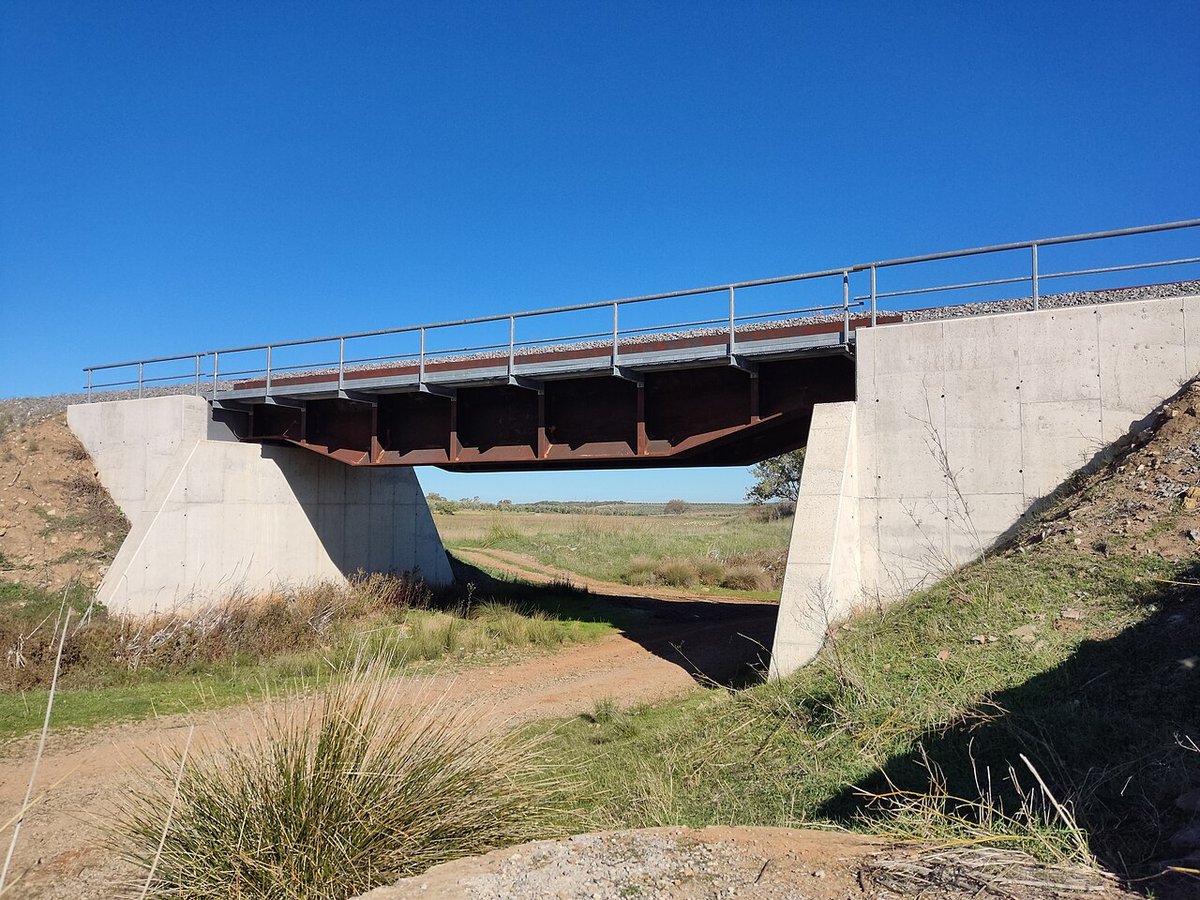
Meals finish with pestiños, honey-coated fritters scented with anise, best eaten while still hot enough to scald fingers. If you’re self-catering, the Ultramarinos on Calle Ancha stocks vacuum-packed cheese and foil-wrapped portions of Iberian ham; ideal picnic supplies if you plan to walk the old railway line that threads south-west towards the abandoned station of El Carrascón.
Paths where the only traffic is rabbits
The countryside starts at the last streetlamp. A web of unmarked farm tracks leads through dehesa—open oak pasture where black pigs graze acorns in autumn and sheep wear bells all year. The tourist office hands out a photocopied map showing three circular routes: 4 km, 8 km and 14 km. None is mountainous, but the 14 km loop does climb a low ridge giving views across two provinces. Spring brings carpets of purple lupins and enough thyme to scent your boots; after rain the clay sticks like wet cement, so sturdy soles are advisable. Summer hiking is best finished by 11:00; the thermometer regularly tops 38 °C and there is no shade outside the river gullies. In winter the same paths turn emerald, lambs appear in February, and you might meet a shepherd on a mule who will greet you with a raised stick and the traditional “Buenos días, viajero”.
When to come, and when to stay away
Easter week is serious business here—processions start at 22:00 and the drums echo off the tower until after midnight. Rooms are booked months ahead by returning families; if you dislike crowds and brass bands, avoid those dates. The August fiestas are louder still, with open-air dancing that continues until the loudspeakers finally give up at 05:00. Accommodation then is scarce and basic; the single three-star hotel triples its rates and insists on half-board.
For walkers and photographers, April–May and late September–October give daytime temperatures between 18 °C and 24 °C, fields either green or golden depending on the crop cycle, and skies washed clean by Atlantic fronts that rarely bring more than a brief shower. Mid-winter can be magical—crisp mornings, woodsmoke in the streets, and bars where an open fire crackles—but daylight is barely nine hours long and many cafés close early.
Getting there, and away again
Azuaga sits 115 km south-east of Mérida, 90 km from the A-66 motorway that links Madrid with Seville. The final 35 km from the junction at Monesterio wind through grain fields and truck traffic; allow 45 minutes and watch for agricultural vehicles at dusk. There is no railway station; the bus from Badajoz (two daily except Sunday) takes two hours and drops you at the petrol station on the ring road, a ten-minute walk from the centre. Car hire is therefore sensible if you plan to explore the dehesa or continue to Córdoba without back-tracking to the motorway.
Parking is free on the rough ground below the castle; do not attempt to squeeze into the barrio alto streets—some are single-track with stone gutters that will rip a low bumper. Electric-car chargers have not yet arrived; the nearest rapid point is at Fuente de Cantos, 28 km north.
The verdict
Azuaga will never fill a week. It might not even fill a day if you are ticking boxes. What it offers instead is scale: a church you can see from the next province, a plate of migas large enough for two, and a pace that makes the afternoon feel negotiable. Come for the tower view, stay for the cheese, and leave before the siesta ends—unless the plaza bench, warmed by winter sun, persuades you to postpone the drive and watch one more hand of dominoes.