Full Article
about Casas de Reina
Home to the striking Roman Theatre of Regina; a small town with top-tier archaeological heritage in the Campiña.
Hide article Read full article
A fine layer of reddish dust settles on the road at the edge of Casas de Reina. The morning light, still low and soft, turns the pale house walls a shade of warm cream, almost the same colour as the dry earth of the Campiña Sur. For an hour, maybe two, the only sounds are a distant tractor and the metallic creak of a gate swinging on its hinges.
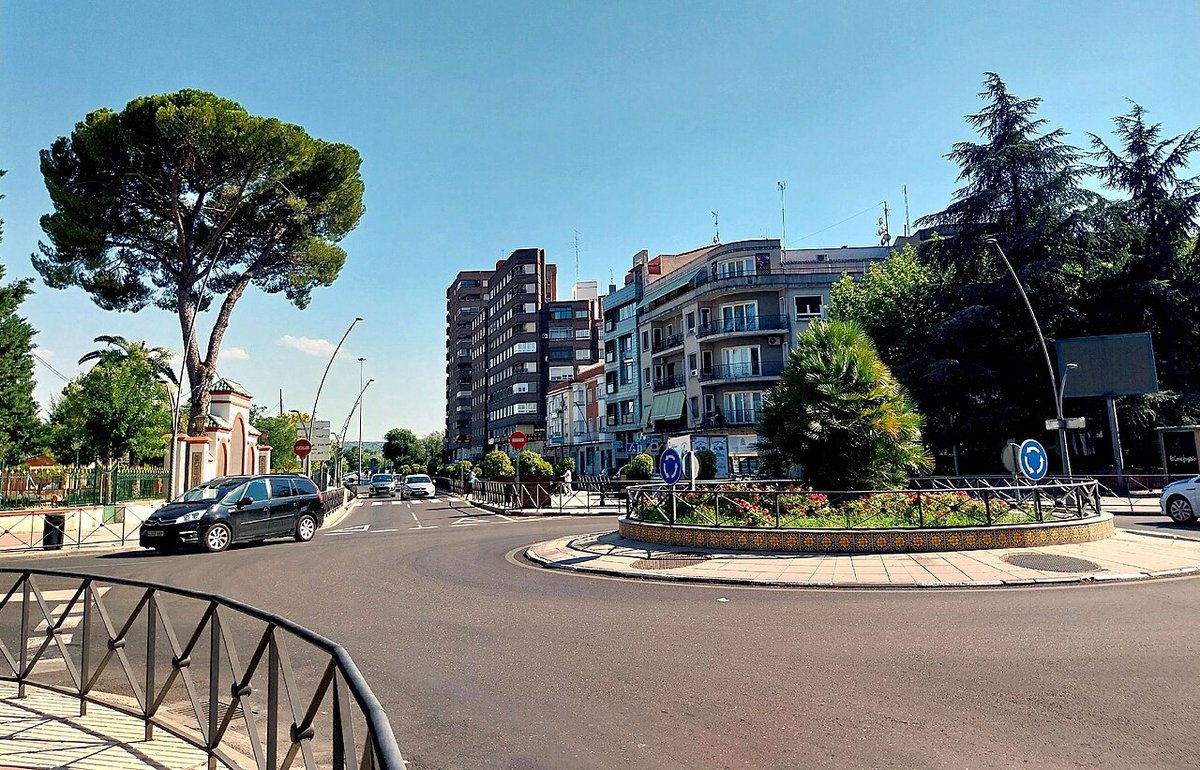
With barely two hundred residents, the village ends abruptly. There is no suburban drift. One moment you are on a street of single-storey homes with dark iron grilles; the next, your shadow falls across the first row of olive trees. The thick-walled houses were built for this climate—their interiors stay cool, their wide gates designed to let the evening air move through.
The Roman Horizon
The reason people have stayed here for millennia becomes clear a few kilometres out, at the archaeological site of Regina. Go when the stone has lost its midday burn. In the late afternoon, the low sun throws long shadows from the fragments of wall and picks out the carved detail in the theatre’s ima cavea. The wind is constant, sweeping across the plain the theatre faces.
From here, you see the logic of the place. The ancient city was placed to watch over this open country of gentle hills, olive groves and cereal fields. It feels less like a isolated monument and more like a piece of the landscape that was simply given shape. Bring water; there is no shade.
The Pace of the Plaza
Everything eventually leads back to the plaza and the church of San Bartolomé. Its early 20th-century walls are stout, its windows small. Stepping inside on a summer afternoon is like walking into a cool, quiet cellar. The square itself amplifies sound—the scrape of a chair from a doorway, the closing of a shutter—making it easy to gauge the village’s rhythm. On a regular Tuesday, it holds a deep quiet. When families return for a visit, more doors stand open and conversations criss-cross the space.
There are no panoramic miradors. You notice instead how the late sun cuts between buildings to create sharp triangles of shade on the ground, or how a line of washing moves slowly in a breeze coming off the fields.
Walking the Farm Tracks
The agricultural tracks start where the pavement ends. They lead towards Llerena and other villages, flat and straight, dividing endless olive groves and vast fields. Shade is a commodity you won’t find. Walk here in winter or early spring, after a rain, when the scent of wet soil hangs in the air and the green is vivid. By June, you’ll want to be finished by ten in the morning.
The light changes everything. In evening, each olive leaf catches a silver glint, and the rolling hills lose their harsh edges. Some years, sunflowers are planted between groves, their sudden yellow against the ochre soil startling from a distance. The best photographs are often unplanned: a worn wooden door, a hoe leaning against flaking whitewash, sheep clustering at a trough. Nothing is staged.
Seasonal Shifts on the Table and in the Air
The food follows an annual cycle rooted in what’s nearby: olive oil from local cooperatives, cured sheep’s cheese, pork from Iberian pigs. Heavier dishes appear when the temperature drops. Migas or roast lamb are for Sundays and celebrations.
The year pivots on the fiestas of San Bartolomé in late August. Then, those who live away return. The pace quickens with open-air dances and a procession, and long tables appear in streets still warm from the day’s heat. In winter, some families still observe the matanza, though it’s now a private gathering, not a public event.
Come between March and May for walking, when fields are green and temperatures mild. Autumn, after the first rains, has a similar ease. High summer demands adaptation: activity happens early or very late, when people finally emerge to sit in doorways as the air cools.
You won’t need a map for Casas de Reina. A slow walk down its main street, a turn onto a farm track, a pause to look across land that has sustained generations—that’s enough. The landscape does most of the talking.