Full Article
about Fuente del Arco
Home to the spectacular Mina de la Jayona (Natural Monument) and the Ermita del Ara (Extremadura’s Sistine Chapel); beautiful mountain setting.
Hide article Read full article
A small town on the southern edge
Fuente del Arco sits at the far south of the province of Badajoz, within the area known as Campiña Sur, right by the foothills of Sierra Morena. With fewer than seven hundred residents, it keeps the scale and feel of an agricultural settlement typical of this part of southern Extremadura. The town forms a compact cluster of streets, surrounded by olive groves and cereal fields, where daily life still follows the cycles of the land.
At around 700 metres above sea level, the elevation brings slightly cooler evenings than in the nearby plains. The streets are narrow and, in places, gently sloping, linking a group of whitewashed houses that has barely spread beyond its traditional layout. This is not a place defined by grand monuments. Its appeal lies more in how the town has taken shape over time and in the landscape that frames it.
Streets shaped by everyday life
As in many towns across this part of Extremadura, the parish church occupies one of the most visible points in the urban centre. The current building largely reflects later renovations, with a simple nave and a tower at the foot of the structure. It is not especially rich in artistic pieces, yet it plays a central role in organising the surrounding streets.
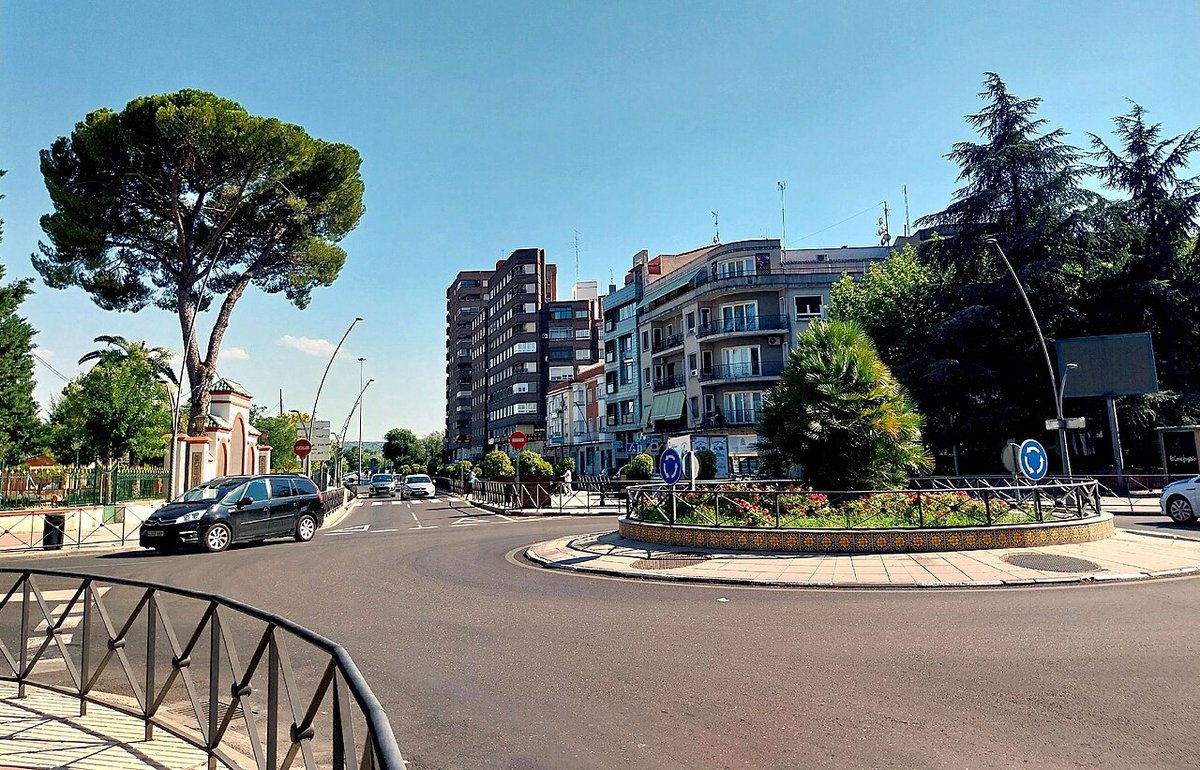
Walking through the centre reveals houses of one or two storeys with very restrained façades. White limewash, simple iron grilles and wooden or metal doorways dominate the look. These homes were designed with practicality in mind rather than display. Some still preserve elements of traditional domestic architecture, including interior courtyards or agricultural spaces, reminders that for decades many families combined living and working under one roof.
The town centre is easy to cover on foot. In less than an hour, it is possible to cross almost the entire settlement, pausing in small squares or along streets that retain their irregular, historic layout. The experience is less about ticking off landmarks and more about observing how the built environment reflects a long-standing rural way of life.
Fields, tracks and traces of mining
Beyond the last houses, the landscape opens up quickly. Here, the Campiña Sur presents a mix of olive groves, cereal plots and small areas of dehesa as the terrain rises towards Sierra Morena. The agricultural tracks leading out from the town are still in daily use, so encounters with farm machinery or people at work are part of the scene rather than an exception.
Autumn brings a noticeable increase in activity during the olive harvest. This period offers a clear view of the area’s economic rhythm. Groups working among the trees, trailers moving in and out of the town, and long working days all shape local life at this time of year.
Not far away lie former mining areas within Sierra Morena. Some of these operations have been closed for decades, yet they remain part of the recent history of the region. They help explain why this stretch of southern Badajoz combined agriculture and mining through much of the twentieth century, leaving traces that still define the wider landscape.
Festive dates and daily routines
The local calendar revolves around religious celebrations and community gatherings. In summer, usually in August, Fuente del Arco holds its patron saint festivities. For a few days, the population increases as those who live elsewhere return, and the streets become busier than usual.
Holy Week is observed in a more subdued manner. Processions pass through short, narrow streets, creating a close, intimate atmosphere. Residents often watch from their doorways or from street corners, keeping everything within a small, shared space.
Outside these dates, social life follows the steady pace of the town. The square, early evening meet-ups and the ongoing agricultural work all play a part in structuring the year. There is no sharp divide between daily routine and social interaction; both unfold in the same familiar settings.
Practical notes for a visit
Fuente del Arco lies in the south of the province of Badajoz, close to the border with Andalusia. From Zafra, the route follows regional roads that cross the Campiña Sur and pass through several towns of similar size.
Spring and autumn tend to be the most comfortable seasons for walking in the surrounding countryside. Summer brings strong heat around midday, although temperatures usually ease somewhat in the evening thanks to the altitude.
Getting around the town itself requires little more than walking. For those heading out along the surrounding tracks, it is sensible to carry water and wear comfortable footwear, particularly during the warmer months.