Full Article
about Higuera de Llerena
Quiet village in the Campiña Sur; noted for its Mudejar church and the La Mesilla archaeological site.
Hide article Read full article
A Slower Pace in the South of Badajoz
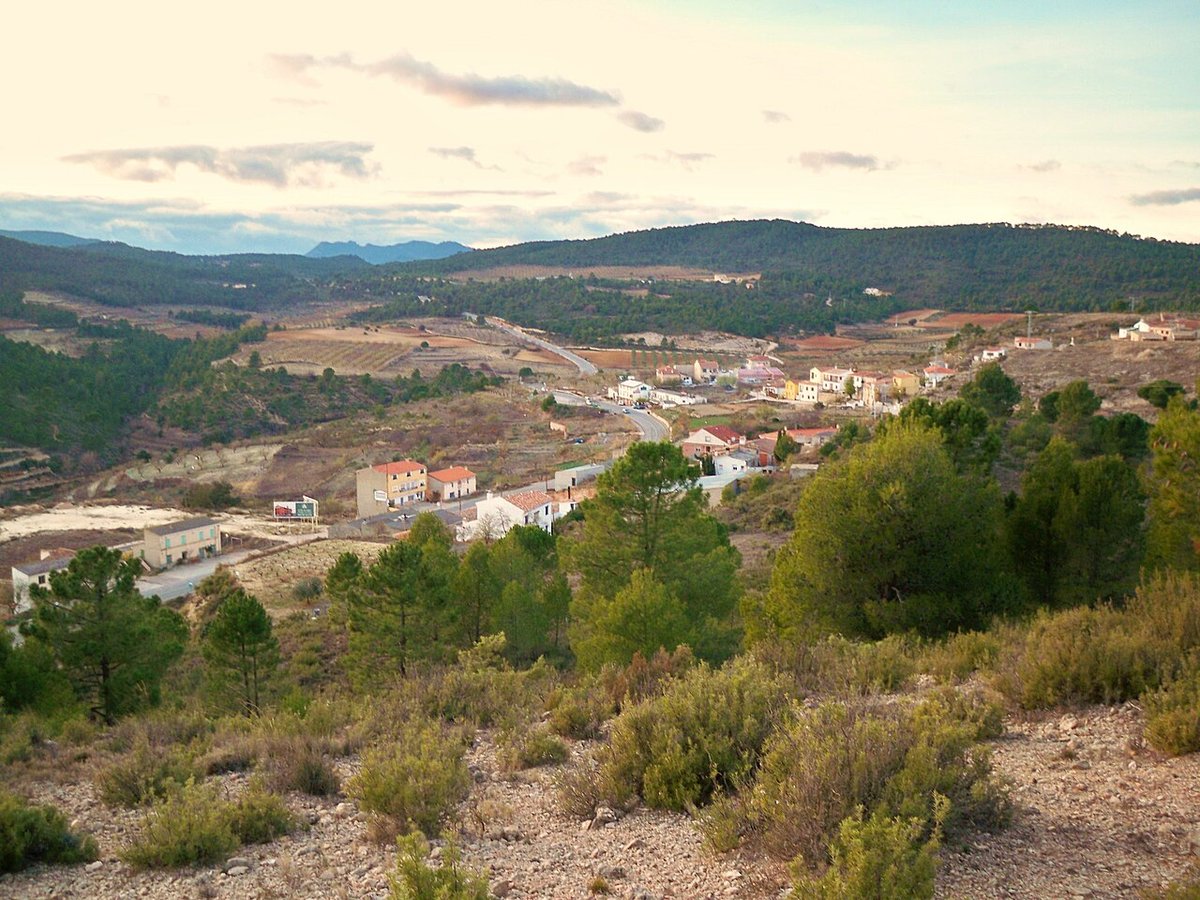
There are villages where it feels as though someone has quietly turned down the volume of the world. Higuera de Llerena is one of them. It lies in the Campiña Sur, in the south of the province of Badajoz, and has just over three hundred inhabitants. Life here still revolves around the countryside: sowing, harvesting, livestock, brief conversations in the square and cars that pass without hurry.
There are no headline sights or monuments that dominate glossy brochures. What you find instead is a way of living that is easy to recognise across this part of Extremadura. Whitewashed houses line short streets that can be walked in ten minutes. Tiled roofs sit low against wide skies. Beyond the last row of homes, open farmland stretches for kilometres.
Wheat and barley shape the landscape. The fields shift in colour with the seasons, green in spring and turning gold as summer advances. Anyone who has driven through the Campiña Sur will recognise the pattern: broad horizons, cultivated plots and gentle undulations rather than dramatic scenery. It is simple terrain, but deeply characteristic of southern Badajoz.
The Parish Church and the Traditional Houses
At the heart of Higuera de Llerena stands the parish church of Nuestra Señora del Valle, set on the main square. It is the building that draws the eye first, although it is far from grand. Built in stone, with solid walls and an unadorned presence, it reflects the practical spirit of many rural churches in Extremadura. These were structures designed to endure and to provide shade during the fiercest summer heat.
Clustered around it are the houses that form the village centre. Their façades are whitewashed, their doorways often low. Many still preserve the traditional layout common in rural Extremadura: an entrance leading into a long corridor, a courtyard at the back, and side rooms that were once used for animals or storage. Walking slowly through the streets, traces of this past remain visible. There are small corrals, vines climbing across patios, tools resting against a wall.
The countryside begins almost as soon as the village ends. Wide, orderly plots are devoted mainly to cereal crops. In spring the surrounding land is a vivid green; by summer it becomes a sweep of gold reaching towards the horizon. It is not elaborate scenery, but it defines this stretch of the Campiña Sur and frames daily life in Higuera de Llerena.
Walking Without an Agenda
Higuera de Llerena is not a place that demands a checklist. It works better without one. Park the car, wander for a while and let the layout of the village reveal itself at its own pace.
There is usually little movement in the streets, except at certain times of day. A neighbour may sit outside as evening falls. Someone returns from the fields. Brief encounters take place in the square. It is the sort of community where most people know each other, and conversations often begin with a simple enquiry about how things are going.
For those who enjoy walking, agricultural tracks run out from the village in straight lines across fields and low hills. They cross farmland and gentle rises, without much difficulty underfoot. These routes suit both walkers and cyclists looking for an easy outing. With a bit of luck, birds of prey can be seen gliding above the crops, or flocks moving between plots in search of food.
Food here follows the patterns of rural Extremadura. Dishes are hearty rather than decorative, designed to sustain long working days. Pork products are central, reflecting the region’s livestock traditions. Migas, a preparation based on breadcrumbs cooked with various ingredients, appear on many tables. There is local cheese and simple stews that prioritise substance over presentation. It is straightforward cooking rooted in what the land provides.
Fiestas and the Return Home
In August the atmosphere changes. Many residents who now live elsewhere return for a few days during the fiestas dedicated to Nuestra Señora del Valle. The streets become livelier, and the square fills with more voices than usual.
Processions are organised, along with music in the square and shared meals where local produce takes centre stage. These celebrations are less a spectacle for visitors than a reunion for people who have known one another all their lives. Families reconnect, friends meet again, and the village briefly regains part of the population it has lost over the years.
Semana Santa, Holy Week, is also observed, though in a restrained style typical of a small village. The religious floats, or pasos, are simple. The routes are short. Participation from local residents is strong, maintaining traditions that are passed down rather than reinvented.
Getting There and Choosing Your Moment
Higuera de Llerena is set within the Campiña Sur, linked by regional roads that connect several agricultural villages. Most visitors arrive by car from nearby towns in the comarca or from the city of Badajoz, travelling through long stretches of open countryside before reaching the village.
Summer brings intense heat, particularly in the middle of the day. It is wise to avoid the central hours if visiting during this season. Spring and autumn are generally more forgiving, offering milder conditions for walking along the surrounding tracks and seeing the fields at their most colourful.
Higuera de Llerena does not attempt to impress. It presents itself as it is: a small agricultural village in southern Extremadura where the rhythm of life remains closely tied to the land. There is little rush, plenty of open space and a sense that daily routines follow patterns established long ago.
For travellers exploring the Campiña Sur, stopping here offers a clear view of how rural life functions in this corner of Spain. No grand monuments, no elaborate attractions. Just whitewashed streets, cereal fields and a community that continues at its own steady pace.