Full Article
about Llera
Agricultural and livestock municipality with a cheese-making tradition; set amid dehesa and scrubland.
Hide article Read full article
Llera in the Campiña Sur
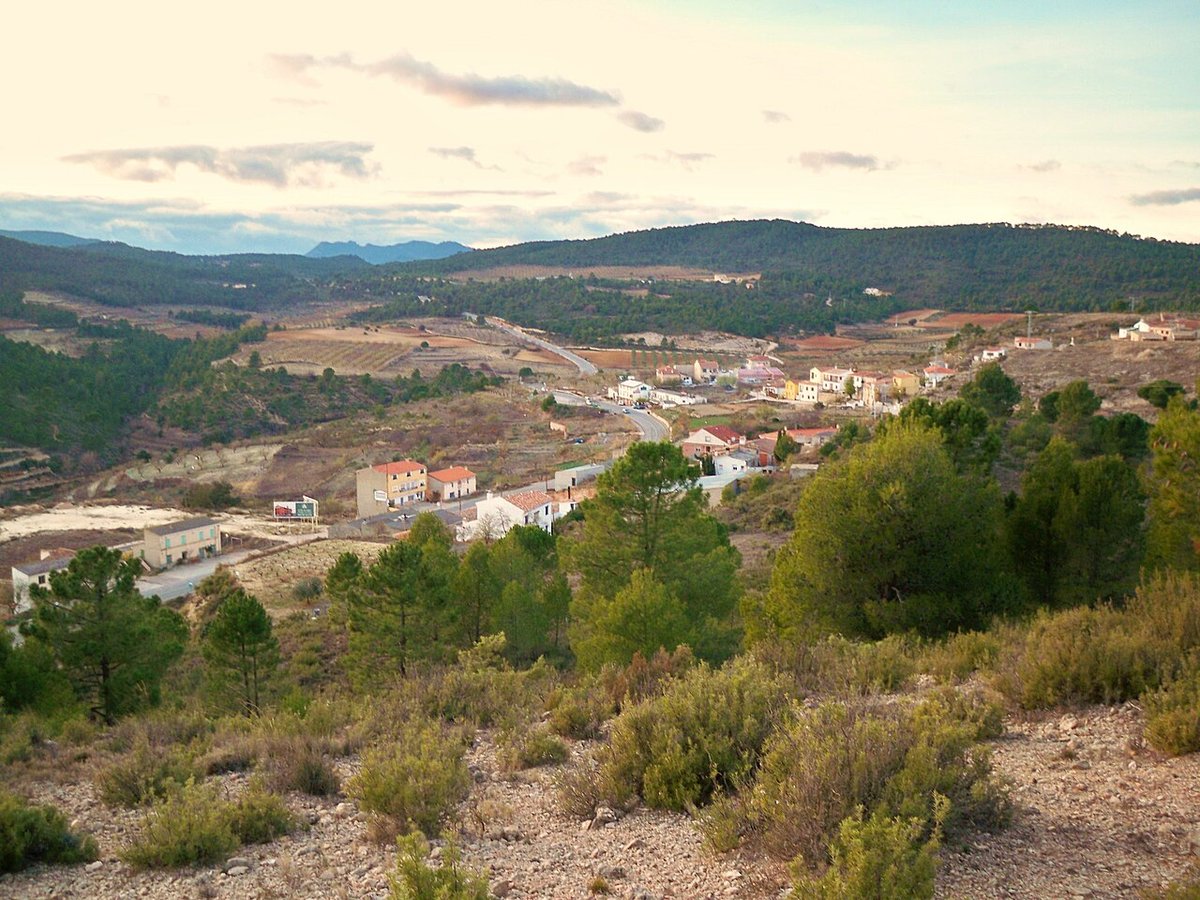
Llera occupies a stretch of the Campiña Sur in Extremadura, a terrain of low hills given over to cereal fields and olive groves. The settlement pattern here is dispersed: the village itself is the central point within a wider municipality of large agricultural plots, connected by the unpaved service tracks that serve the cortijos. Its population, around 780, has remained closely tied to the land.
The layout of the village is functional. Streets run in a largely grid-like pattern, flanked by one and two-storey whitewashed houses. Many retain wide gateways, an architectural feature from a time when homes commonly incorporated space for carts and animals. This is architecture shaped by rural work, not by ornamental design.
The church of San Sebastián
The parish church of San Sebastián provides the main vertical marker in Llera. Its construction is typically dated to the 16th century, with subsequent modifications evident in the masonry. The exterior is austere.
Its significance is primarily social. The building anchors the main plaza, a space that has long functioned as a communal focal point. Inside, the nave is simple, with a barrel vault and side chapels added later. The retablos are modest, consistent with the resources of a small agricultural community.
The surrounding square and adjacent streets maintain a domestic scale. You see iron balconies, tiled roofs, and those substantial doorways—practical details that outline a way of life organised around the farming calendar.
The agricultural terrain
The countryside begins where the last houses end. The Campiña Sur is a landscape of open horizons, defined by the seasonal rotation of crops. From any slight elevation near the village, the organisation of the land becomes clear: vast rectangles of barley or wheat, darker blocks of olive trees, and the occasional cortijo sitting back from a track.
There are no designated viewpoints. To understand the setting, walk out along one of the farm tracks for ten minutes. The continuity between the built environment and the worked land is direct and unambiguous.
Walking the service tracks
The network of unpaved tracks used by farmers and machinery also allows for exploration on foot. They are not signposted as hiking routes, but navigation is simple due to the open terrain. Always be prepared to step aside for passing vehicles.
In late spring, the colour contrast between the green cereal fields and the grey-green of the olive groves is pronounced. By summer, the palette turns to gold and dust. The structure of the landscape, however—geometric, expansive—remains constant.
Local provisions and calendar
The cooking here follows the broader patterns of inland Extremadura. Dishes are substantial: migas, stews of lamb or kid goat, and preparations from the matanza, the annual pig slaughter. Olive oil from local groves is the cooking base, a staple rather than an artisanal product.
Festivals follow the rural and liturgical year. The patronal festivities for Nuestra Señora de la Asunción in August see the population swell. The January celebration of San Antón, with its blessing of animals, points to a past linked to livestock. Easter processions are quiet, community-led events.
A practical visit
You can walk through Llera’s centre in under an hour. Start at the plaza by the church. If the door is open, go inside to see the proportions of the nave. Then, choose any street leading east or south to reach the edge of town within a few minutes.
The transition to farmland is immediate. A short walk along a track clarifies the village’s relationship to its surroundings better than any monument could.
This is a stop for context, not for a list of attractions. Its value lies in observing a specific form of rural settlement, one still visibly connected to its economic base.
Considerations for the visit
Spring and autumn offer the mildest temperatures for walking. Summer heat here is intense; limit outdoor movement to early morning or late afternoon. After heavy rain, the clay-based tracks can become muddy and difficult to walk on. In such conditions, it is more practical to remain within the paved streets of the village.