Full Article
about Valencia de las Torres
Quiet village with castle ruins and hunting country; perfect for switching off.
Hide article Read full article
A village that reveals itself slowly
Valencia de las Torres is the sort of place that makes sense after a bit of time rather than at first glance. Nothing is arranged to catch attention, and there is no obvious list of sights waiting to be ticked off. Spend a little while here, though, and the rhythm of the village becomes clear.
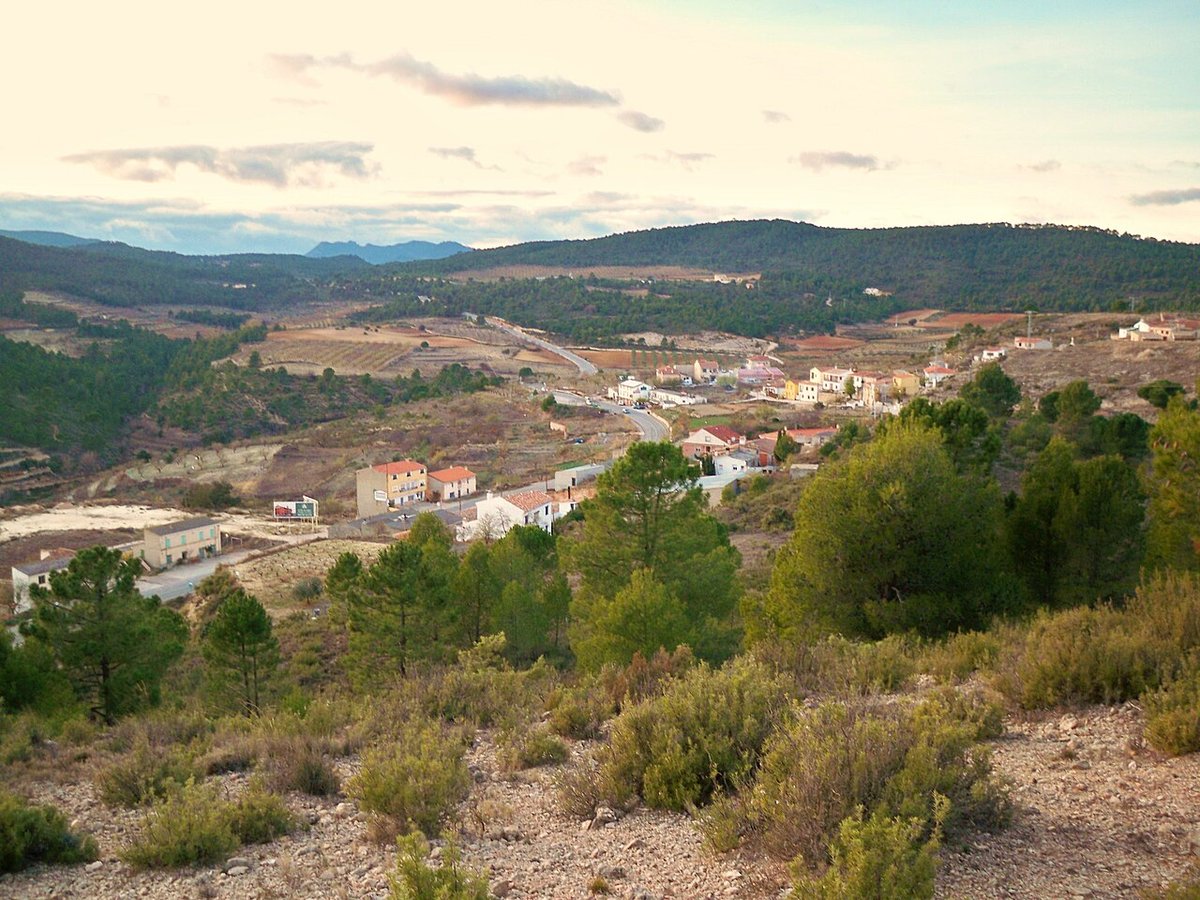
With fewer than five hundred residents, it sits in the Campiña Sur area of Badajoz, surrounded by open countryside. You can walk across it quickly, but that misses the point. The appeal lies in slowing down, noticing whitewashed façades, the occasional half-open door, and a quietness only interrupted now and then by passing cars.
It is not a place that tries to direct your attention. It simply allows you to look around and settle into its pace.
Around the church, where daily life gathers
Like in many Spanish villages, the church acts as a reference point. Here it is the parish church of Nuestra Señora de la Asunción, located in a central part of the town. Its exterior is fairly restrained, yet it has been part of the village landscape for centuries. Its origins are traditionally placed in the 16th century, with later changes over time.
Much of daily life unfolds in the surrounding area. There are benches where people sit and talk, neighbours crossing the square on errands, and a sense that most people know one another.
Walking along streets such as Calle Mayor or Calle Real, names found all over Spain but still fitting here, you come across simple houses, many with interior courtyards. There are no grand restorations or façades designed for display. These are homes built for living in, not for presentation.
The square works as a kind of shared living room. Towards the end of the day, small groups gather, conversations drift along at an easy pace, and children pass through on bicycles. It is an everyday scene that says more about the place than any guidebook summary.
The surrounding countryside
Step outside the built-up area and the landscape shifts quickly. This part of the Campiña Sur opens into wide fields with scattered holm oaks, dirt tracks, and the occasional agricultural or livestock operation in the distance.
Not far from the village there are dehesa areas, a type of pastureland typical of western Spain, along with paths that locals have used for years to reach the countryside or move livestock. There is little in the way of signposting or interpretation. These are ordinary tracks, used because they have always been there.
The look of the land changes with the seasons. Spring brings greener tones and a striking contrast with the clear skies typical of this part of Badajoz. Autumn shifts everything towards drier, ochre colours, giving the countryside a different character.
For anyone who pays attention to birdlife, there is steady movement. Birds of prey circle above the fields, while smaller birds gather around puddles after rain. It is not presented as a spectacle, yet there is a quiet sense of activity if you walk at an unhurried pace.
Walking without a plan
One of the appealing aspects of Valencia de las Torres is how easy the surrounding terrain is for walking. Many of the paths are flat or gently sloping, with compact earth underfoot. It is the kind of ground where you can walk for an hour without really noticing the time pass.
There is no need to map out a route in advance. Simply leave the village along one of the agricultural tracks and continue for a while. Along the way, it is common to come across a tractor, a local working the land, or just the gradual change of scenery as you move further out.
The walk is less about reaching a specific destination and more about switching off for a while.
Food rooted in tradition
The cooking in this part of the Campiña Sur draws on what the land has provided over generations. Pork features heavily, along with slow-cooked stews and dishes designed to sustain long working days.
Homemade cured meats are common, as are locally produced cheeses. When the weather turns colder, spoon dishes take centre stage. Morcilla extremeña, a type of blood sausage typical of Extremadura, often appears in stews with potatoes or lentils, and its flavour stands out particularly when made at home.
It is straightforward food, filling and practical, the kind that leaves you ready for a rest afterwards.
When to visit
Spring and autumn tend to be the most comfortable times to spend time in Valencia de las Torres and its surrounding countryside. Temperatures are moderate, and the light in this part of Extremadura is notably clear.
Summer brings strong heat, as in much of the province of Badajoz. During that season, it makes more sense to be out early in the morning or later in the day.
Winter mornings and evenings can be cold, though there are also plenty of clear days that make a walk after breakfast appealing.
What to expect, and what not
It is worth being clear about what Valencia de las Torres offers. There is no collection of major monuments, and the streets are not arranged with tourism in mind. This is a small agricultural village with a calm, steady pace of life.
What makes it interesting is the chance to see how a place in the Campiña Sur continues to function without embellishment. Short streets, conversations between neighbours, and open countryside in every direction define the experience more than any single sight.