Full Article
about Almaraz
Known for its nuclear plant, Almaraz also hides rich nature: an orchid garden and a reservoir.
Hide article Read full article
Arriving without fanfare
Some places are discovered by accident, and Almaraz fits that pattern. It tends to appear when you are on your way somewhere else, crossing the wide plains of the Campo Arañuelo along one of those long, straight Extremadura roads lined with holm oaks. Then, without much warning, the village is simply there.
There is no dramatic entrance, no skyline that announces its presence. It feels more like arriving at the home of a friend of a friend. Nothing has been advertised, yet you end up lingering longer than expected.
Tourism in Almaraz does not revolve around major landmarks or an impressive historic centre. The real point of reference is the surrounding landscape: the Tagus river, the Arrocampo reservoir, and the dehesa countryside that defines this part of Cáceres more than any building ever could. With a population of around 1,600, the pace remains that of a place where people still greet each other in the street.
A village shaped by quiet routines
The centre of Almaraz can be covered quickly. Low houses, straightforward streets, and the occasional façade with a stone doorway or an old coat of arms offer small glimpses into the past. Nothing demands long stretches of attention, but there are enough details to suggest centuries of continuity.
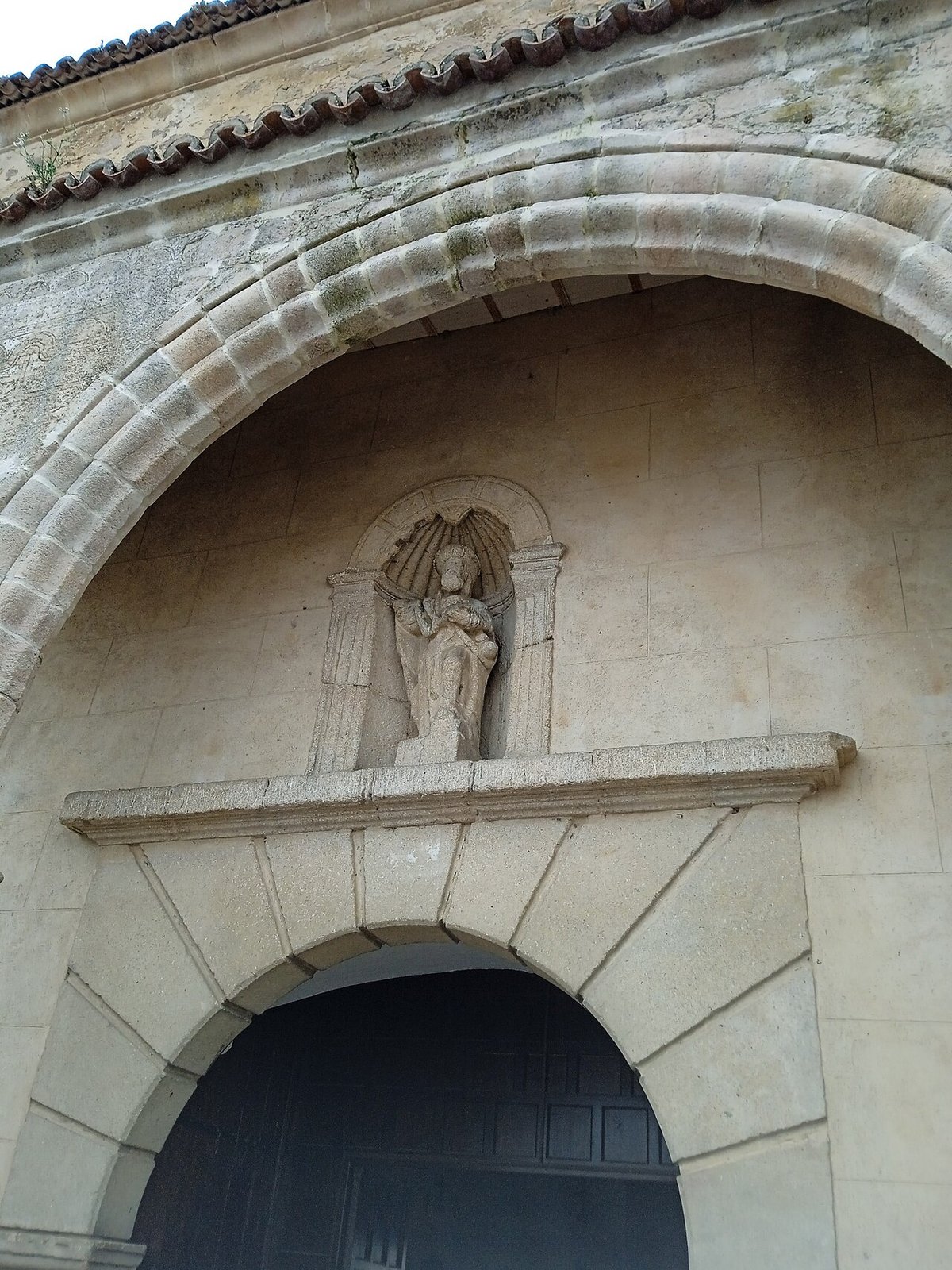
The parish church, dedicated to Nuestra Señora de la Asunción, is usually dated to around the 16th century. From the outside it is simple, built in stone and marked by time and the strong sun typical of this area. Inside, it still holds religious images and objects that remain part of everyday life rather than museum pieces.
Yet the atmosphere shifts once you move beyond the edge of the village.
Arrocampo and the rhythm of birdlife
Just a few minutes away lies the Arrocampo reservoir, which over the years has become one of the best-known spots in the area for birdwatching. For those already interested in ornithology, the appeal is obvious. For everyone else, picture calm water, dense reed beds and wooden walkways where someone is almost always scanning the horizon with binoculars.
Herons, cormorants, stilts and various species of ducks are regularly seen here. At times, groups of photographers wait patiently for that brief moment when a bird takes flight in front of the lens. Patience and silence tend to be more effective than any technique.
Beyond the water, the dehesa landscape takes over again. Holm oaks dominate, with some cork oaks scattered among them, and large estates where livestock graze at an unhurried pace. It is a typical scene in this part of Extremadura: open, slightly harsh at first glance, but gradually more compelling the longer you look.
Walking without overthinking it
One of the advantages of Almaraz is that it does not require much planning. Rural tracks lead out towards the reservoir or into the dehesa. Some are signposted, others are simply traditional paths that have been used for generations.
It is worth asking locally before heading too far out. Much of the surrounding land is privately owned, and not every path is public. In the village itself, people can usually point you in the right direction without much fuss.
Fishing also has a presence around the reservoir. Carp, black bass and pikeperch draw anglers who spend hours quietly watching the water. From the outside it may seem uneventful, but sitting there for a while tends to change that impression.
Food rooted in the land
The local cooking remains closely tied to the countryside. Iberian pork appears in many forms, from cured meats to stews and grilled cuts. Game dishes are also part of the tradition when the season allows. These are not elaborate recipes but solid, sustaining ones, the kind associated with long working days outdoors.
Autumn brings another familiar theme: wild mushrooms. In nearby pinewoods, saffron milk caps and other varieties can be found when the season has been wet. As in much of Extremadura, it is common practice to ask permission before entering private land and to forage responsibly.
Celebrations that still feel local
The main festivities revolve around the Virgen de la Asunción in mid-August. During these days, the atmosphere shifts noticeably. There are open-air dances, activities organised by local groups and a return of people who come back to the village for a short time.
Spring brings romerías, a type of traditional outing to the countryside with religious roots. Families head out together, carrying folding tables and homemade food, and spend the day outdoors with music and conversation. It is a familiar scene across many parts of Extremadura, and here it continues in a natural, unforced way.
When the landscape sets the tone
Spring is often a good time to visit. The fields turn green, and bird activity around the reservoir increases. Summer, by contrast, brings intense heat, making early starts almost essential for walking.
Winter offers a different mood altogether. Some mornings arrive wrapped in fog over the water, and the landscape falls quiet for hours. There is little in the way of structured activity, but that absence is part of the appeal.
Almaraz is not a place built around a checklist. It is somewhere to pause, walk by the reservoir, spend a while in the square and then move on with the sense of having seen a more unfiltered side of Extremadura. One that does not require much explanation to be understood.