Full Article
about Majadas
Tiétar village ringed by tobacco and corn fields
Hide article Read full article
Majadas and the Open Plain of Campo Arañuelo
The village of Majadas sits on the plains of north-eastern Cáceres, in the comarca known as Campo Arañuelo. This is dehesa country, a landscape of holm oaks and pasture shaped by centuries of grazing and dryland farming. Like many settlements here, its origins lie in the late medieval repopulation efforts, when the Crown of Castile encouraged new communities to work the land between the Tagus River and the sierras to the north. It was established as a practical, agricultural settlement, not a defensive or commercial one.
That initial purpose is still visible. The layout is open, with straight streets and low houses of whitewashed walls and local granite. There are no grand palaces or imposing monuments. The population, just over twelve hundred, lives in a municipality that is geographically broad and topographically flat. The surrounding fields and stone enclosures tell you more about the place than its architecture does.
The Parish Church of El Salvador
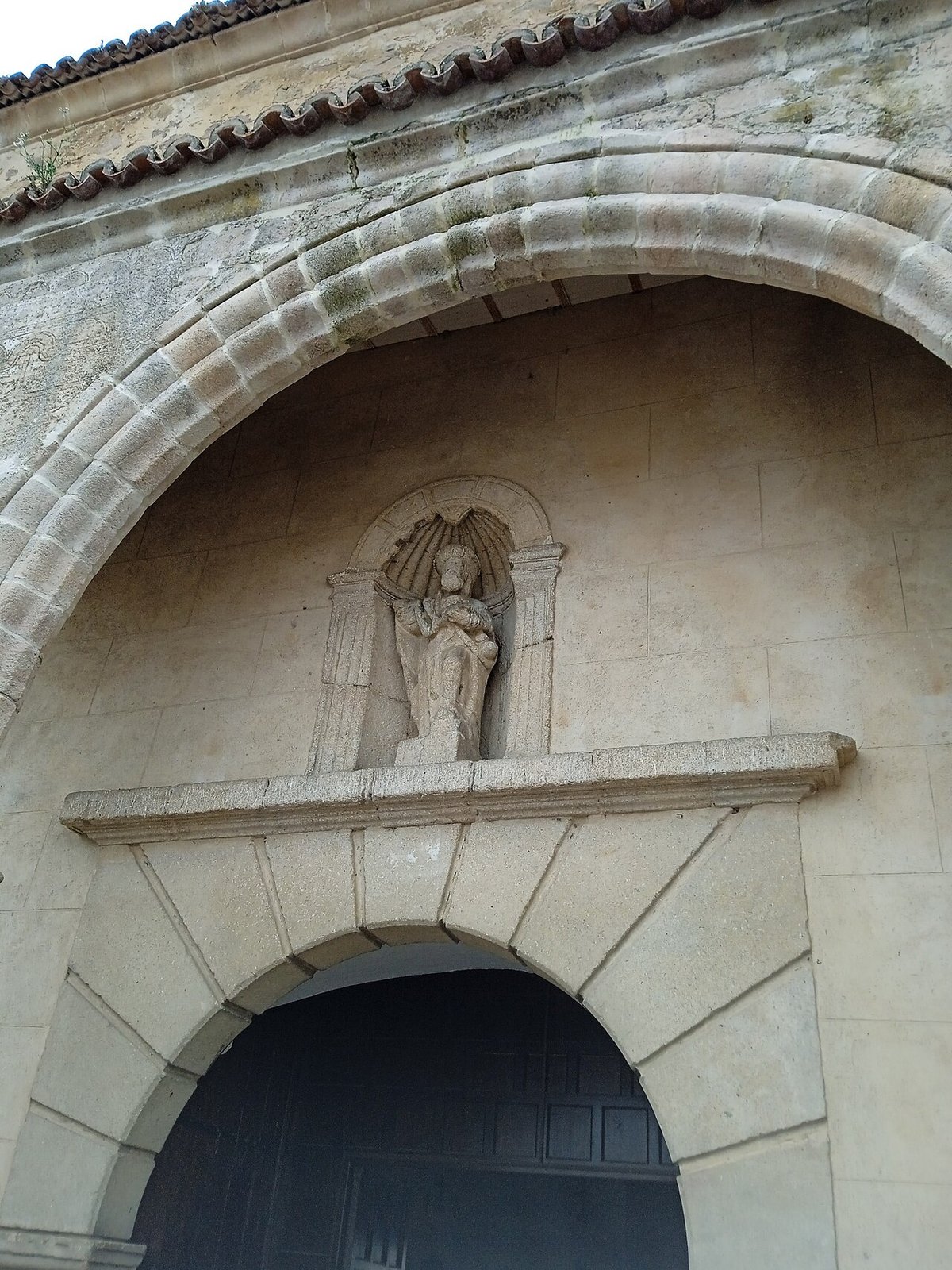
At a central point in the village stands the parish church of El Salvador. The current structure is from the 16th century, though it likely replaced an earlier, simpler building. Its architecture is functional: thick walls, clear volumes, a tower that rises above the rooftops without ornament. Inside, a modest Baroque altarpiece places it within the artistic conventions of the old Diocese of Plasencia.
The building’s significance is less about its art and more about its historical role. For generations, this church acted as the community’s primary gathering space. Beyond religious services, it was where festivals were organised, local matters discussed, and much of the village’s social life was anchored. In settlements of this size, the parish often served as both spiritual and civic centre.
The Working Dehesa
To understand Majadas, you walk out of it. The dehesa begins where the last houses end. This is not a natural forest but a managed ecosystem, an ancient agro-pastoral system where holm oaks are deliberately spaced to allow grassland to flourish beneath. The pattern of trees, the quality of the pasture, and the network of stone walls all result from sustained human intervention over generations.
The birdlife here is a direct reflection of this environment. Birds of prey are frequently seen circling overhead, and other species typical of open plains and seasonal ponds are present. Their movement, especially during migratory periods, introduces a vertical element to an overwhelmingly horizontal landscape.
A web of unpaved farm tracks allows for exploration. Many follow old routes that connected livestock shelters, or majadas, which gave the village its name, with outlying farms. Walking these tracks provides a concrete sense of how this land has been used and organised.
Reading the Landscape
A slow walk around the village outskirts reveals the practical logic of the dehesa. Parcels of land for grazing are divided by dry stone walls. The oldest holm oaks often cluster near old stone piles or former water sources, markers of earlier land use.
Further out, you find rural buildings now largely dormant: livestock sheds, corrals, and farmhouses from an era when daily life was more directly tied to managing herds across these extensive estates. The terrain itself is gentle, with no steep slopes, which amplifies the feeling of vast, open space. The colour of this space shifts with the seasons—greener in spring, golden in summer, warmer in autumn—always under a wide Extremaduran sky.
Local Rhythm and Festive Moments
The local calendar follows patterns common across the comarca. The festivities for San Pedro typically form the main religious event of the year. Summer sees another period of social activity, often coinciding with the return of residents who work elsewhere. These are uncomplicated gatherings, their primary function being to reinforce social bonds within a small community.
Daily life outside these times is quiet, dictated by the rhythms of agriculture and the proximity to larger service towns.
A Practical Orientation
Majadas is located just minutes by road from Navalmoral de la Mata, which acts as the commercial and administrative hub for Campo Arañuelo. This proximity means the village retains its distinctly rural character while having easy access to services.
The most revealing times to visit are spring and autumn, when the light and the state of the vegetation make the structure of the dehesa particularly clear. Summer days are hot and dry, as is typical inland, though evenings become active as people emerge onto the streets.
Majadas does not offer dramatic scenery or monumental heritage. Its value lies in observing the continuity of a rural system. The open plain, the spaced oaks, and the unassuming presence of El Salvador church define a place best understood by walking its streets and following its farm tracks into the working landscape.