Full Article
about Millanes
Small town surrounded by holm oaks near Navalmoral
Hide article Read full article
A place that doesn’t try to impress
Sometimes you pass through a village and within ten minutes you have a fairly clear sense of how life works there. Not because there are major sights, but because of the rhythm of the streets, who calls out a greeting from a doorway, or the stillness in mid-afternoon. Millanes feels like that kind of place.
This small municipality in the Campo Arañuelo, in the province of Cáceres, has just over two hundred residents and carries on without trying to stand out. It simply goes about its day.
The centre is quick to walk around. Whitewashed houses line the streets, some with exposed stone at the corners, and many façades seem to have passed through several generations of the same family. There are no grand monuments or large, formal squares.
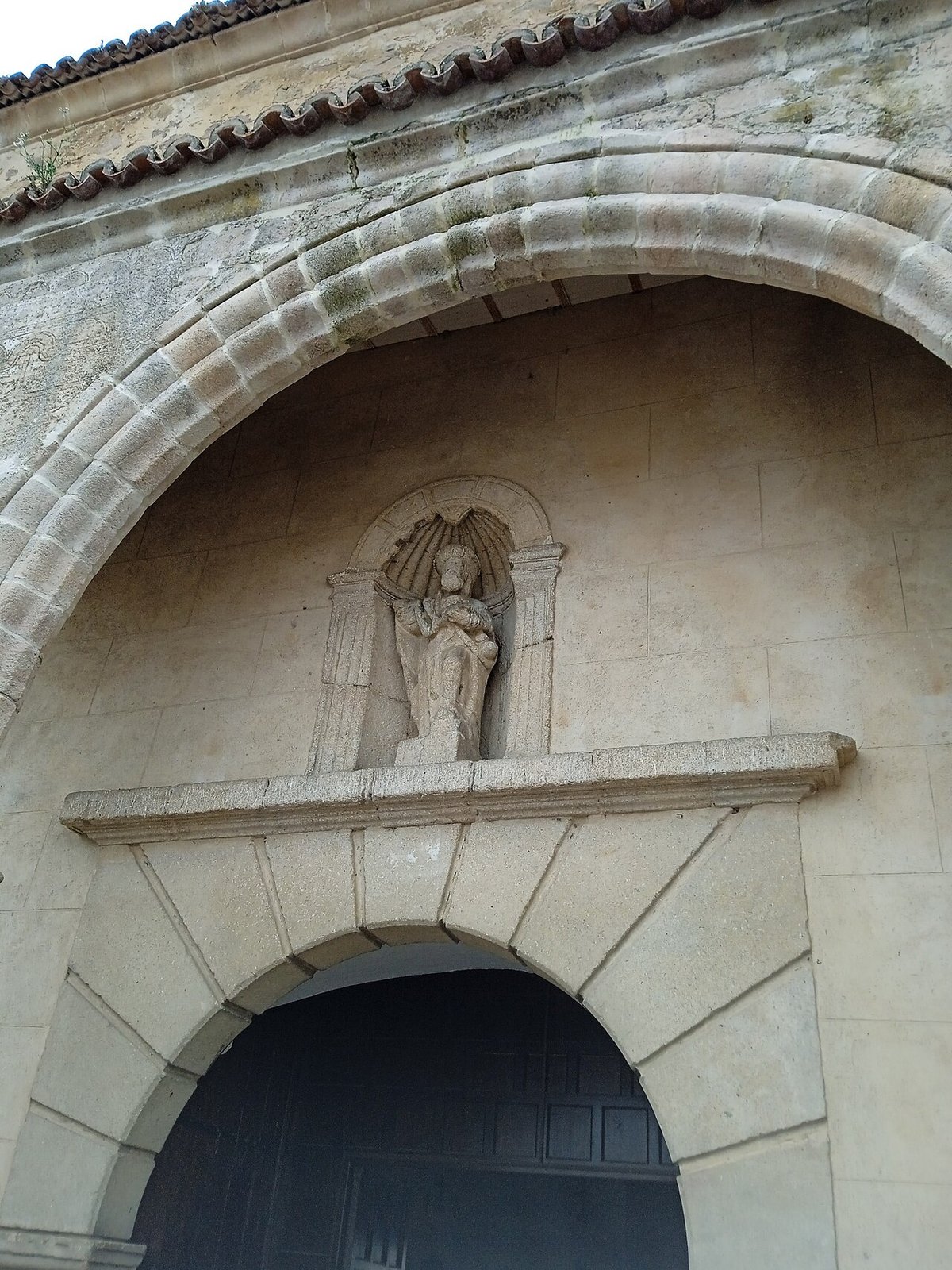
The parish church, dedicated to Santa Ana, is straightforward. It has been altered over time, which is common in villages across this part of Extremadura, and it keeps a practical feel. Solid, without much ornament, it belongs to everyday life rather than to tourism.
Everything revolves around a handful of streets and a small square where there are usually benches and a bit of shade. It is the sort of place where people clearly know each other. Doors sit half open, conversations stretch out, and the pace is unhurried in a way that is hard to find in larger towns.
Beyond the houses: dehesa and working paths
Step outside the built-up area and the landscape takes over. This is the terrain that defines much of the Campo Arañuelo: open dehesa, scattered holm oaks and agricultural tracks leading to plots of land. A dehesa is a traditional Spanish landscape, used for grazing and farming, where trees are spaced out rather than forming dense woodland.
There are no prepared walking routes or information boards. The paths are the ones locals use to work the land or move between fields. For anyone who enjoys walking without much in the way of infrastructure, this is the kind of place where you can simply pick a dirt track and follow it to see where it leads.
The look of the countryside shifts with the seasons. In spring, rockrose comes into flower and the fields fill with insects and small birds moving through the scrub. By summer, the colours turn drier and the heat becomes intense, as it does across much of Extremadura.
Early in the morning or towards sunset, it is common to spot small birds of prey searching for food, or storks perched on posts and rooftops. You do not need detailed knowledge of birdlife to notice that the countryside here is active.
A short visit that says a lot
Millanes is not a place that demands a full day’s itinerary. Part of its appeal is how quickly it can be understood.
A walk along the main street, a look into the square, a moment to notice how the older houses are built, and then a short wander along one of the surrounding paths. Within a couple of hours, you leave with a clear mental picture of the place.
It works well as a brief stop if you are travelling through the Campo Arañuelo by car. There is no sense of needing to tick off sights. Instead, the interest lies in observing how the village functions, quietly and without display.
Food rooted in the countryside
The food associated with this area follows the patterns of rural Extremadura. Dishes tend to be substantial, based on seasonal ingredients and shaped by a culture of making full use of what is available.
Local cheeses are common, along with honey from nearby hives. Recipes built around lamb or pork are also typical, reflecting long-standing farming traditions. The cooking is not elaborate, but it has the character of food meant to sustain a day’s work rather than to be presented.
Traditions that mark the year
Life in Millanes still follows a calendar influenced by religious traditions and agricultural cycles. In summer, the patron saint festivities take place, bringing people together around the church and the square.
In winter, some households continue the practice of the matanza del cerdo, the traditional pig slaughter. For generations this has been more than a domestic task, functioning as a family event that provided food for the months ahead.
These customs are not arranged with visitors in mind. They are simply part of how the village continues to organise its year.
When to stop by
Spring and autumn are usually the most comfortable times to walk in the surrounding countryside. Temperatures are milder and there is more visible activity in the fields.
In summer, the heat can be strong from midday onwards, so it makes sense to head out early or later in the day if visiting at that time.
Millanes is not a destination designed to fill an entire weekend. It is better understood as a quiet pause within the Campo Arañuelo, a place where the interest does not come from a checklist of sights, but from spending a short while in a village that continues at its own pace.