Full Article
about Romangordo
Famous for its trampantojos (murals) that decorate the entire village and interpretation center
Ocultar artículo Leer artículo completo
A garage door bursts into a sunlit library. A blind wall sprouts a balcony that isn’t there. Around the corner, a life-sized grandmother leans from a window that opens only onto brick. Romangordo, 255 residents and not a single supermarket, has spent the last eight years turning every flat surface into an argument against decline. The project started when the local women’s association asked a Madrid street artist for a favour; today the place is a loose-leaf comic book of more than 60 murals and trompe-l’œil, each painted freehand on whitewashed adobe.
The art that stopped the exodus
Pick up the folded map at Casa de los Aromas (open 10:30-14:00 and 17:00-19:00, closed Monday-Tuesday out of season) and the village becomes a gentle treasure hunt. A red dashed line guides you past a giant boy blowing soap bubbles that seem to hover over the lane, past a black-and-white portrait of the last muleteer, past a cat asleep on a windowsill that exists only in pigment. Children detour to stroke the cat’s tail; pensioners rest on the real bench placed exactly where the painted bench begins. The illusion works because nothing else competes for attention: no neon, no chain cafés, just the smell of woodsmoke and the clack of a single petrol lawnmower.
The map costs nothing, but the shop will happily sell you a bottle of rosemary honey harvested from hives tucked among the holm oaks. Brits who expect the punch of English lavender find the flavour milder, almost citrusy; Customs lets it through in hand luggage without a murmur. Leave cash on the counter – there is no ATM for 20 km – and walk on.
A church roof you may never see
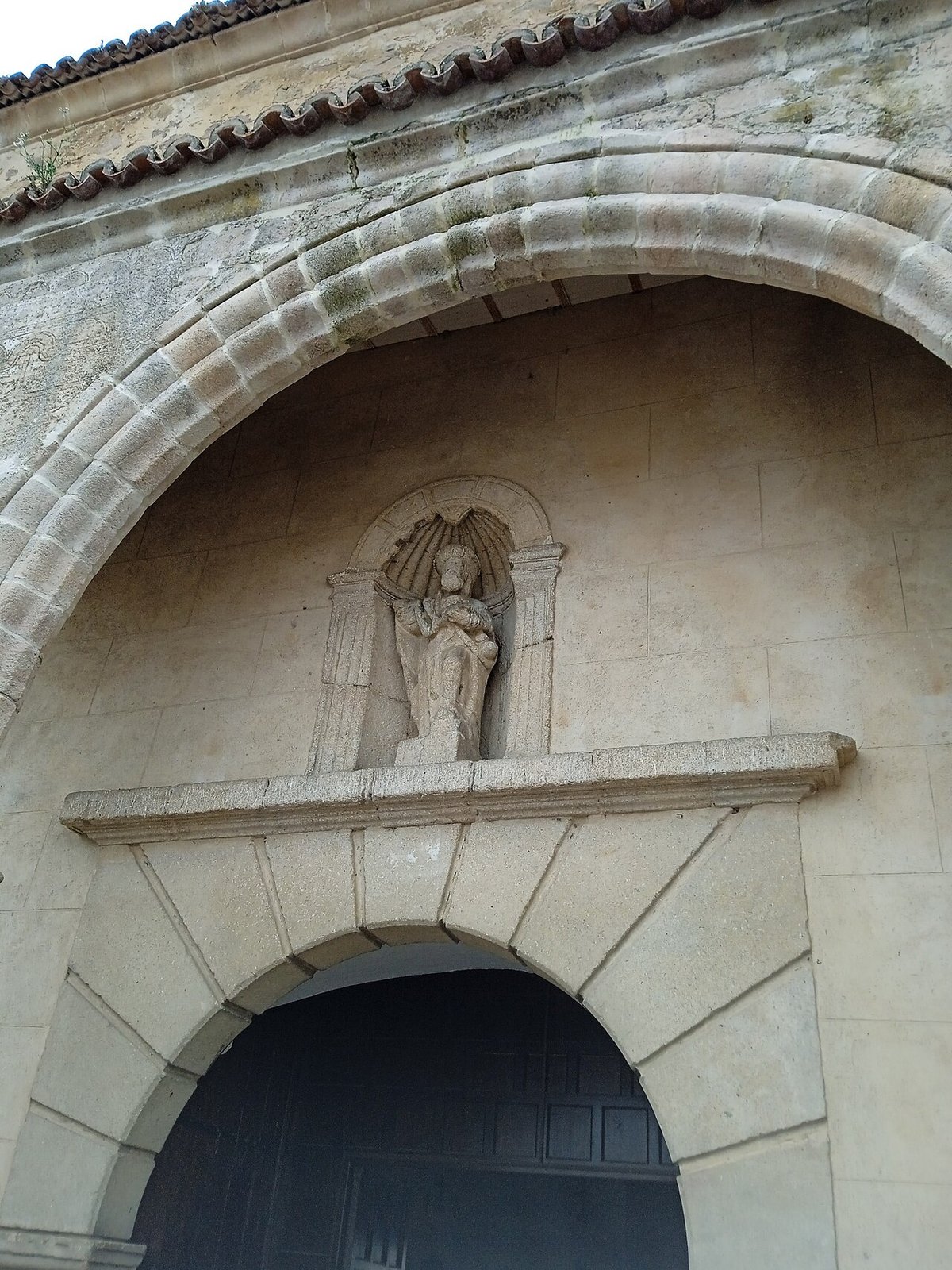
Halfway along the route the lane widens into a pocket square dominated by the church of Santa Catalina. The door is usually locked. No sign tells you where to find the key-keeper, and knocking on neighbouring houses produces only the yap of dogs and the shuffle of slippers retreating further inside. Persistence can pay off: the 15th-century Mudéjar ceiling inside is a lattice of cedar and laurel that looks like an inverted ship’s hull. If the church stays stubborn, console yourself with the view from the tiny tower platform – a sweep of dehesa rolling towards the granite batholith of Monfragüe, one of Spain’s lesser-known national parks and twenty minutes away by car.
Walking in Wellington’s footsteps
Romangordo’s other claim to fame is the Ruta de los Ingleses, a 16 km loop that leaves the village past vegetable plots and pig-wallow wallows before climbing onto the ridge where British and Portuguese troops skirmished with Napoleon’s rear guard in 1812. The battle is remembered only by a wooden sign riddled with bullet-shaped woodpecker holes; the panorama across the Tagus valley is the real reward. Griffon vultures tilt overhead, and in April the path is edged with yellow cytinus flowers that look like plastic buttercups. Allow three hours if you stop for binocular work, five if you photograph every beetle. Wear shoes you don’t mind whitening with Extremadura dust; there is no café en route, so fill bottles at the village fountain before the gradient starts.
When to come, when to stay away
April and mid-September to mid-October give you warm days (22-26 °C) and cool nights without the furnace blast of July. August is workable only if you treat the day like a siesta sandwich: walk at dawn, retreat between 12:00 and 18:00, venture out again when the walls glow ochre. Mid-wternoon in midsummer the south-facing murals bleach to glare and the sole bar runs out of ice; photographers end up snapping their own shadows. Winter is quiet, sometimes too quiet: the bar may close early if no one turns up for the football, and the smell of woodsmoke can thicken into an eye-stinging fog when the temperature inversion traps smoke in the valley.
One bar, one menu, no rush
Bar Plaza opens when the owner finishes feeding her chickens and shuts when the last customer leaves. Order the plato de ibérico and you receive a slate tiled with scarlet chorizo, nutty salchichón and jamón the colour of garnet. A plate costs €9 and feeds two if you load the complimentary bread. Vegetarians are limited to tomato-rubbed toast and a jar of olives the size of conkers. Finish with the local fig cake – pressed discs of dried fruit that taste like natural Wine Gums – and accept the thimble of herb orujo offered “para la digestion”. It is stronger than Pimm’s and has disabused many a designated driver of their virtue.
Combining Romangordo with the real world
The village sits 65 km west of Cáceres, an hour’s drive on the A-66 followed by a twist through dehesa on the EX-390. Unless you are content to circle murals all day, string it together with Monfragüe’s vulture viewpoints (20 min) or the conquistador town of Trujillo (30 min). Accommodation inside Romangordo amounts to one three-room guesthouse; most visitors base themselves in Trujillo’s paradore or in a rural cottage outside Navalmoral de la Mata where the nights are silent enough to hear barn owls negotiating divorce.
The honest verdict
Romangordo will not change your life. It has no beach, no Michelin star, no nightclub. What it offers is a practical demonstration of what happens when a community decides that “too small to matter” is a challenge, not a verdict. Come for the painted walls, stay for the honey, walk the ridge if your calves are up to it – and leave before the silence starts feeling like a reproach.