Full Article
about Saucedilla
Known for its large Renaissance church and the Arrocampo bird park.
Hide article Read full article
A plain in the province of Cáceres
Saucedilla belongs to the Campo Arañuelo, a wide plain between the Tiétar and Tajo rivers in the north-east of Cáceres. The town’s layout and rhythm are set by this open land. Its foundation is relatively recent, tied to 20th-century agricultural reforms and land consolidation projects across the region. Today, just over a thousand people live here.
The streets are short and the houses low, built close together. The architecture is practical: whitewashed façades, thick walls for insulation, and a general absence of ornament. This is not a place of grand displays. In summer, the design makes sense. Narrow streets provide shade, and life gathers in the small plazas and interior patios.
The parish church and its context
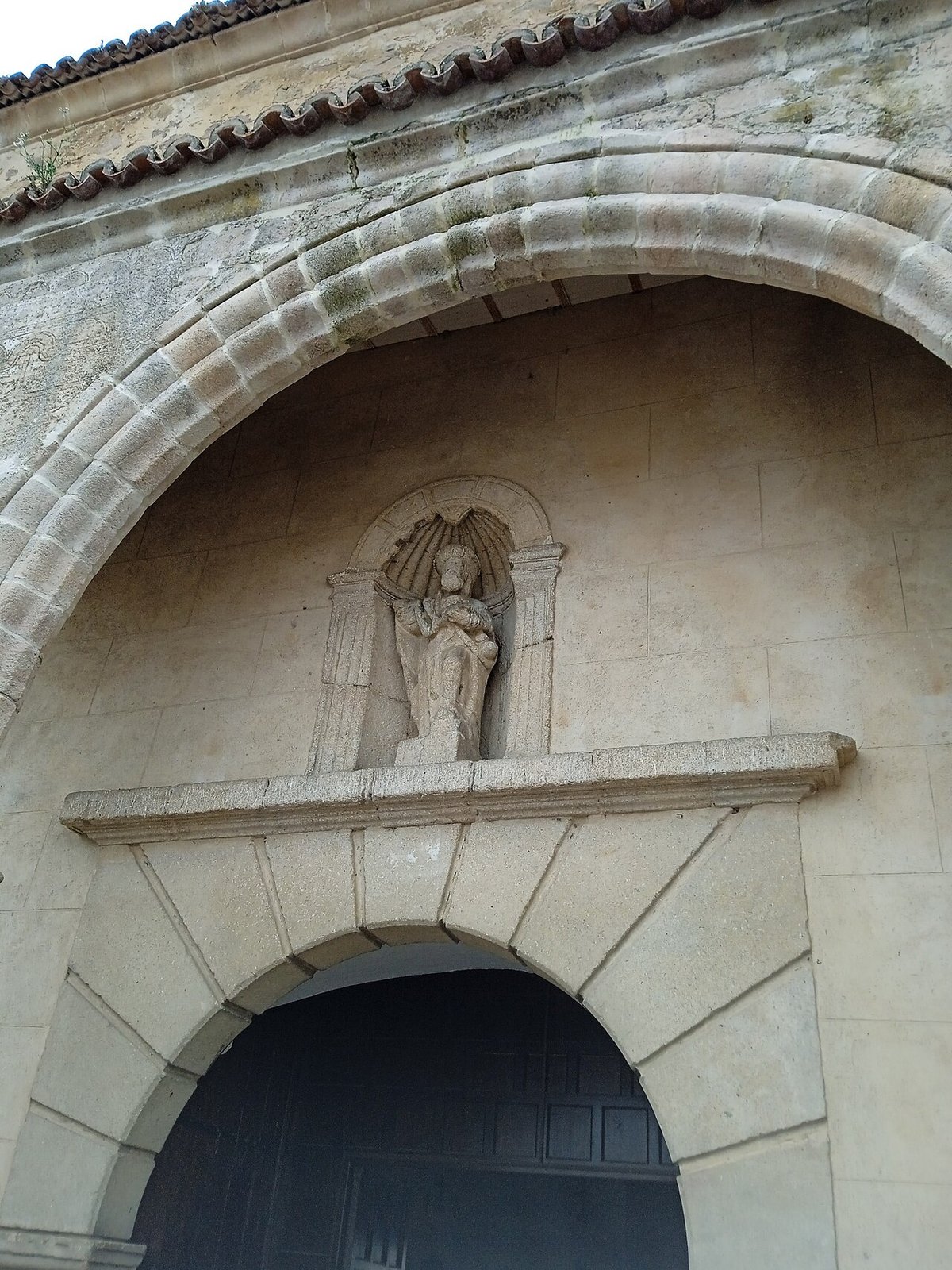
The parish church stands in the main square. It is a sober building of masonry, with minimal decorative detail. This architectural restraint is common in the villages of this comarca, where churches were built for community use rather than spectacle. The square remains the functional centre. All streets lead from it, and a five-minute walk in any direction reaches the edge of town, where the buildings stop and the farmland begins.
The character of Campo Arañuelo
To understand Saucedilla, you must look past its streets. The Campo Arañuelo is a landscape of dehesa—open holm oak woodland—interspersed with agricultural plots. Not far from town, the terrain changes. Wetlands associated with the Arrocampo reservoir system and the Tajo river create a different environment of lagoons and reed beds.
This combination of farmland, dehesa, and water supports significant birdlife. It is common to see white storks, herons, and various birds of prey over the fields. The wetlands attract migratory species, particularly in spring and autumn. The presence of water alters the atmosphere; the reed beds feel enclosed and quiet compared to the exposed plains.
Paths into the landscape
You can walk directly from the town centre into this landscape. Agricultural tracks lead out between cultivated fields and stands of holm oak. These are not marked hiking routes but working paths, used by locals. They follow the logic of the land.
A walk of an hour or two gives a clear sense of the area: large plots, occasional livestock, and long stretches of quiet. The silence is broken only by farm machinery or bird calls. Those interested in birdwatching tend to move between specific vantage points near the wetlands for clearer views over the water.
A quiet stop on the plain
You can see Saucedilla’s centre in under an hour. The visit is straightforward: the church, the square, a walk through the gridded streets. Its value lies in its simplicity and its position. It functions as a quiet pause on a journey through the Campo Arañuelo, or as a base for exploring the surrounding dehesa and wetlands. There is no need for an itinerary.
Spring and autumn are the most comfortable seasons for walking here. The light is softer and bird activity in the wetlands increases. Summer brings intense heat, especially at midday. In winter, the landscape becomes more subdued, but clear days are good for walking.
Reaching Saucedilla
The town lies just off the A-5 motorway, the main artery into the Campo Arañuelo. A short drive on local roads leads into the centre. Public transport in the area is limited, so most visitors travel by car. This is advisable if you plan to explore other villages or different stretches of the Tajo’s course nearby. Distances are not great, but the character of the land shifts enough to make even short drives worthwhile.