Full Article
about Valdecañas de Tajo
Small town beside the Valdecañas de Tajo reservoir; peace and nature
Hide article Read full article
Where the wind arrives first
The wind usually gets there before anything else. It comes down across the reservoir and moves through the streets of Valdecañas de Tajo as if the village were simply an extension of the shoreline. By mid-afternoon, a pale light settles over the whitewashed façades, and the water in the distance shifts colour with the sky: sometimes a metallic grey, sometimes a dense blue with barely a reflection.
This small municipality in the Campo Arañuelo area has fewer than a hundred residents and sits right beside the reservoir that now fills what used to be the valley of the Tagus river. When the water level is high, the horizon feels wider than expected for a place of this size.
Life beside the reservoir
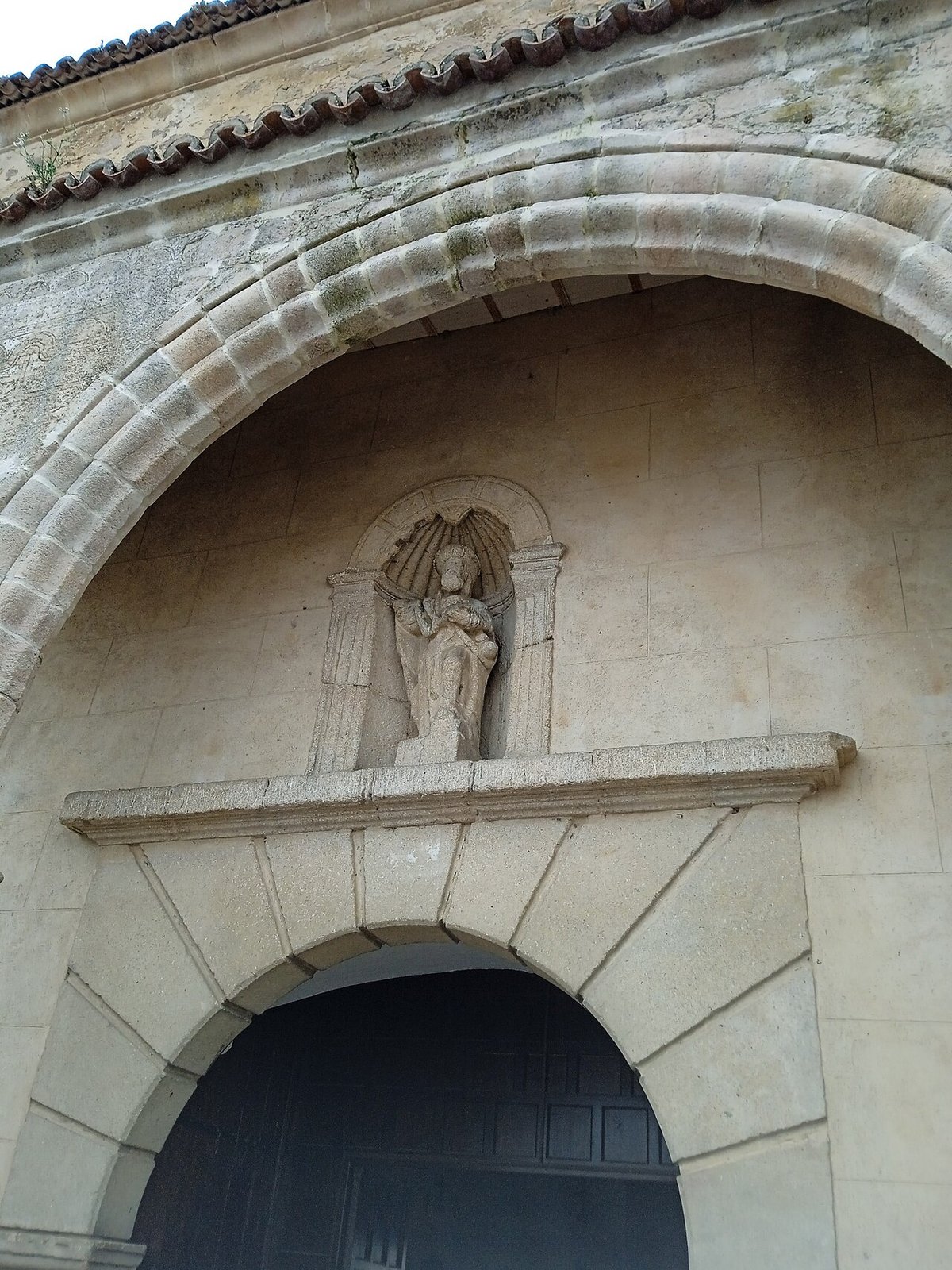
The houses cluster around the church of Santa María Magdalena. It is a simple building, the kind that has seen generations pass without much change. On Sundays, small groups still gather outside after mass, especially when the weather is mild and the sun warms the square.
In that square there is a fountain and a few benches where the day stretches out slowly. At certain hours, the sound of a tractor returning from the fields cuts through the stillness. The rest of the time, quiet dominates, broken now and then by the wind or by dogs barking from somewhere behind a gate.
The presence of the reservoir is noticeable even when it is out of sight. The air feels different, slightly more humid. Dirt tracks lead away from the village in several directions, and sooner or later they all drift towards the water.
Walking the surrounding land
The landscape follows the pattern of the dehesa typical of northern Cáceres, a type of open woodland with scattered holm oaks, low scrub and grazing land. It is a working landscape rather than a manicured one, shaped by farming and livestock over time. In winter, the ground tends to be dark and damp. In summer, it turns dry, ochre and brittle underfoot.
The paths around Valdecañas de Tajo are not marked walking routes. They are agricultural tracks and firebreaks used by farmers and herders. Walking here is straightforward enough, but it helps to carry a map or use a phone with GPS. Some areas lead into private estates, and signage is not always clear.
From certain higher points, the reservoir comes into full view, stretching between gentle hills. Towards sunset, when the wind drops, the surface of the water becomes almost still. The soundscape changes as well, with fewer gusts and more birds.
Birds and still water
In the colder months, cranes are a familiar sight overhead, flying in loose, uneven formations. They come to the dehesa to spend the winter, and their calls can be heard from a considerable distance, especially early in the morning.
The reservoir also draws birds of prey and waterfowl. There are no formal viewing platforms or walkways. Observation here is simple: a car left by a track, a pair of binoculars and time. The best moments tend to be at dawn or late in the day, when the air settles and the water reflects movement more clearly.
Fishing appears at those same hours. Now and then, someone waits quietly by the shore. It is important to respect permits and designated areas, as much of the surrounding land belongs to private estates.
Light, seasons and pace
Spring noticeably changes the look of the area. The holm oaks put out new growth and the land regains some green. Autumn also works well, with lower temperatures and softer light over the water.
Summer brings strong heat from mid-morning onwards. Anyone planning to walk is better off setting out early or waiting until the evening. If the idea is to reach the reservoir itself, it is worth checking access in advance, as some tracks deteriorate easily or become blocked.
Valdecañas de Tajo does not revolve around major monuments or a packed calendar of events. It sits quietly at the edge of the reservoir, shaped by the landscape around it. The village follows the rhythm of the water and the fields, where days are measured by light and wind. For this place, that is enough.