Full Article
about Casas de Don Pedro
Gateway to Siberia Extremeña; farming and ranching town near the Guadiana River and fishing areas.
Ocultar artículo Leer artículo completo
The morning bus from Badajoz empties six teenagers and a crate of bread rolls, then turns round for the city. By the time the engine fades, swallows have begun circling the Plaza Mayor and the only other sound is a tractor heading out to the dehesa. At 386 m above sea level, Casas de Don Pedro sits just high enough for the air to feel thinner than the coastal plains, but not so high that the siesta shortens. The village clocks still obey heat, not timetables.
Water, wheat and white-washed walls
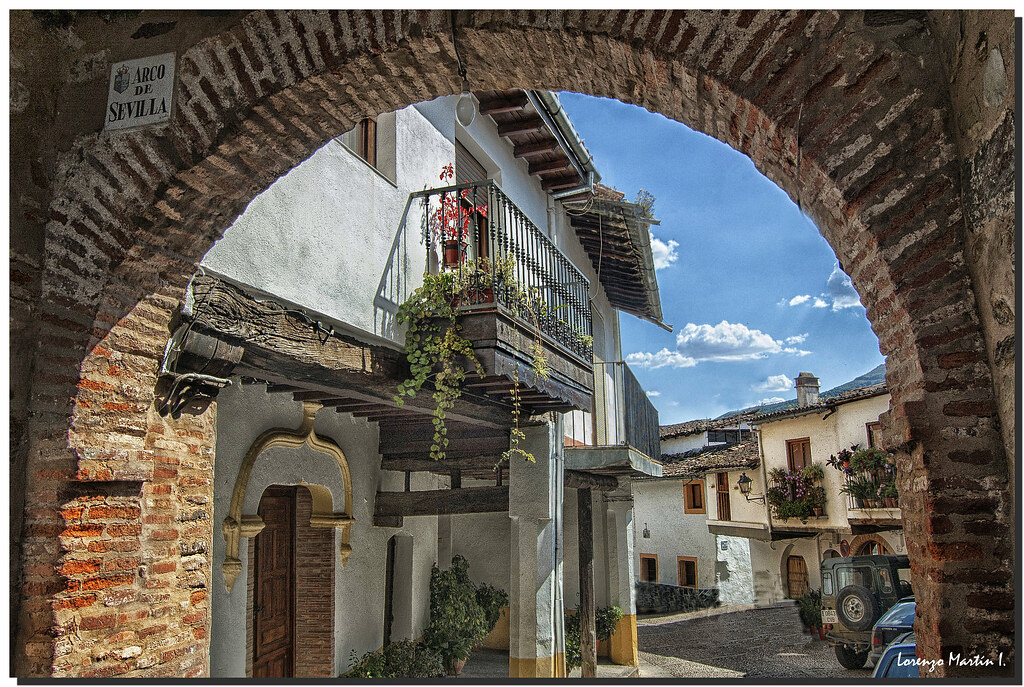
Two reservoirs lap at the margins of the municipality: García de Sola to the north-west, Orellana to the south-east. Their combined shoreline exceeds 80 km, yet you can walk across the grid of quiet streets in eight minutes. Houses are rendered the colour of yoghurt, iron balconies painted racing-green, roofs of Roman tile that turn apricot at sunset. The parish church of San Sebastián keeps watch from the top corner; its sixteenth-century tower was rebuilt after lightning in 1892, the stone still slightly darker on the south face.
Outside the church door a single information panel shows a 1950s photograph: the square packed with wheat sheaves, mules and berets. The harvest still matters—combine harvesters now rattle along the EX-346 at dawn—but water has become the louder neighbour. When the reservoirs were raised in the 1960s, the village lost farmland yet gained a heat regulator; even in July, when Badajoz swelters at 43 °C, an easterly breeze skimming the water keeps the evening terrace temperature below 30 °C. British visitors used to Cornwall’s changeable seas should note the difference here: the reservoirs are vast but placid, more lake than coastline, and levels can drop four metres by late summer, exposing pale bathtub rings of clay.
Walking without waymarks
There are no gift-shop maps, no colour-coded arrows. Instead, agricultural tracks simply peter out at the water’s edge. A recommended loop starts behind the cemetery: follow the concrete lane for 1.5 km, bear left at the goat shed, then drop to the shore through a stand of eucalyptus. Black-winged stilts pick through the mud; if you sit still, a purple heron may glide past at eye level. The circuit back to the village is 5 km, flat enough for trainers, though after rain the clay clings like wet biscuit.
Spring brings the best mileage. From mid-March the wheat glows emerald, poppies puncture the verges and daytime temperatures sit in the low twenties—perfect for a ten-kilometre out-and-back to the abandoned railway halt at Guadajira. Autumn is equally gentle, but the stubble fields raise dust that hangs in the low sun, ideal for photographers, less so for asthmatics. Summer walking is possible only at first light; by 10 a.m. the mirage shimmers and every dog has retreated under a car. Winter days alternate between T-shirt calm and bitter Levante wind; snow is rare, yet when it comes the reservoirs steam like kettles.
Eating on Spanish time
Bar La Suegra opens for coffee at seven—rare this far west—and serves toasted mixto sandwiches until the kitchen closes at 21:30. If you want a full meal, Restaurante El Parral on Calle Real offers a weekday menú del día for €10: garbanzo soup, grilled pork shoulder, house wine from nearby Tierra de Barros. The gazpacho extremeño is closer to a thick vegetable stew than Andalusian gazpacho; ask for a small portion unless you’ve walked ten miles. Vegetarians survive on tortilla and salads; vegans should stock up in Villanueva de la Serena before arrival.
Local specialities that translate well to British palates include the mild torta de casar cheese, served melted in a clay dish with crusty bread, and migas—fried breadcrumbs with garlic and bits of chorizo. Order migas as a sharing starter; the portion is roughly the size of a rugby ball. Sweet-toothed visitors hunt out pestiños in April, honey-glazed fritters sold from a house doorway on Calle Ancha; knock loudly, they freeze well for the flight home.
When the square becomes the programme
Fiestas are low-key but tightly scheduled. On the last weekend of April, neighbours spend Friday night decorating wrought-iron crosses with paper flowers for the Cruz de Mayo competition. By Saturday lunchtime the scent of marzipan drifts from every kitchen, and by 22:00 a mobile disco cranks out Spanish eighties hits loud enough to rattle the church windows. August ups the ante: five days of processions, foam parties for teenagers, and a Saturday-night fireworks display reflected in the reservoir. Book accommodation early; the two rural houses—El Nidal and Lares—fill with Spanish families who drive down from Madrid. Expect bedtime after 02:00; if you prefer silence, visit in June instead.
Getting stuck, getting out
Public transport is honest but skeletal. The weekday bus from Badajoz arrives at 08:15 and leaves again at 14:30; miss it and the next service is tomorrow. A taxi from Herrera del Duque, 15 km north, costs around €25 if you can persuade the driver to make the trip—phone numbers are pinned inside the village shop. Car hire is the practical choice: pick up at Madrid or Seville airport, drive the A-5 to Mérida, then the EX-118 to Villanueva de la Serena and finally the EX-346. The last 12 km twist through dehesa dotted with fighting-bull farms; watch for black cattle on the road at dusk.
Petrol is cheaper at the cooperative pumps in Herrera; fill up before you arrive. There is no cash machine in Casas de Don Pedro—nearest ATM is inside the petrol station on the EX-118. Shops close 14:00-17:00; if you need paracetamol or a phone charger, the pharmacy in Herrera is the only option. Mobile coverage favours Movistar; Vodafone and Three drift between one bar and none.
Why stay longer than lunch?
Because the night sky is darker than any campsite in the Peak District. Because the waiter remembers your name on the second coffee. Because on a still evening the reservoirs mirror saffron clouds so perfectly that herons appear to walk on sky. Casas de Don Pedro will never compete with Cáceres for palaces or with Seville for flamenco. It offers instead a calibrated slowness: a place where you measure the day by the arc of the sun over the water and by the moment the church bell strikes nine, prompting swifts to rise in a shrieking swirl above the white roofs. Arrive with a full tank, an empty diary and at least one spare afternoon—you’ll need it to learn the difference between quiet and silence.