Full Article
about Fuenlabrada de los Montes
Known as the honey capital; set in the Siberia Biosphere Reserve amid rich forestland.
Hide article Read full article
In La Siberia of Extremadura
Fuenlabrada de los Montes sits in La Siberia extremeña, a district in the north-east of Extremadura whose name sounds dramatic but refers to a landscape of wide dehesas, quiet roads and villages that move at their own speed. This is not a place built around spectacle. Life here follows older rhythms tied to the land.
With around 1,700 inhabitants, Fuenlabrada de los Montes has long been known for beekeeping. Honey is not a token purchase picked up at the end of a trip. It is central to the town’s identity and economy. There are far more hives scattered across the municipality than most visitors expect, and the presence of bees filters into local conversation, seasonal fairs and even small design details in the streets.
A Town That Smells of Honeycomb
The Museo de la Miel explains why apiculture matters so much here. It walks visitors through the workings of a hive, how honey is harvested and why bees thrive in this area, moving between scrubland, holm oaks and thyme. The museum is modest in size, yet it provides enough context to understand why honey keeps reappearing as a theme across the town.
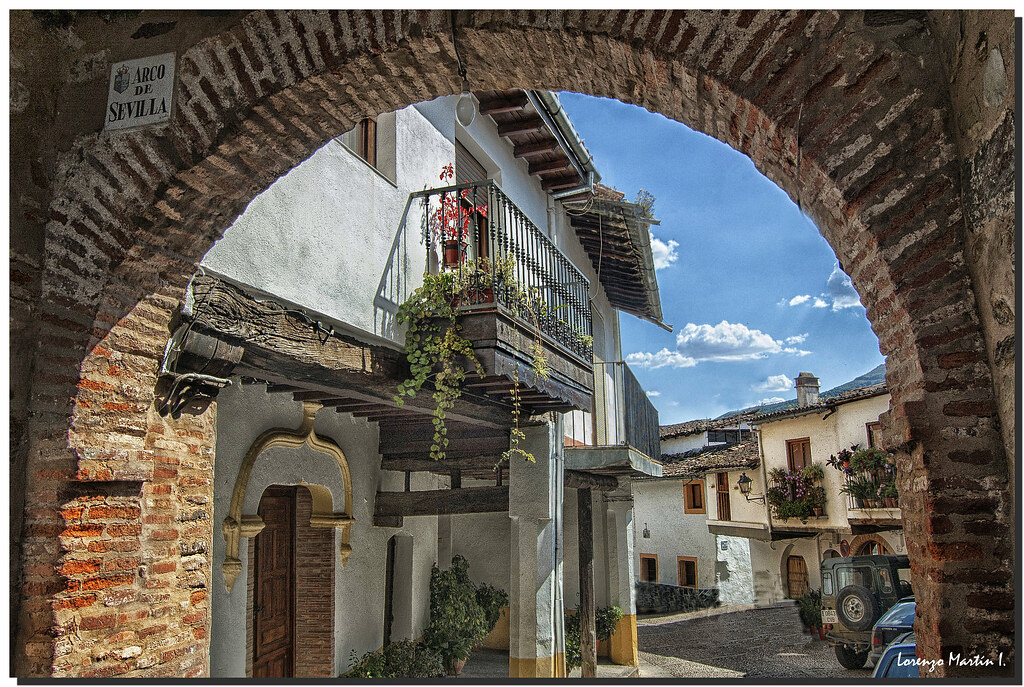
The urban centre forms a loop of whitewashed streets and gentle slopes. On the Paseo de la Constitución, the pavement is decorated with mosaics made from river stones. They depict hives and bees beneath your feet, subtle reminders of what sustains the place. There is no oversized monument proclaiming the town’s trade. Instead, it is woven into the ground you walk on.
Another reminder of Fuenlabrada’s past stands in the form of the Rollo de Santa Ana. This stone column dates from the period when the town had its own jurisdiction. In practical terms, it was once used to expose criminals. Today it remains as a marker of municipal authority from another era, proof that even small inland communities had their share of institutional history.
Church, Hermitage and Rural Memory
At one of the highest points in the town stands the Iglesia de la Asunción. Built in the 16th century, it blends different architectural styles, something common in churches constructed and altered over generations. Its position makes it a natural reference point when walking through the centre.
Nearby is the ermita de Santa Ana. In May, a romería linked to San Isidro usually takes place. A romería is a traditional rural pilgrimage and celebration, often involving a procession out into the countryside. From early in the day, families head out together. Cars pull small trailers, groups gather with food and the scent of crushed rosemary lingers underfoot. For a few hours the routine shifts, and the town’s social life moves into the open landscape that surrounds it.
The more recent past has also left difficult chapters. During the Spanish Civil War, the area experienced harsh episodes. There are no large interpretative panels explaining events in detail, yet conversations with older residents bring out fragments of memory, sometimes spoken quietly. In many inland villages across Spain, remembrance survives in this intimate, domestic way rather than through formal displays.
A few kilometres away rises the Risco de San Blas. Prehistoric cave paintings are preserved there, protected but still visible. They have watched over the same valley since long before Fuenlabrada existed, while today hikers and the occasional flock of sheep pass below.
Walking Through the Dehesa
One of the most appealing aspects of Fuenlabrada de los Montes is how easily the built-up area gives way to open countryside. It does not take long to find yourself on a path with few other people around.
The route to the Risco de San Blas is short and manageable with comfortable footwear and water. The walk is not especially demanding, and although the cave paintings are protected, they can be clearly made out. It is a brief excursion that connects the present-day village with a much older human presence in the landscape.
Another option follows the path towards Villarta de los Montes. This means several kilometres through dehesa, passing holm oaks and stretches of near silence. The pace tends to slow without much effort. There are no dramatic landmarks along the way, just the steady rhythm of footsteps and open land.
When temperatures rise, attention shifts to water. Many locals head to the area known as the Pretura del Molino. Here, the river Zapatón feeds a natural pool. Shade from the surrounding vegetation, cold water and children jumping from rocks define a typical summer scene. It is simple and practical, the sort of arrangement that has served generations in rural Spain.
Honey as a Reason to Gather
Beekeeping does not remain confined to fields and workshops. Each autumn, a fair dedicated to honey and local produce usually fills the main square. Stalls appear, along with demonstrations connected to hive work. Sweets where honey takes centre stage are easy to find.
Among the treats are the so-called rosas de miel, a sweet typical in Extremadura. Sheep’s cheeses and dishes associated with mountain cooking also make an appearance. Chanfaina is often on the tables too. This rice dish made with lamb offal tends to divide opinion, between those who happily go back for more and those who prefer to choose something else.
In August, the fiestas of the Virgen de la Asunción bring further change. For a few days there are more cars, more people out in the streets and the distinctive fair atmosphere that small towns experience intensely. Public space becomes the focus, and daily routines adjust to celebration.
A Stop Worth Making?
Fuenlabrada de los Montes does not compete with highly polished destinations or places made famous on social media. The appeal lies elsewhere.
Time here is best spent walking through dehesa, understanding why honey carries such weight in this part of Extremadura and sitting in the square as the afternoon unfolds. A slow circuit along the paseo, a visit to the Museo de la Miel for those curious about bees, and, when the heat builds, a break by the water near the river offer a straightforward plan.
There is no need to rush. Fuenlabrada de los Montes rewards a measured visit, one that follows the same calm tempo as the landscape that surrounds it.