Full Article
about Garbayuela
Small village in Siberia surrounded by pristine nature; known for its rock formations and riverside forests.
Hide article Read full article
Where the map begins to matter
Any look at tourism in Garbayuela starts with its position. The village sits at the southern edge of the comarca of La Siberia, in the north-east of the province of Badajoz. This is a part of Extremadura defined by long distances and small settlements, and Garbayuela fits that pattern. It has around 450 residents and retains a distinctly rural scale. Streets are short, houses are low, and the dehesa landscape begins almost at the last wall of the village.
The settlement reflects an agricultural and livestock-based logic. The land shapes everything. Holm oaks, grazing areas and open plots explain both the traditional economy and the layout of the built area. There is little in the way of monumental architecture. What stands out instead is the continuity between village and countryside, with no clear break between the two.
San Bartolomé and the centre of village life
The most recognisable building is the parish church of San Bartolomé. Its origins are usually placed in the 16th century, although later alterations define its current appearance. The structure is simple, in line with churches built in small Extremaduran villages: thick walls, restrained proportions and a rounded arch doorway with minimal decoration.
Inside, there are wooden altarpieces of modest craftsmanship. Their importance lies less in artistic value and more in their function. For centuries, the church served as the social centre of the village as much as a religious one. From the square, that relationship between the building and everyday life is easy to read.
Streets shaped over time
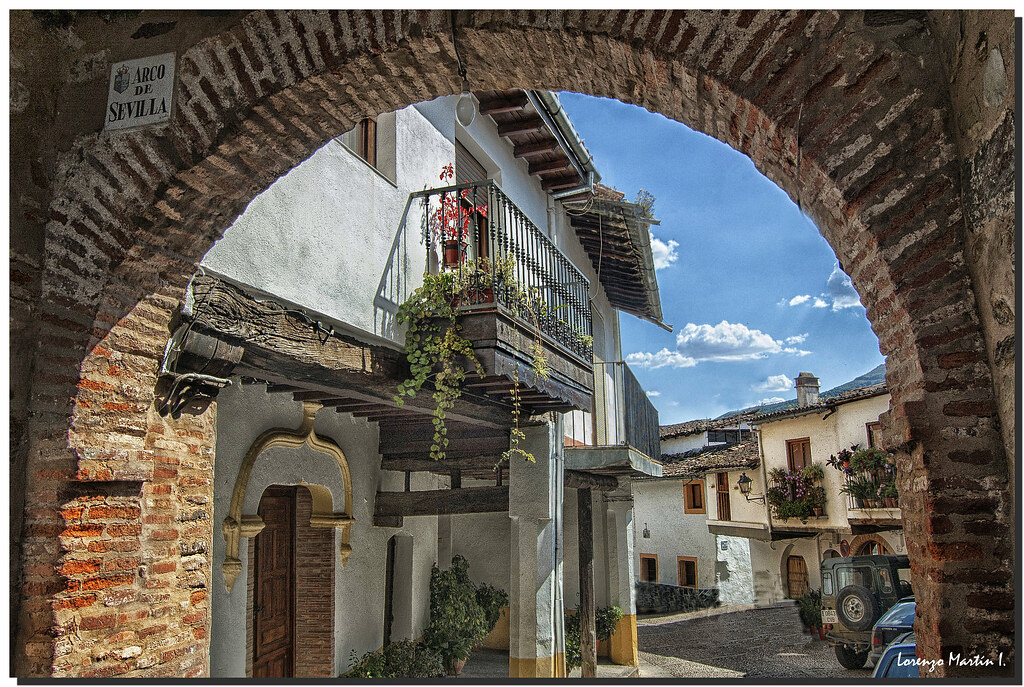
Garbayuela is best explored slowly, without a fixed route. The urban centre still shows stretches of exposed masonry alongside whitewashed walls. Some houses retain stone or brick doorways that point to periods of greater agricultural prosperity.
The streets are narrow and somewhat irregular. They do not follow a clear urban plan, but rather reflect successive expansions from an original core. The main square gathers the municipal buildings and continues to act as a meeting point during local celebrations and events.
The dehesa at the doorstep
A few metres beyond the last yard, the dehesa begins. This traditional landscape, typical of western Spain, combines scattered holm oaks with pasture and patches of low scrub. It dominates this part of La Siberia and has been shaped over centuries by livestock farming.
Signs of wildlife appear with a bit of attention. Tracks cross the dirt paths, burrows break the ground in places, and birds of prey circle above the low hills. Hunting has long played a role in the local economy, although today it exists alongside a growing concern for conserving the environment.
The appearance of the countryside changes noticeably in summer. Pastures dry out and the colours shift towards yellow tones. Even so, the structure of the dehesa remains clear: spaced trees, large estates and paths linking different holdings.
Walking beyond the village
Rural tracks leave Garbayuela in several directions. Many are not signposted, and some pass through private land, which is common in this part of Extremadura. Respect for gates and boundaries is expected.
The surrounding area contains remains of old flour mills linked to small watercourses. Some are quite deteriorated, yet they offer a glimpse into how the local economy worked before the mechanisation of agriculture.
The landscape changes character at certain times of day. Early morning and late afternoon bring lower light and more visible wildlife. These are also the moments when the quiet of the countryside becomes most noticeable.
Practical notes for a visit
Garbayuela is a small and quiet village. A walk through the urban centre can take less than an hour.
Access is usually by car. Public transport in the area is limited, and distances between villages are considerable.
Anyone heading out into the dehesa should carry water, use sun protection in summer and have some form of orientation. Closing any gates along the way and keeping to established paths are basic countryside practices in this comarca.