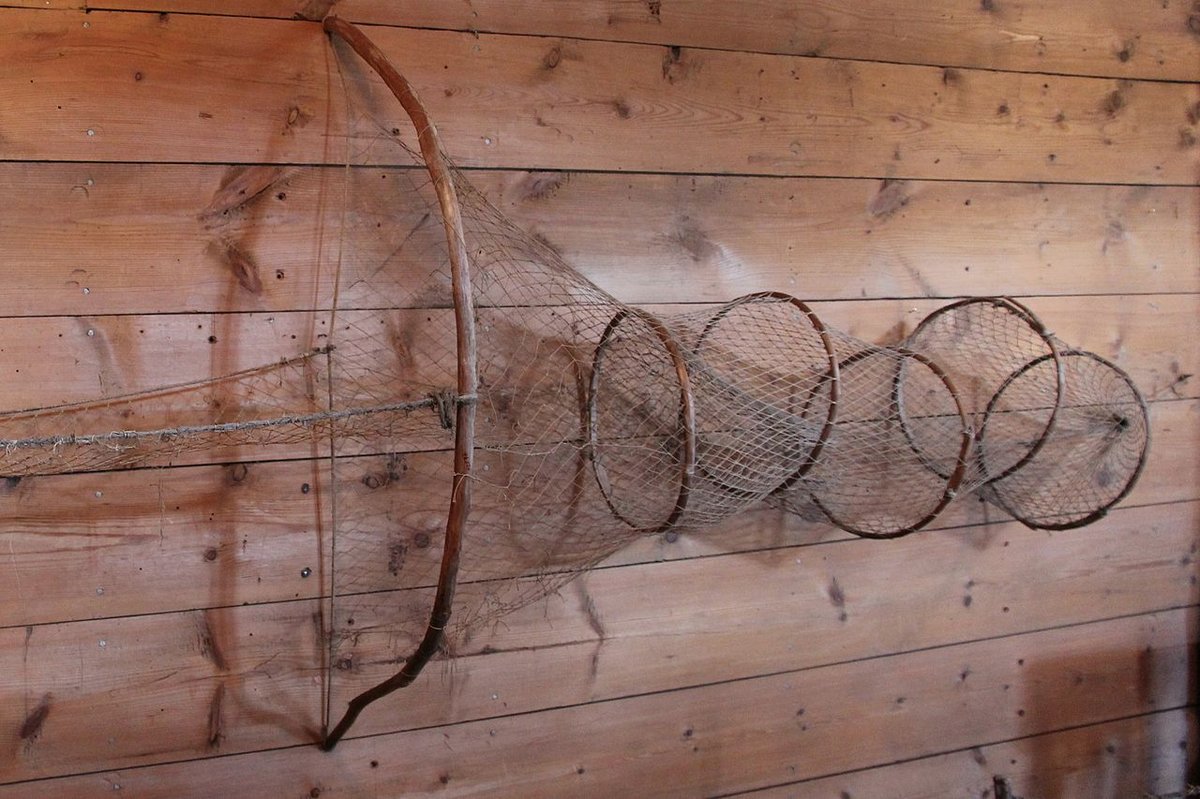
Fyke net in a museum.jpg
Extremadura · Meadows & Conquerors

Garlitos

The church bell strikes noon as a farmer in overalls leans against the stone wall of Bar Central, discussing rainfall statistics with the barman. A...

510 inhabitants · INE 2025
554m Altitude

Why Visit

Mountain Garlitos Castle Sport fishing

Best Time to Visit

summer

Virgen de Nazaret festival (September) septiembre

Things to See & Do
in Garlitos

Heritage

  • Garlitos Castle
  • Church of John the Baptist
  • La Serena Reservoir

Activities

  • Sport fishing
  • Historical hiking
  • Landscape photography

Festivals
& & Traditions

Fecha septiembre

Fiestas de la Virgen de Nazaret (septiembre)

Las fiestas locales son el momento perfecto para vivir la autenticidad de Garlitos.

Full Article
about Garlitos

A charming municipality in La Siberia, noted for its Moorish castle and views over the Embalse de la Serena.

Ocultar artículo Leer artículo completo

The church bell strikes noon as a farmer in overalls leans against the stone wall of Bar Central, discussing rainfall statistics with the barman. Above them, swifts wheel between terracotta rooftops at 554 metres altitude, where the air carries a dryness that makes even September afternoons feel crisp. This is Garlitos, population 543, a place where mobile phone signals fade in and out like passing thoughts and the nearest supermarket sits forty minutes away in Herrera del Duque.

The Geography of Silence

Extremadura's Siberia earns its nickname during winter months when Atlantic weather systems collide with the Iberian plateau. Temperatures drop to minus eight, winds knife through the dehesa oak forests, and the EX-118—the only proper road for miles—develops a reputation for catching out drivers who've underestimated Spanish winter driving. Summer brings the opposite extreme: forty-degree heat that turns the surrounding landscape bronze by July, making 7am the only sensible time for walking the agricultural tracks that radiate from the village centre.

The altitude matters here. At 554 metres, Garlitos sits high enough to escape the worst of Extremadura's summer humidity but low enough to avoid the snow that blocks higher mountain villages. This creates a microclimate where spring arrives two weeks later than in the Guadiana valley below, extending wildflower season through late April and May. Autumn lingers similarly—oak leaves hold their colour until November, when mushroom foragers appear with wicker baskets and the serious business of the pig slaughter begins.

A Village That Measures Time in Centuries

San Miguel Arcángel church dominates the skyline from every approach road, its sixteenth-century tower rebuilt after the 1755 Lisbon earthquake that cracked masonry across western Spain. The building's honey-coloured stone changes tone throughout the day: pale lemon at dawn, deep amber during the golden hour photographers prize, grey-blue under storm clouds that gather over the nearby Sierra de Villuercas. Inside, the altarpiece shows Saint Michael weighing souls—a subject that resonated in a borderland between Christian and Moorish Spain.

The church's irregular opening hours reflect village rhythms. Morning Mass at 10am on Sundays draws thirty parishioners if the weather's good, dropping to twelve during harvest season when even octogenarians help family members gather almonds. Weekday access requires finding the key-holder, usually Doña Carmen who lives opposite the primary school and judges visitors' intentions with a scrutiny developed over seventy years of watching strangers pass through.

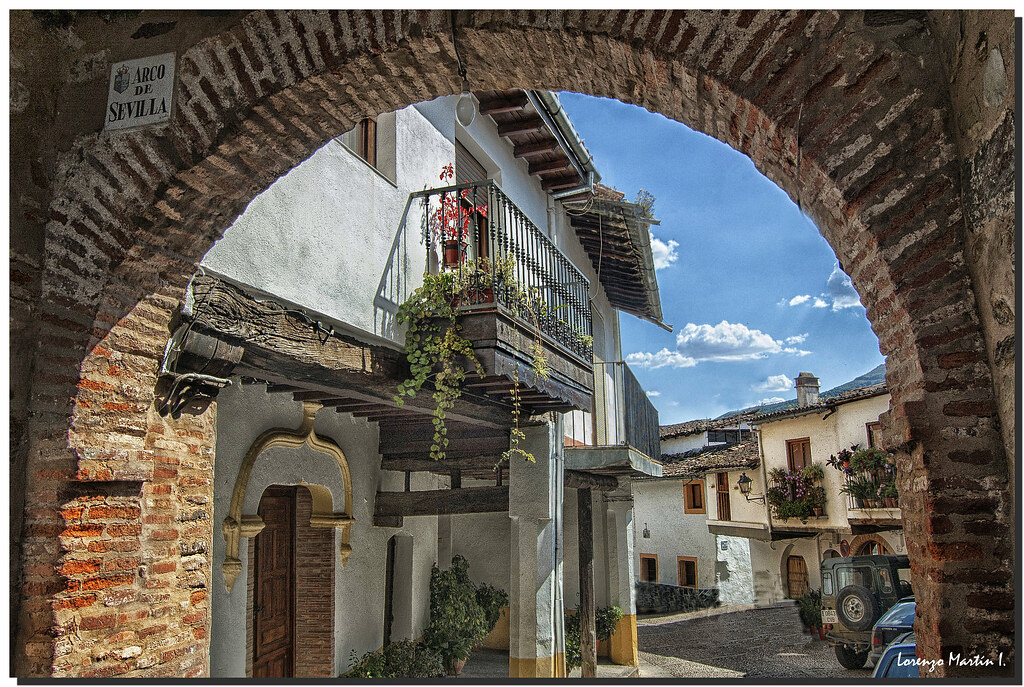
Around the plaza, houses follow a pattern repeated across Extremadura's mountain villages: whitewashed walls two feet thick, keeping interiors cool during summer heat and warm during winter cold; wooden balconies added during the nineteenth-century prosperity that came from cork extraction; ground floors converted from animal stalls to garages as mechanisation reached La Siberia during the 1960s. Numbers 14 and 16 retain original stone coats-of-arms, belonging to families who made fortunes shipping merino wool to northern Europe during the sixteenth century—wealth that built the church tower and funded the village's brief moment as a regional centre.

Walking Through the Dehesa

The real Garlitos begins where the tarmac ends. Agricultural tracks lead into dehesa landscape—managed oak forest that produces cork, charcoal, acorn-fed pork, and increasingly scarce wild mushrooms. These aren't manicured English woodlands but working landscapes where black Iberian pigs roam freely from October to February, fattening on acorns that give jamón ibérico its distinctive nutty flavour. The trees themselves tell stories: cork oaks show harvest dates painted in white, some dating back to 1952; holm oaks grow in perfect rows where nineteenth-century landowners planted for future generations.

Walking requires preparation. Distances deceive in the clear mountain air—a farmhouse that appears twenty minutes away actually sits forty minutes distant across undulating terrain. The GR-168 long-distance path passes three kilometres north of the village, following an ancient drove road where merchants once walked cattle toward Seville's markets. Today's hikers share tracks with wild boar, increasingly confident after decades of hunting decline. Dawn and dusk offer the best wildlife watching: Spanish imperial eagles patrol the thermals above Sierra de Villuercas while Egyptian mongooses—introduced during Moorish occupation—dart between rockrose bushes.

Weather changes rapidly. Morning mist that creates photogenic scenes in valley bottoms burns off by 10am, replaced by winds that can drop temperatures fifteen degrees in an hour. Local wisdom suggests carrying layers regardless of season; summer afternoons bring thunderstorms that turn dry riverbeds into raging torrents for exactly forty-seven minutes—long enough to strand vehicles at river crossings but brief enough to seem theatrical rather than dangerous.

Eating With The Seasons

Garlitos possesses no restaurants in the conventional sense. Bar Central serves coffee and tostadas from 7am, switching to beer and tapas at noon, but proper meals require advance arrangement. María Jesús at number 23 Calle Real cooks for groups of six or more, specialising in gazpacho de pastor—shepherd's gazpacho that bears no relation to Andalucian tomato soup but instead combines game, flatbread, and wild herbs into a stew that sustained transhumant shepherds during winter months. The dish costs €12 per person including wine from nearby Tierra de Barros, but requires 24 hours' notice since María Jesús shops in Herrera del Duque and kills her own poultry.

During autumn mushroom season, local hunters sell seasonal fare from kitchen doors—look for hand-written signs reading "setas frescas" or "jabalí hoy". Wild boar appears from November through February, prepared with bay leaves from village gardens and served with chestnuts gathered from centuries-old trees that drop their spiky bounty across church grounds. The village's single shop stocks basics but closes between 2pm and 5pm, following patterns established during Franco-era siesta regulations that locals maintain despite tourist-focused regions abandoning them decades ago.

San Miguel's September fiesta transforms this culinary landscape. Returnees from Madrid and Barcelona arrive with sophisticated palates and city expectations, prompting temporary restaurants in village garages and pop-up bars serving gin-tonics that cost triple the usual €2 wine price. The three-day celebration centres on roasted suckling pig, cooked in the bread oven that operates year-round behind the town hall—built in 1734 and still heated with oak from the surrounding forest.

The Practical Reality

Getting here requires commitment. The nearest train station at Villarreal de San Carlos connects with Madrid twice daily, but still leaves a forty-minute taxi ride costing €60. Car hire from Madrid Barajas takes three hours via the A-5 motorway, turning off at Navalmoral de la Mata for the final forty-five minutes through increasingly empty landscape. Petrol stations become scarce after Trujillo—fill up before the final mountain section where mobile coverage disappears completely.

Accommodation options remain limited. Casa Rural La Siberia offers three double rooms at €60 nightly, booked through Antonio who manages bookings from his mobile phone when signal permits. The house occupies a former priest's residence, retaining original floor tiles depicting the Archangel Michael and a courtyard where swifts nest in eaves each spring. Breakfast includes honey from village hives and eggs from chickens kept in the garden—though Antonio's English extends only to "good morning" and numbers, creating transactions conducted through smiles and calculator displays.

Winter visits bring complications. Heating comes from wood-burning stoves using oak that costs €120 per tonne delivered; guests should expect to manage fires themselves and dress warmly for bed. Summer presents different challenges—rooms lack air conditioning but thick stone walls keep temperatures bearable if windows remain shuttered during peak heat. The village's single ATM operates sporadically, accepting only Spanish cards between 9am and 11am when the bank's generator runs. Bring cash.

Garlitos offers no postcard moments, no Instagram opportunities beyond the church tower against sunset sky. Instead, it provides something increasingly rare—a place where Spain's rural rhythms continue unchanged, where farmers discuss rainfall statistics because crops depend on it, where lunch happens at 3pm because that's when field work pauses, where darkness brings silence broken only by church bells marking hours that matter to people who've lived here for generations. The village doesn't need visitors, which paradoxically makes visiting feel like privilege rather than tourism.

Key Facts

Region
Extremadura
District
La Siberia
INE Code
06057
Coast
No
Mountain
Yes
Season
summer

Livability & Services

Key data for living or remote work

2024
ConnectivityFiber + 5G
HealthcareHealth center
EducationElementary school
Housing~5€/m² rent · Affordable
CoastBeach nearby
Sources: INE, CNMC, Ministry of Health, AEMET

Planning Your Visit?

Discover more villages in the La Siberia.

View full region →

More villages in La Siberia

Traveler Reviews