Full Article
about Orellana de la Sierra
Small town overlooking the Orellana reservoir; noted for its castle-palace and quiet.
Hide article Read full article
A small village at its own pace
The usual way to visit Orellana de la Sierra is to leave the car in the main square, next to the church. The village is small and there are few obvious places to park elsewhere. It does not take long to get around: a slow walk through the streets and you will have seen most of it. If you want to stretch your visit, you will need to head out along one of the tracks that circle the built-up area.
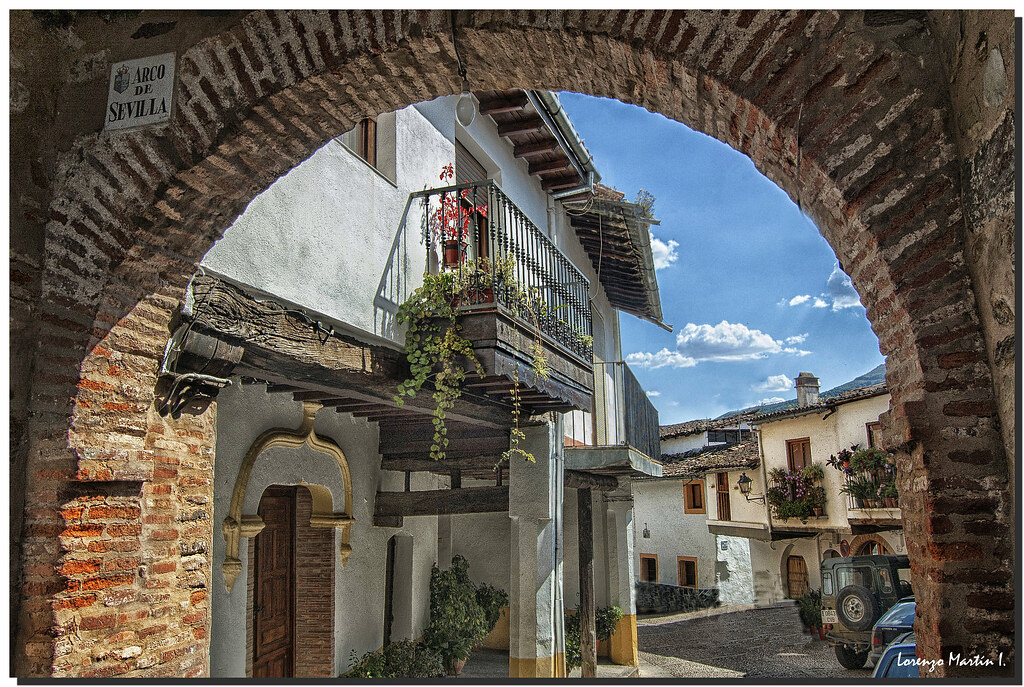
The centre is short and compact. Houses are low, many whitewashed, with stone and some slate in walls and roofs. There are no major monuments. The parish church, dedicated to San Pedro, is the building that stands out most from a distance. It is simple inside and out. It does what it is there to do, nothing more.
Calle Mayor gathers a good number of the older houses. Some still show large wooden doors and iron fittings that have been in place for decades. Do not expect shops or much daily bustle. With a population this size, life moves slowly and largely behind closed doors.
Streets, tracks and the open landscape
Once you leave the centre, dirt tracks begin almost immediately. These are working paths used for farming and livestock, and some residents still rely on them every day. Signposting is limited, so if you wander further out it is sensible to carry a phone with a map or a simple GPS.
The landscape is typical of this part of La Siberia, a region in Extremadura known for wide, sparsely populated countryside. You will see open dehesa, a traditional grazing system with scattered holm oaks, and gently rolling ground. From some higher points, the Orellana reservoir appears in the distance. There are no built viewpoints or platforms, just clearings where the view opens up if the day is clear.
Food, seasons and everyday life
Food in the village follows a straightforward rural logic: filling dishes based on local produce. Migas, a dish made from fried breadcrumbs, appear alongside stews with pulses and, when the time comes, lamb. There is no elaborate culinary narrative attached to it. These are home recipes that continue because they always have.
The patron saint festivities usually take place in August, and during those days the village becomes livelier. Outside that period, the atmosphere is quiet. In winter, traditions linked to the matanza, the home slaughter and processing of pigs, are still kept in many households. It remains part of family life here, rather than a staged event.
If you have a couple of hours, a walk along Calle Miguel Hernández and the streets that climb towards the upper part of the village is worthwhile. There are a few larger houses that break with the more modest architecture found in the centre. After that, you can follow any of the tracks leading out into the countryside for a calmer look at the surroundings.
The weather has a clear say in how you plan your time. When the wind blows in winter, it is noticeable and the cold is dry. In summer, the heat builds from mid-morning onwards, so it makes sense to move early in the day or later in the afternoon if you are planning to walk.
What there is to see
The square is the obvious starting point. The town hall sits there, along with several older houses. From this spot, you can quickly reach the church and the two or three main streets.
There are no long routes within the village itself. The more interesting part lies outside: country tracks, holm oaks and open views across the comarca if you climb a little on the nearby hills.
Keep in mind
Orellana de la Sierra works best as a short stop within a wider route through La Siberia in Extremadura. In about an hour you can see it at a relaxed pace. To fill a full day, you would need to move around the area by car and combine it with other villages or with the reservoir.
Arrive with realistic expectations. This is a small place that continues at its own rhythm. If the idea is to walk quietly and take in the dehesa landscape, it delivers. If you are looking for museums or a busy atmosphere, this is not the place for that.