Full Article
about Puebla de Alcocer
Dominated by a majestic castle with the best views of Siberia and the reservoirs; a town of steep streets and birthplace of giants.
Hide article Read full article
A village that appears all at once
Some places reveal themselves gradually. Puebla de Alcocer does the opposite. You round a bend in the road through La Siberia, where the landscape stretches wide and open, and suddenly there it is: a castle on top of a hill, with houses climbing up towards it. The usual reaction comes quickly. This looks like a place worth stopping for a while.
This is not a village built around tourism. Puebla de Alcocer is shaped by the countryside, by the nearby reservoir, and by long, hot summers. With around a thousand residents, life follows a steady rhythm tied to the seasons and familiar routines. That becomes clear as soon as you park and start walking uphill through its streets.
Up to the castle
The castle draws your eye straight away. It sits at the highest point and, as in many villages in this part of Extremadura, seems to watch over everything below.
The climb has a bit of a slope, but it is not demanding. Within a few minutes, you reach the top. Parts of the walls are still standing, enough to give a sense of its original outline. From there, the view opens wide across the Orellana reservoir and the surrounding fields. It is the kind of spot where people linger without much thought, leaning on the stone and looking out.
From up there, the choice of location makes immediate sense.
Streets shaped by the hillside
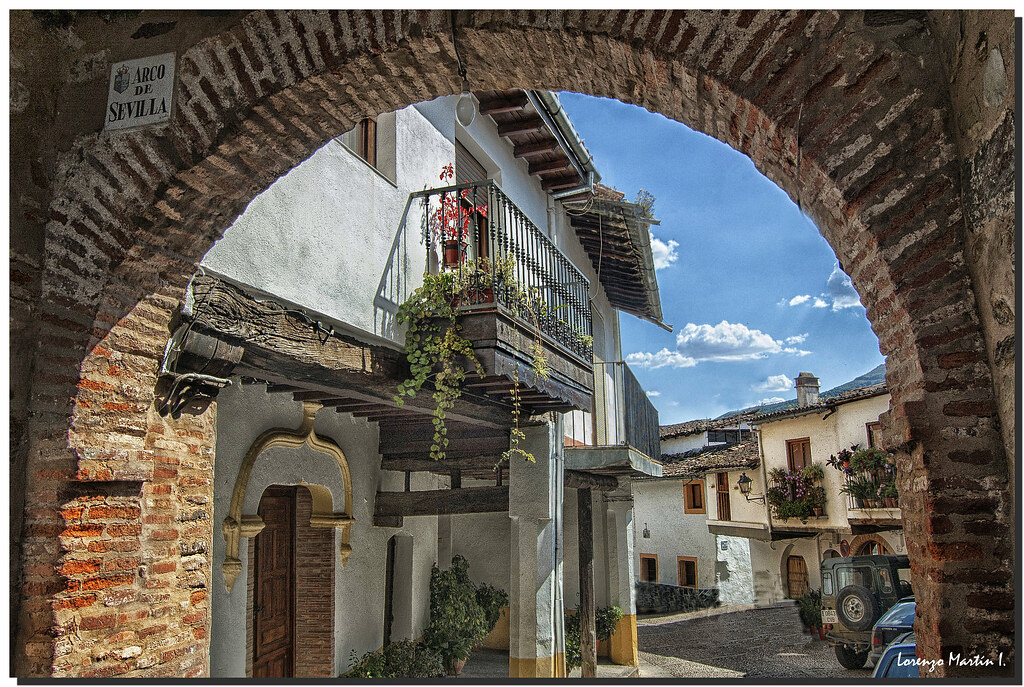
The layout of Puebla de Alcocer follows the terrain rather than any strict plan. Streets rise and turn unexpectedly, with small squares appearing without warning. There are no straight lines or grand promenades designed for display.
Whitewashed houses dominate, many with wooden doors worn by time and iron grilles that look as though they have always been there. One moment you pass a small yard, the next a carefully maintained façade. It is the sort of walk where there is no need to search for landmarks.
At the centre stands the church of Nuestra Señora de los Remedios. It is not especially large or striking from the outside, but it fits the scale of the village. Inside, it usually holds religious images closely linked to the September festivities, when the village becomes more animated.
The presence of the Orellana reservoir
Even though Puebla de Alcocer sits high above, the Orellana reservoir is a constant presence in the landscape. From various points, you can see that large stretch of water breaking up the otherwise dry terrain.
There are several places where it is natural to stop and look out. Among holm oaks, small orchards or paths leading into open countryside, the water appears and disappears in the distance. These are not formal viewpoints with railings or information panels. More often, it is a matter of pausing by the car or leaning on a rock and taking in the view.
The contrast between land and water defines much of the area’s character.
Walking the surrounding countryside
The area around Puebla de Alcocer is crossed by a network of dirt tracks. Some follow traditional routes between rural properties, while others head closer to the reservoir.
These are easy walks, the kind that do not require much planning. Holm oaks, cork oaks, patches of stonier ground and wide, open sky shape the scenery. It feels expansive rather than dense.
Birdlife is part of that landscape. With a bit of patience, it is possible to spot birds of prey gliding over the hills, as well as species linked to the water near the reservoir. Some visitors come specifically with binoculars, drawn by the chance to observe them in this setting.
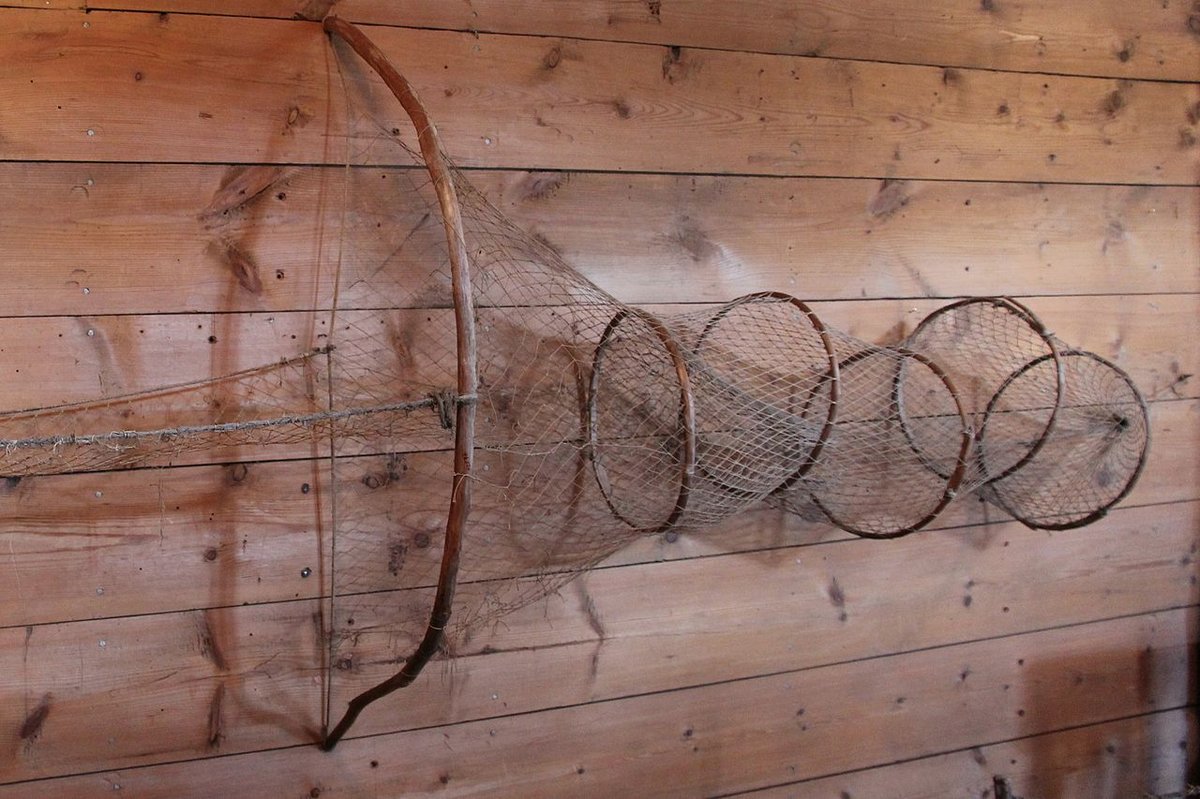
Fishing also attracts a steady number of enthusiasts. The reservoir is home to species such as carp, zander and black bass. Those who come for this tend to arrive prepared, with their equipment and permits already sorted.
Festivities and everyday life
The liveliest period in Puebla de Alcocer usually comes in September, when celebrations dedicated to the Virgen take place. During those days, the atmosphere changes noticeably. There are processions, music in the evenings, and many families return to the village even if they live elsewhere.
Easter, or Semana Santa, has a different tone. It is quieter and more reflective, with a stronger sense of restraint.
In January, the feast of San Antón brings bonfires and gatherings around the fire. In the middle of winter, any excuse to spend time outdoors together is welcome.
Puebla de Alcocer is not a place defined by packed schedules or major attractions. It is simpler than that. A walk through its streets, a short climb to the castle, a pause to look out over the Orellana reservoir. It does not take long to understand how life moves here, and often that is enough.