Full Article
about Talarrubias
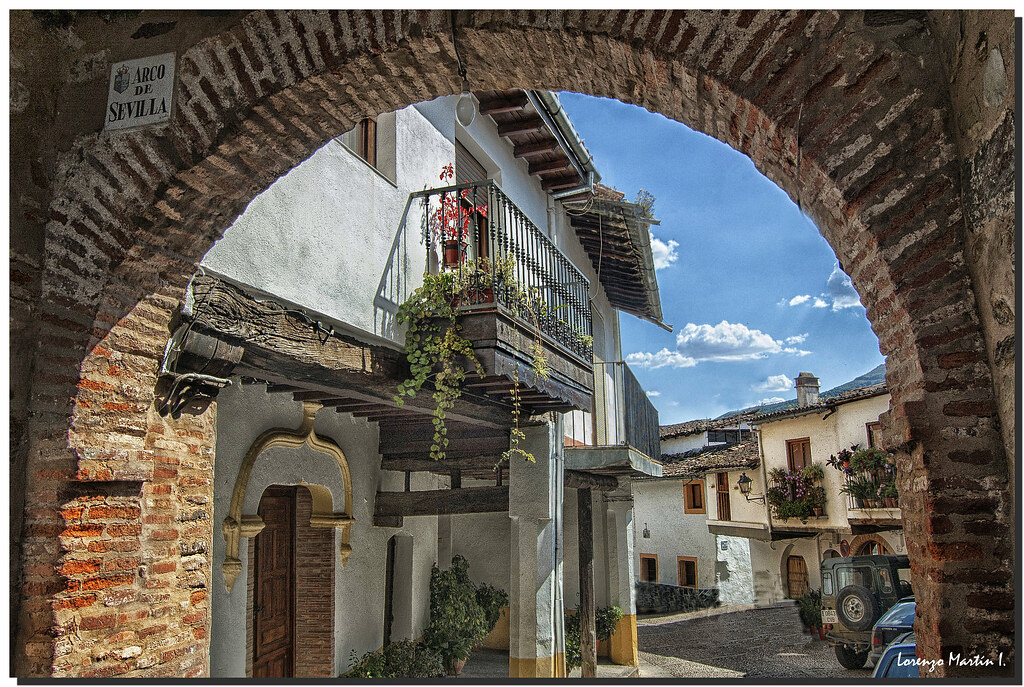
Service hub for western Siberia; near the main reservoirs and with a chapel to the Virgen Coronada.
Hide article Read full article
There is a moment, just as you leave the town and the road begins to cling to the reservoir, when the water looks like a broken mirror. That is not poetic exaggeration. The wind sweeping down from the sierra fractures the surface into shifting silver triangles, all moving at once, as if someone had fed a coin into a vast slot machine. For many visitors, that is the first clear sign that they have reached Talarrubias. Here, water keeps reappearing. Sometimes it fills the view, sometimes it lingers at the edge of your vision, yet it is rarely far away.
A town that paid for its independence
Talarrubias is not the sort of place you stumble upon by accident. It sits in the middle of a map dominated by water. The reservoirs of Puerto Peña, Orellana, La Serena and Zújar lie relatively close by, reshaping the landscape in ways that can be surprising if you are expecting dry plains. With so much blue around, even a GPS can send you looping about as though you were hunting for a parking space in the historic centre of a city.
Before stepping out of the car, it helps to know a story that locals still recall. In the 17th century, the town paid a significant sum to free itself from the authority of Puebla de Alcocer. Picture the scene: neighbours pooling money to secure room to govern themselves. It is the kind of episode that sheds light on local character and pride.
The Iglesia de Santa Catalina dominates much of the town, its Baroque tower rising above the rooftops. Nearby stands the so‑called Casa del Patio, linked to a former Franciscan convent. From the outside the building appears sober, almost restrained. Inside, however, there is a richly decorated dome that tends to catch visitors off guard precisely because it is so unexpected.
Water on every side
The surrounding reservoirs do more than shape the view. They influence daily life and the rhythm of the area. Puerto Peña, for example, stretches out in kilometres of shoreline and looks quite different depending on the season. In spring, when there is still a breeze in the air and the heat has not yet settled in, the water resembles a field of liquid wheat. Herons stand motionless at the edge, as though placed there deliberately.
Signposted routes run through parts of the area, used by those who prefer to explore on foot or by bike. Many of these paths are intended for birdwatching. This is not a natural park filled with dramatic viewing platforms. Instead, expect the kind of gentle walk where attention drifts between the water, the reeds, the wide sky above and the slow movement of light.
Near the reservoir there is a small inland beach known as El Sabinar. It is simple and unfussy: sand, water, people laying out their towels. Families often head there when the weather warms up, and anyone in search of a swim will feel equally at home. On certain days the wind picks up and umbrellas need to be held down firmly. More than once, a runaway parasol has sent someone sprinting across the sand in pursuit, to the quiet amusement of onlookers.
Hearty food and the art of wiping the plate clean
Cooking in Talarrubias is not designed around light bites. Migas serranas appear frequently. The base is stale bread, combined with garlic and good olive oil, then served with whatever accompaniment is at hand. In some of the town’s bars, a tapa may arrive with a drink, although that depends on the day and on who is in the kitchen.
Another local favourite is achicorias fritas. In this part of Extremadura they are prepared in a similar way to other wild greens from the region. They have a noticeable crunch and a slightly bitter edge that proves more compelling than it first sounds.
During colder months, caldereta de cordero is common. It is the sort of lamb stew that calls for time and a hunk of bread alongside. For something sweet, look out for candelillas, rolled almond pastries that resemble chocolate cigars. They are best eaten at a table. In a car, they tend to crumble and scatter with very little encouragement.
Local festivals, local character
Carnival in Talarrubias begins with a tamborrada, a massed drum performance whose sound can resemble a washing machine trapped inside a giant barrel. Costumes are often assembled from whatever happens to be at home. That improvisation is part of the appeal. One year, a neighbour reportedly dressed up as a reservoir, complete with a plastic bathtub hanging around his neck.
At the beginning of May, the Fiesta de la Cruz brings small gatherings into certain streets. Tables appear outside front doors, along with food and drink. Older residents sit and talk while children weave in and out, watching the balconies in case sweets are tossed down.
Around September, the romería of the Virgen Coronada draws large numbers of people from the surrounding area. Part of the route is walked from the ermita, although there are always a few who seem to materialise for the final stretch as if they had covered the whole distance on foot. Given the heat that is common at that time of year, few are inclined to question it.
A slow day in Talarrubias
A gentle way to begin is in the centre of town, with a stop at the Fuente Trifón. This covered fountain, topped by a vault that gives it the feel of an old cave, is neither vast nor grand. What it does have is a quiet peculiarity that encourages a pause.
From there, paths and tracks lead out towards the area of the ermita de San Roque. The walk is not demanding. It suits those who prefer an unhurried pace and an open horizon. In Talarrubias, the experience rarely hinges on ticking off sights. It is more about noticing how the reservoirs alter the light, how the wind rearranges the water, and how a small town carries the memory of having once bought its own freedom.