Full Article
about Tamurejo
Small village in the heart of Siberia, ringed by hills and wild land beside the Río Agudo.
Hide article Read full article
Morning light over La Siberia
Early in the day, when the sun is still low, the surface of the García de Sola reservoir sits flat like a sheet of metal. Sound barely carries. A bird calls somewhere among the pines, and the wind brushes the shore. Tourism in Tamurejo begins in that kind of stillness, far removed from places that compete to offer more and more sights.
Tamurejo lies in La Siberia extremeña, an area of north-eastern Badajoz, at around 540 metres above sea level. The landscape rolls gently, with dehesa pastureland and low hills surrounding the village. The reservoir sits close by and shifts the look of the area depending on rainfall and water levels. In some periods the shoreline pulls back by many metres, exposing dry mud and the marks of earlier levels.
This is not a place defined by monuments. The setting takes priority. The countryside reaches almost to the last houses, and a short walk out brings holm oaks, dirt tracks and the long stretches of silence that characterise this part of Extremadura.
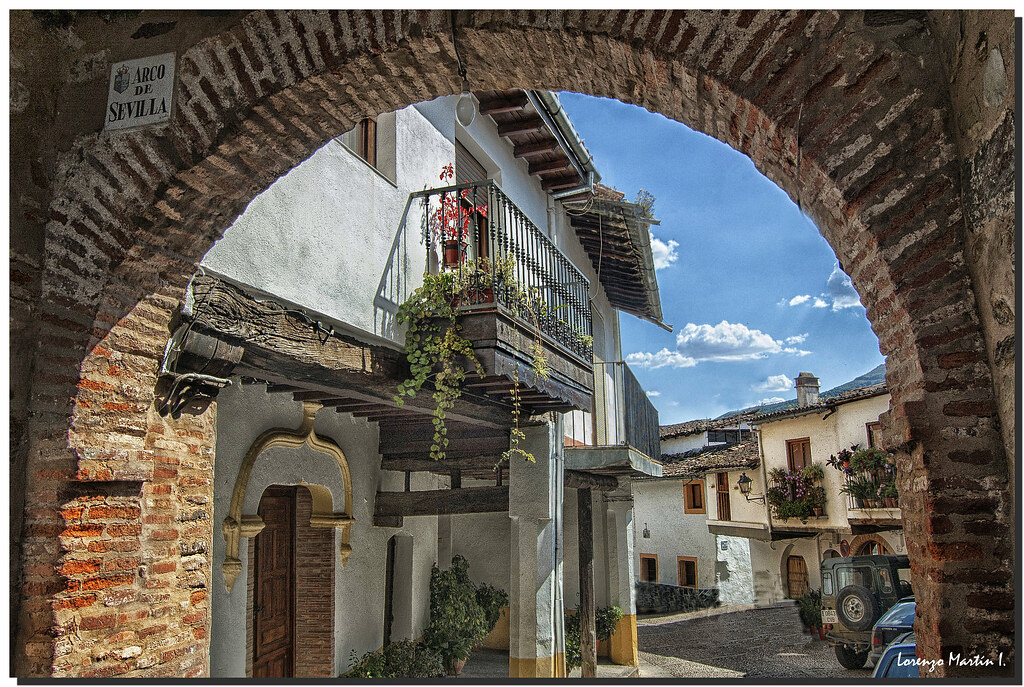
The village itself is small. A handful of straight streets, whitewashed houses and enclosed yards where tools are still kept or animals are raised. The parish church stands in the centre and acts as a point of reference when moving around. You can cross Tamurejo from one side to the other in about ten minutes.
Between the square and the water
The main square gathers most of what happens during the day. There are stone benches, an old fountain and white façades that reflect the strong midday light. Some patios show geraniums or clay pots, and it is not unusual to hear chickens behind a wall.
From several points in the village, the view opens towards the García de Sola reservoir. On clear days, the water reflects the sky in tones that shift between green and blue. By early afternoon, the wind often lifts small ripples and changes the whole scene.
The nearby shores tend to remain quiet. When water levels drop, the mud can reveal traces of passing animals: deer hooves, wild boar tracks or marks left by birds. These small signs give a sense of how closely the village sits to its surroundings.
Paths through dehesa country
A number of dirt tracks leave Tamurejo and head into the dehesa. They are not marked as formal routes, yet people have used them for years to reach farms or simply to walk. When the ground is dry, it crunches underfoot. After rain, the air carries a strong scent of earth and fallen leaves.
Spring brings more birds than cars. Goldfinches appear, birds of prey circle overhead, and small flocks move between the holm oaks. With patience, especially towards dusk, it is possible to spot animals approaching the water.
Summer requires some care when planning a walk. The sun bears down on these open hills and there are few stretches with continuous shade. Early hours or the end of the day are the more comfortable moments to be outside.
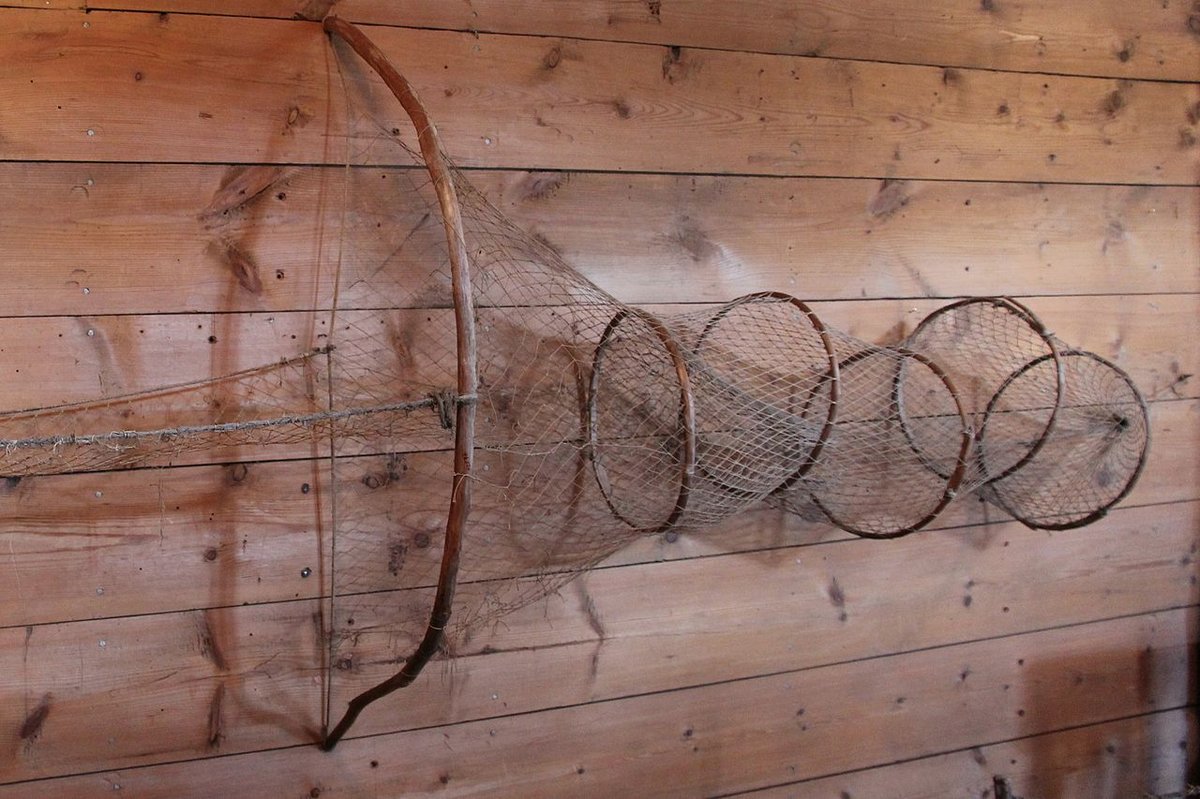
Fishing remains a common activity on the reservoir, always subject to the rules in place for each season. It is easy to see local people spending long stretches by the water, in silence, with a rod set on the bank.
Traditions that still shape the year
The main local festivities usually take place in August. At that time, many people who live elsewhere return to Tamurejo for a few days. The programme includes processions, gatherings in the square and informal groups, known as peñas, where people meet and talk late into the night.
Winter still carries the memory of the matanza, the traditional slaughter and preparation of pork that once marked a key moment in the rural calendar. It continues in some households, although less frequently than before.
Food in the area remains closely tied to what is raised or grown nearby. Dishes such as migas, along with pork stews and local cheeses, are part of everyday cooking. In season, wild mushrooms appear as well, collected in the surrounding countryside by those who know the terrain.
Taking Tamurejo at its own pace
Tamurejo does not take long to see, yet it rewards a slower approach. A walk through the centre, a short stroll towards the dehesa and some time looking out over the reservoir are enough to form a clear sense of the place.
This is not a destination for ticking off sights. What it offers is open landscape, simple paths and a great deal of quiet. Some visitors may find that there is little to do; others come precisely for that reason.
Spring and autumn tend to be the most comfortable seasons for walking. Summer heat can be intense, while winter often brings a dry, persistent wind.
Access is via local roads. Traffic is usually light, though there are bends and narrow stretches. Driving slowly helps, and it is worth taking care not to block entrances to farms when parking near the tracks.