Full Article
about Villarta de los Montes
The easternmost town in Badajoz, deep in the Biosphere Reserve; surrounded by forests and big game.
Hide article Read full article
A village that wakes gently
Early in the morning, before the heat settles in, Villarta de los Montes carries the scent of damp earth and old firewood. A car might pass slowly along the main street, its sound bouncing off whitewashed façades. This small municipality in La Siberia extremeña, with only a few hundred residents for most of the year, moves at an unhurried pace shaped more by the countryside than by the clock.
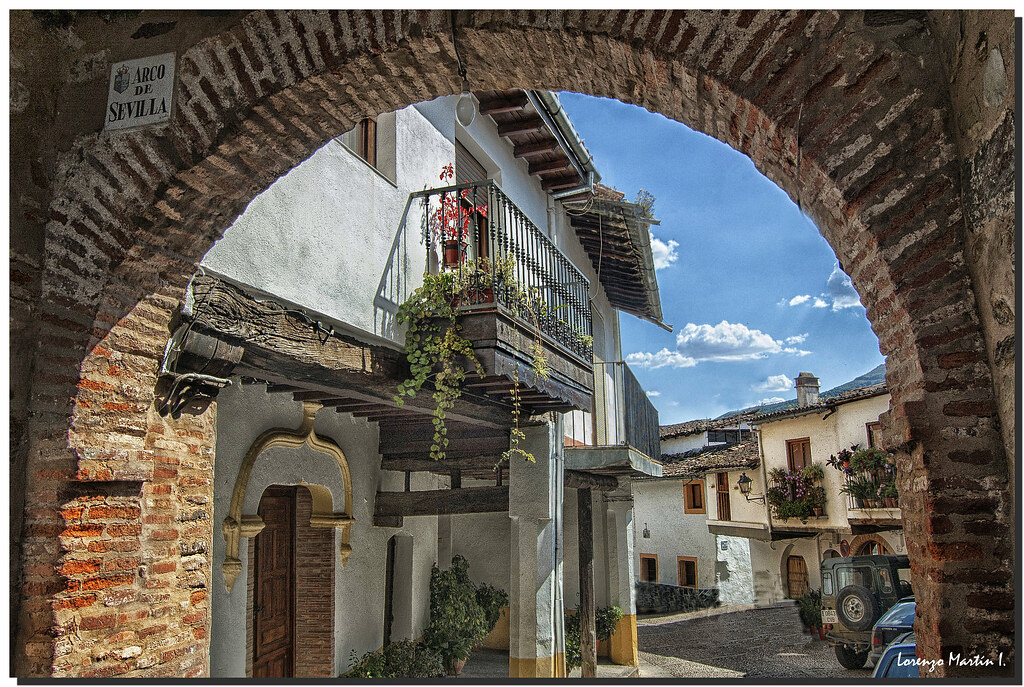
The streets are short and slightly sloped. Houses have traditional terracotta roof tiles, dark wooden doors and plant pots watered in the early hours. At the centre stands the church of San Bartolomé, plain in appearance, its bell tower rising only modestly above the rooftops. There are no long urban routes to follow. You can cross the village in half an hour, yet it rewards a slower walk, paying attention to small details like old iron window grilles, weathered lime-coated walls and the occasional patch of shade to pause for a moment.
The dehesa beyond the last houses
Villarta is really defined by what lies just beyond its edge. Step past the final houses and the dehesa opens out in every direction. This landscape, typical of parts of Extremadura, is a mix of pasture and scattered holm oaks, shaped over time by farming and grazing. The trees are often very old, with twisted trunks, and stone walls mark the boundaries between plots of land.
On quiet days, the distant sound of cowbells drifts across the low hills, as if rolling slowly through the air. By mid-morning, vultures often appear, riding the warm currents. They move high and unhurriedly overhead. There is also frequent mention of the Iberian lynx in this part of La Siberia, though seeing one is another matter entirely and depends on patience and luck.
The landscape shifts with the seasons. In spring, the ground is covered with grass and low wildflowers. By late summer, it dries out, and the scents change to dust, crushed thyme underfoot and sun-warmed oak.
Paths that follow daily life
Several agricultural tracks lead out from the village. They are not designed as marked walking routes, nor do they have information panels. These are working paths, used by farmers and those who tend the land. That is part of what keeps them feeling unspoilt.
It is sensible to carry water and have a basic sense of direction, especially if heading away from the village centre. The terrain itself is not difficult, but distances can be misleading and shade is limited in some stretches.
The most pleasant times to walk tend to be early morning and late afternoon. At those hours, the light falls at an angle across the holm oaks, giving the landscape a warmer, reddish tone.
Skies full of movement, ground full of quiet
La Siberia has a certain reputation among birdwatchers. In the skies above Villarta de los Montes, black vultures and griffon vultures are commonly seen. At certain times of year, migratory species pass through as they cross the Iberian Peninsula, following these gentle ranges of hills.
Even without any knowledge of birds, the area has a particular pull. Long stretches pass with almost no sound at all, just the wind moving through branches or the faint rustle of an animal in the grass. It is a kind of quiet that feels uninterrupted rather than empty.
Food shaped by the land
Local cooking remains closely tied to what the dehesa provides, especially pork. In many homes, meals are simple and familiar. Dishes might include magro de cerdo, a straightforward pork preparation, migas when the weather turns cooler, or gazpacho on the hottest days.
On special occasions, traditional sweets still appear. Perrunillas, crumbly biscuits typical of Extremadura, and pestiños, fried pastries often coated with sugar or honey, are usually made at home or in village ovens. The recipes are old and filling rather than elaborate.
August days and the rhythm of the year
Festivities dedicated to San Bartolomé usually take place in August, when many people who live elsewhere return to the village. For a few days, the atmosphere shifts. There are evening dances, gatherings in the streets and a noticeable increase in activity.
Outside those dates, Villarta returns to its usual calm. Daily life revolves around the countryside and seasonal work, with little sense of urgency.
Getting there and choosing your moment
Villarta de los Montes lies just over 150 kilometres from Badajoz by road. The usual route follows the N-430 eastwards before turning onto smaller roads that cross La Siberia. The journey can easily take more than two hours, especially in the final stretch where the road winds through the dehesa.
Spring and autumn are generally the most comfortable times for walking in the area. Summer brings strong midday heat, so earlier starts and late afternoon outings are more manageable if visiting then.
Villarta de los Montes does not aim to impress with major attractions. It offers something quieter: a place to pause, look around and get a sense of life in this part of Extremadura, where the landscape sets the rhythm and time seems to move a little more slowly.