Full Article
about Aldeanueva de la Vera
A Vera town surrounded by gorges and lush nature, noted for its traditional architecture and tobacco and paprika farming.
Hide article Read full article
Morning light in the old quarter
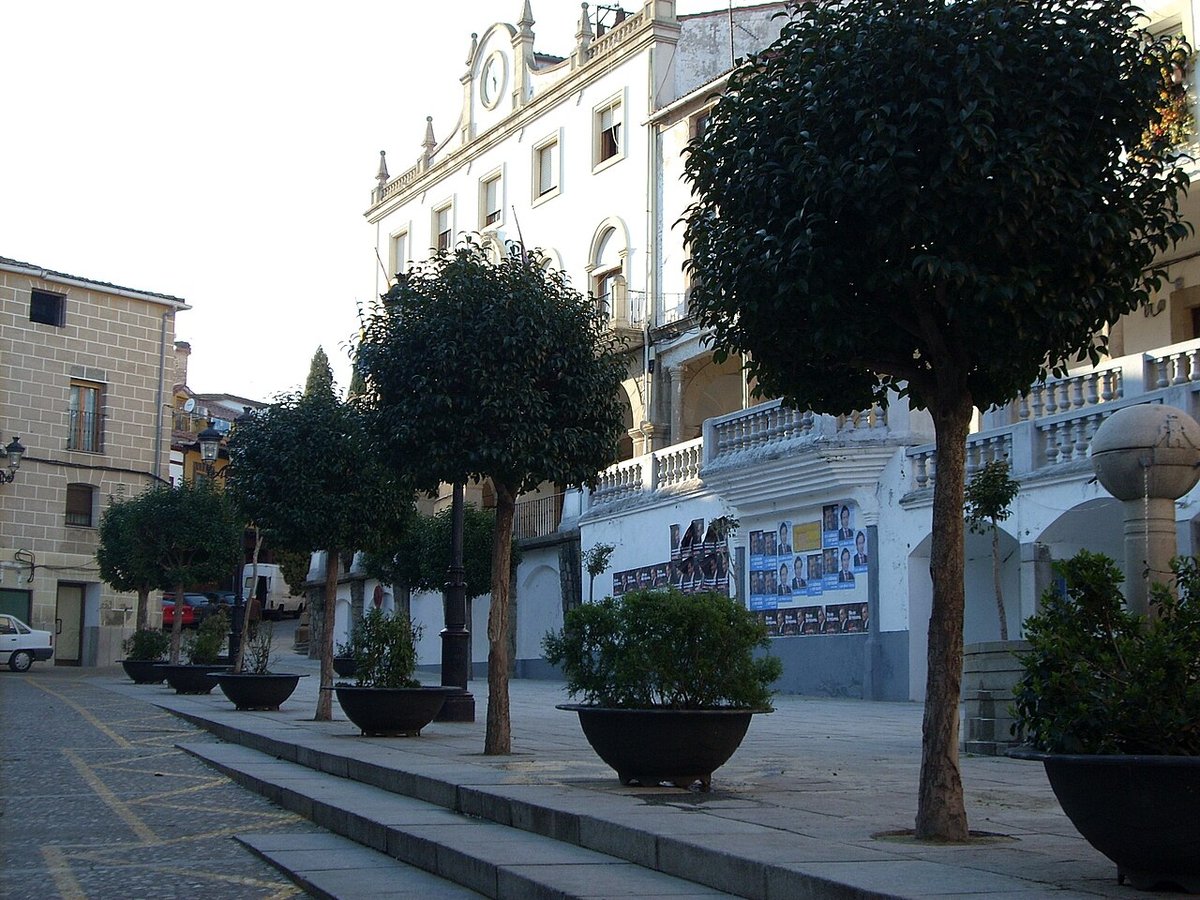
Early in the day, when the air still drifts down cool from the sierra, Aldeanueva de la Vera carries the scent of damp earth and fallen leaves. At a crossroads in the old quarter, beneath an old holm oak marked by time, the silence is broken only by the crunch of stone underfoot or the low buzz of a bumblebee moving between wildflowers. The streets are narrow and cobbled, and the granite houses with wooden balconies seem built for a slower rhythm, with no hurry to change.
Set in the centre of the comarca of La Vera, between slopes where cherry trees mix with oaks and a few chestnuts, the village keeps its architecture close to the land. There are no grand buildings or monumental squares. Instead, rough stone walls, dark timber and arcades that hold shade even in summer define the scene. This way of building has more to do with climate and with the water that runs through the local gargantas, mountain streams, than with any decorative ambition.
San Mateo and the small hermitages
The parish church of San Mateo stands at one of the most visible points in the village. Its tower, raised in granite ashlar, rises above the tiled roofs. The building combines elements of late Gothic design with later additions, something fairly common across the area. Inside, a Baroque altarpiece carved in wood is still preserved, its craftsmanship retaining much of its original intensity.
A little further out sits the Ermita del Cristo, smaller and more discreet. In many villages of La Vera, these spaces remain part of everyday life. Someone comes in to clean, to leave flowers, or simply to spend a few quiet moments. They are not only historic structures but places that continue to serve the community in small, habitual ways.
Garganta de Cuartos and the water from Gredos
A few kilometres from the centre lies one of the best-known spots in the area: the Garganta de Cuartos. The water descends from the Sierra de Gredos and forces its way between large granite boulders, forming natural pools that draw plenty of people in summer.
It is worth arriving early during the hottest months. By midday the atmosphere shifts and the more accessible areas fill up quickly. After heavy rain the flow increases and some rocks are more slippery than they first appear, so it makes sense to move carefully if searching for a quieter corner.
In autumn and spring the landscape around the garganta changes noticeably. The trees that line its banks, alders, oaks and chestnuts, begin to shed leaves or push out fresh shoots, and the sound of the water carries from some distance away. The setting feels different with each season, even though the granite and the course of the stream remain constant.
Paths, old tracks and wide views
Several walking paths leave from the outskirts, linking different gargantas and small cultivated plots. They are not especially technical routes, yet many cross damp ground and exposed roots, particularly after several days of rain.
Some of these paths follow old tracks where horseshoe marks can still be seen etched into the stone. For centuries they were regular routes for moving livestock or connecting the villages of the comarca. The marks remain as quiet traces of that movement, embedded in the same granite that shapes the houses and bridges.
Climbing a little higher on the surrounding slopes opens up a broad view across La Vera, a green strip that ends abruptly in the plains of northern Cáceres. The contrast is clear: wooded hills and watercourses giving way to flatter, more open land beyond.
A base for exploring La Vera
From Aldeanueva it is easy to head towards other villages in the comarca such as Garganta la Olla or Cuacos de Yuste. On a map the distances look short, yet the roads wind between gorges and hillsides, so journeys often take a little longer than the kilometres suggest.
In the kitchens of the area, dishes remain closely tied to local produce. Pimentón, the paprika for which La Vera is well known, appears in both sweet and hot varieties. Traditional embutidos from the annual pig slaughter are common, along with stews made with kid goat or pork. In season, dried chestnuts known as pilongas still find their way into certain recipes, keeping older culinary habits alive in everyday cooking.
Food here follows the agricultural cycle, just as the festivals do. What appears on the table reflects what is being harvested or prepared in the surrounding fields and groves.
Festivals shaped by the farming calendar
The village celebrations remain closely linked to the agricultural and religious year. In September, the fiestas of San Mateo are usually held, with religious events and shared meals out in the street. The tone is local rather than grand, centred on gathering and continuity.
In spring, the tradition of Los Mayos continues. Groups of neighbours walk through the village singing old coplas, traditional verses that have been passed down over time. It is not organised as a performance for visitors. Instead, it persists because each year someone takes on the task of arranging it, and others join in.
Autumn brings the chestnut harvest in the nearby sotos, or chestnut groves. The village often sets aside a day to mark the occasion. It is not a large-scale event. The change is more noticeable in the atmosphere, in the smell of chestnuts roasting and in the stews that begin to appear in homes as the weather cools.
When to go
Between April and October the village shows its rhythm most clearly. In spring the countryside is particularly green and the gargantas run with plenty of water. Summer heat builds around midday, yet the bathing areas offer relief if reached early or later in the afternoon.
August sees a noticeable increase in visitors, especially around the Garganta de Cuartos. Those who prefer walking the paths or strolling through the old quarter at a gentler pace often appreciate coming during the week or in the quieter months at either end of the season.
Aldeanueva de la Vera does not present itself through grand landmarks or dramatic statements. Its character lies in granite underfoot, water moving steadily down from Gredos, and routines that follow the fields and the weather. For travellers exploring Extremadura and the wider La Vera region, it works well as both a place to pause and a starting point for the surrounding landscape.