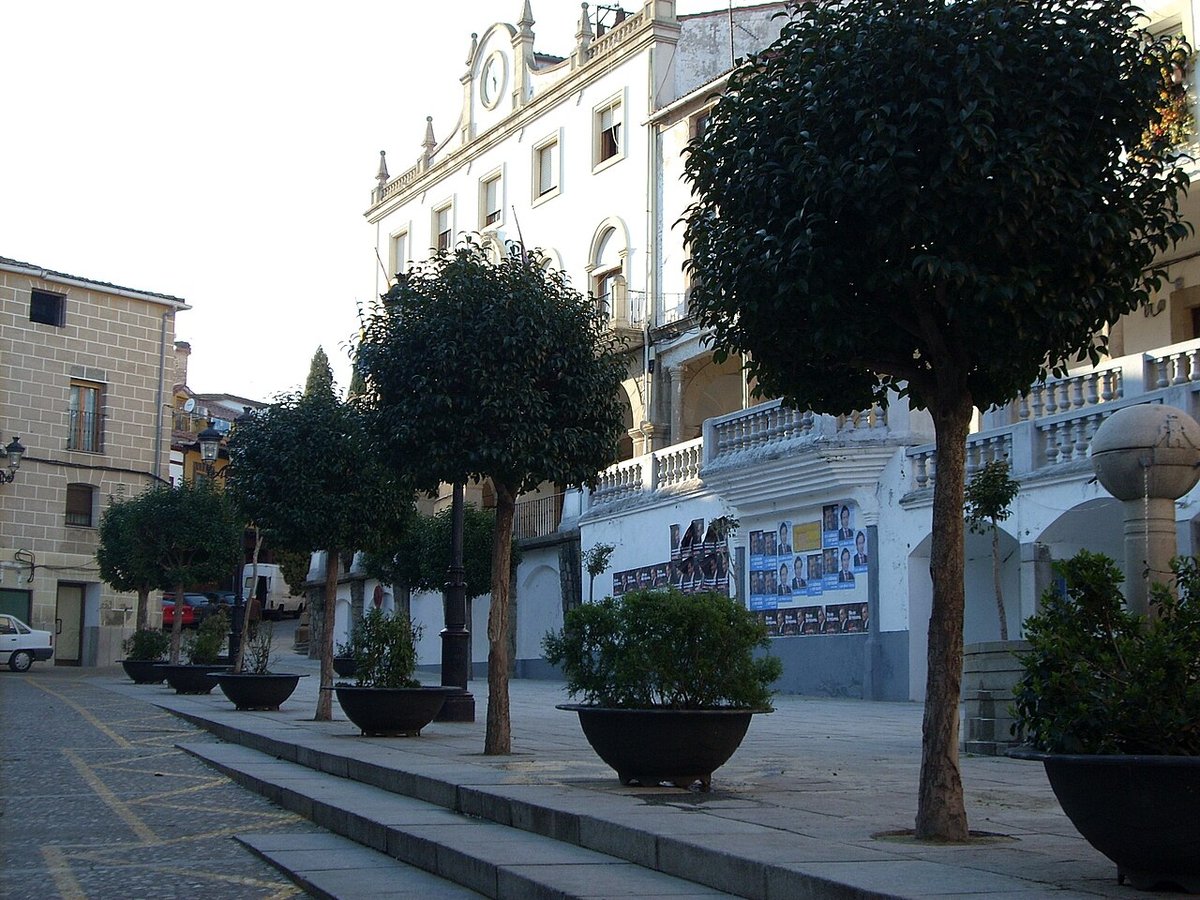
Vista aérea de Collado de la Vera
Instituto Geográfico Nacional · CC-BY 4.0 scne.es
Extremadura · Meadows & Conquerors

Collado de la Vera

At 526 m above the Tiétar valley, Collado de la Vera is high enough for the air to carry the scent of oak and wild thyme, yet low enough for figs t...

274 inhabitants · INE 2025
526m Altitude

Why Visit

Mountain Church of San Cristóbal (Jubileo) Hiking trails

Best Time to Visit

spring

Jubilee Festival (Holy Wednesday) agosto

Things to See & Do
in Collado de la Vera

Heritage

  • Church of San Cristóbal (Jubileo)
  • baptismal font

Activities

  • Hiking trails
  • Religious tourism

Festivals
& & Traditions

Fecha agosto

Fiestas del Jubileo (miércoles santo), San Cristóbal (agosto)

Las fiestas locales son el momento perfecto para vivir la autenticidad de Collado de la Vera.

Full Article
about Collado de la Vera

Quiet Vera village with a distinctive church and a setting of oaks and chestnuts.

Ocultar artículo Leer artículo completo

At 526 m above the Tiétar valley, Collado de la Vera is high enough for the air to carry the scent of oak and wild thyme, yet low enough for figs to ripen against south-facing walls. The village counts barely 240 souls, a number that doubles for a week in late August when emigrants return for the fiesta of San Bartolomé and every balcony sprouts the green-white-red flag of Extremadura. For the rest of the year, silence settles so completely that you can follow the flight of a jay by ear as it moves from chestnut to chestnut.

Stone, Adobe and the Sound of Water

The centre is a single web of cobbled lanes no wider than a farm tractor. Houses are built from whatever the sierra provided: lower courses of granite, upper walls of ochre adobe, all capped with curved Arab tiles that throw rainwater into stone gutters the width of a forearm. Iron balconies hold geraniums, but also piles of drying peppers that will be ground into the smoked paprika that gives local chorizo its dusk-red colour. Notice the wooden corredores—first-floor galleries that let farmers look over their beasts without stepping outside in January. Half a dozen still bear the coats of arms of hidalgo families whose fortunes faded when wool prices collapsed in the 1850s. Nobody restores them; the stone carving weathers a little further each winter, softening under lichen.

There are no museums, no ticketed monuments. The parish church of San Bartolomé keeps its door unlocked. Inside, the smell is of candle wax and recently ironed linen; a 17th-century retablo glows dimly, its gilding cracked like an old master painting left in the sun. Drop a euro in the box and the sacristan—usually the baker’s aunt—will switch on the lights long enough to spot a Flemish carving of Saint Bartholomew holding his own flayed skin like a folded jacket.

Walking Without Waymarks

Paths begin where the asphalt ends. One track climbs north-east through sweet-chestnut coppice to the abandoned hamlet of El Almendral, three kilometres and four centuries away. Another follows the Arroyo de los Cuartos south to the Roman bridge at Jarandilla, a steady two-hour descent through bracken and wild pomegranate. Neither route is signed; locals still treat footpaths as utilities, not attractions. Ask directions and you’ll be told to “keep the water on your left” or “turn by the big holm oak that was hit by lightning”. The going is rough—expect loose shale and the occasional ford—so proper boots are advised. In October the chestnut woods catch fire metaphorically: leaves turn copper, the husks split to gloss-brown nuts, and wild boar churn the leaf-litter searching for acorns.

Birdlife rewards patience. Kingfishers ratchet along the stream beds, while short-toed eagles circle overhead on thermals rising from the granite outcrops. Dawn in May is an unpaid orchestra: golden orioles whistle from poplar tops, nightingales argue from the undergrowth, and somewhere a cuckoo keeps unreliable time.

What Arrives on the Back of a Pick-up

Food here is measured by how far it has travelled. Migas—fried breadcrumbs—start with bread baked in the wood oven behind the bar, the same oven used once a month to roast half a pig for the neighbour who still keeps two Iberian sows. Paprika comes from peppers smoked over holm-oak logs in a tin-roofed shed; the smell drifts across the plaza for three autumn weeks and seeps into every jumper you pack. Order a plate of migas (€7) at Bar Plaza and you’ll get a hill of crumbs speckled with chorizo, grapes and pine nuts, plus a glass of local red that costs an extra €1.50 if you ask for the fancy stuff—meaning it was bottled in the province rather than trucked in from La Mancha.

Vegetarians survive on revuelto de setas, a scramble of eggs and whatever mushrooms the forestry chap found that morning. Chestnuts appear in everything when they drop: roasted as tapas, stewed with wild boar, or candied in honey for the Christmas hamper. If you’re invited to a matanza—now a family affair rather than the communal event it once was—decline politely unless you can face the sight of a 150 kg pig meeting its maker at 6 a.m. The reward is a link of fresh morcilla still warm from the pot, but the squeals carry.

When the Village Decides to Stay Up Late

For fifty-one weeks a year, traffic lights would be pointless; there is only one through-road and it dead-ends at the church. Then August arrives. The plaza is boarded over for open-air dancing, a bar sells plastic cups of beer for €1, and teenagers who grew up speaking WhatsApp Spanish with London accents re-learn theExtremaduran “th” that their parents never lost. The statue of San Bartolomé is carried shoulder-high at midday, timed to coincide with the temperature peak of 38 °C; wise visitors watch from the shade of the pillared corridor that once housed the village school.

May brings the gentler fiesta of Los Mayos. Boys rehearse satirical verses for weeks, then tour the streets after dark, serenading each house with couplets that praise the owner’s vegetable patch or mock his bald patch—both received with equal applause. Bonfires of rosemary and vine prunings perfume the night, and the council lays on free chocolate and churros at midnight. Tourist numbers: zero, unless you count the Madrilenian second-home owners who drive up for the weekend.

Beds, Buses and the Art of Low Expectations

Accommodation is limited. Alcor del Roble has six rooms carved into the rock beneath the church; stone walls keep the temperature at 19 °C year-round, so even August guests sleep under wool blankets. Doubles from €70 including breakfast: coffee, toast and homemade quince jam. Cheaper options exist in Jarandilla de la Vera, 8 km down the road, but then you miss the 8 a.m. church bells and the bakery queue. There is no campsite; wild camping is tolerated if you ask the farmer whose land you intend to use, and if you pack out every last cigarette end.

Public transport demands patience. Monday to Friday, one bus leaves Plasencia at 14:15, reaches Collado at 15:30, and returns at 06:55 next morning. That is the timetable—singular. Weekends: nothing. A taxi from Plasencia costs €45; share apps do not operate. The road (EX-390) is twisty but paved; in winter, ice can close the highest stretch for a morning. Chains are rarely needed, yet hire companies in Madrid will insist you take them. Say yes, then use them as luggage stoppers on the way home.

The Honest Season

Spring brings orchids along the track edges and the risk of a week of solid rain carried on Atlantic fronts. Summer is reliable, often too reliable: daytime 35 °C, night-time 20 °C, no rain from June to September. Autumn is the sweet spot—warm days, cool nights, mushrooms, chestnuts, grape harvest fumes drifting across the road—but also the hunting season. Wear something bright if you leave the tracks; shotgun pellets have been known to clip branches. Winter is sharp: blue skies, frost in the shade all day, wood smoke drifting at head height. Bars keep a brazier glowing; conversation slows to the speed at which hands thaw.

Come if you want to calibrate your internal clock to something slower than the UK timetable. Leave if you need a flat white before 10 a.m., a cashpoint that does not charge, or evening entertainment beyond dominoes and the village television showing Extremadura’s version of Who Wants to Be a Millionaire? Collado de la Vera will not change to accommodate you; that, perversely, is its offer.

Key Facts

Region
Extremadura
District
La Vera
INE Code
10065
Coast
No
Mountain
Yes
Season
spring

Livability & Services

Key data for living or remote work

2024
Connectivity5G available
HealthcareHospital 24 km away
EducationElementary school
Housing~5€/m² rent · Affordable
CoastBeach nearby
Sources: INE, CNMC, Ministry of Health, AEMET

Planning Your Visit?

Discover more villages in the La Vera.

View full region →

More villages in La Vera

Traveler Reviews