Full Article
about Guijo de Santa Bárbara
The highest village in La Vera; known for its liqueurs and the Trabuquete.
Hide article Read full article
Arriving and getting your bearings
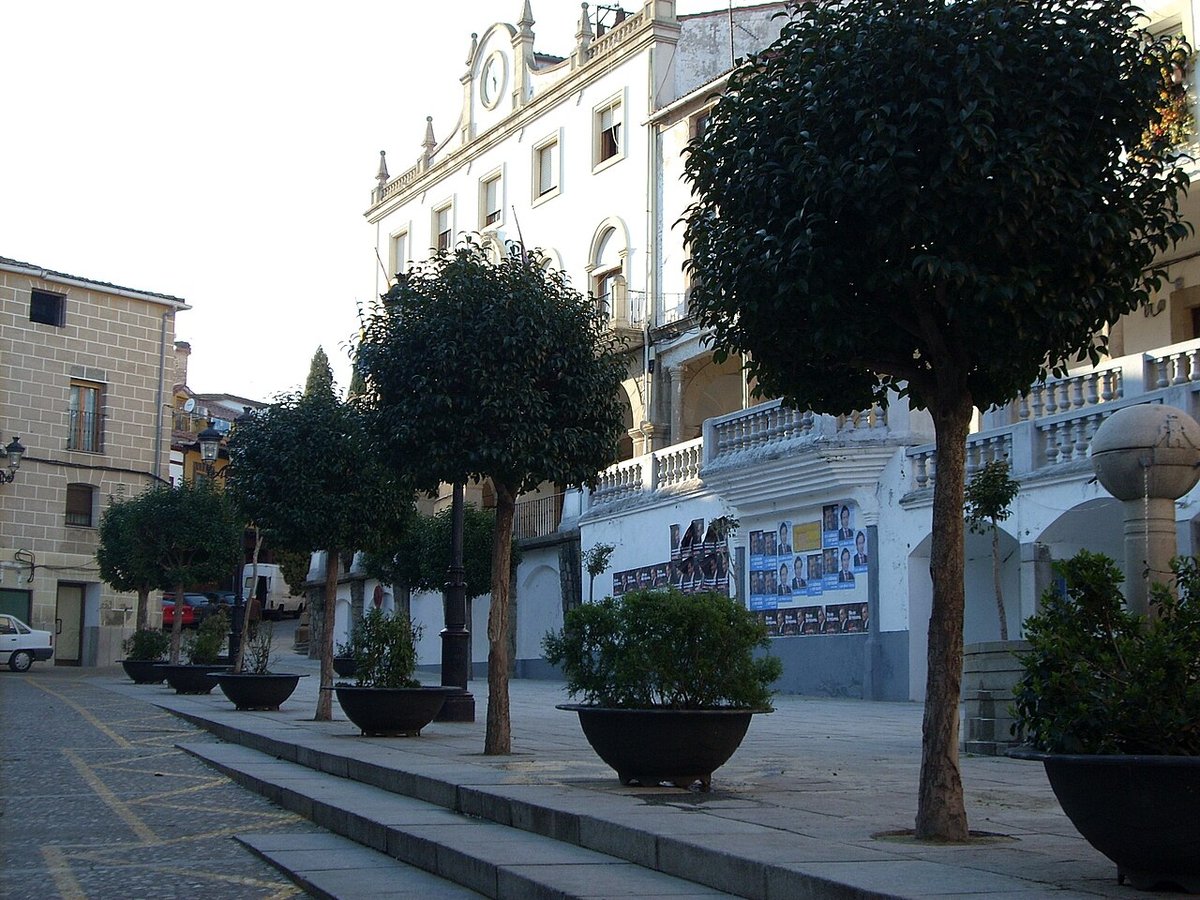
In Guijo de Santa Bárbara, the first practical matter is the car. There is usually space to park near the main square, in the upper part of the village. From there, the route down to the church follows a cobbled street. The centre is small and can be covered in a short walk.
The access road is generally in decent condition, though some stretches are narrow. When it rains or there is ice, it is worth taking it slowly. The slopes are not especially long, but wet tarmac makes a difference here.
A village for a short walk
The urban core does not revolve around major historic buildings or museums. The church of Santa Bárbara appears to be from a relatively modern period, likely 17th century or later, and it is simple in style. Stone construction, solid shape, and an interior without much decoration.
The narrower streets lead to enclosed courtyards bordered by stone or wooden walls. Some houses still retain timber framing and interior patios that stay cool in summer. Many have been renovated, while others keep the same restrained appearance they have always had.
This is not a monumental village. It is the kind of place you walk through once, take in, and that is that.
Gorges, footpaths and chestnut trees
The real reason people come lies beyond the houses. Paths lead out of the village towards the gorges descending from the Gredos mountains. La Garganta del Pinar is among the best known. There are also natural pools along the Casillas river where people swim when water levels allow.
The footpaths cross chestnut groves, low oak woodland and patches of scrub. In spring, wild cherry trees appear in blossom. In summer, if there has been enough rain, the pools offer a quick swim. The water stays cold even in August.
Some stretches include slopes and loose stones. Good footwear matters, and watching where you step is part of the walk.
In the hills, traces of wild boar are common, and with some luck a fox may appear towards dusk. Birds of prey circle above the valley: golden eagles, short-toed snake eagles and the occasional sparrowhawk.
Seasonal food and a steady pace of life
Food here follows what is available nearby. Potatoes from the La Vera area, mushrooms when they are in season, and trout from the Casillas if fishing is open. The cooking is straightforward: migas with peppers, stewed kid goat, and warming dishes eaten with a spoon when the weather turns cooler.
This is not a place shaped around tourism. The bars that exist mainly serve people from the village and surrounding area.
Seasonal gathering is part of life. In spring, some locals head out to pick wild asparagus. In autumn, saffron milk caps and other mushrooms appear if the hills have been damp. Foraging is usually regulated, so it is worth checking the rules before setting out with a basket.
Festivities and the summer return
The main celebrations are linked to Santa Bárbara. These typically include religious events along with activities organised by the village itself.
August brings a noticeable change. Families who live elsewhere return, and the population grows for a while. With them come open-air dances, games and events put together by local associations.
It does not become crowded in any big sense. The atmosphere is more about a village briefly coming back together.
A final note before you go
Arriving early is a good idea if the plan is to walk towards the gorges, and it makes sense to return before nightfall. The village itself is quickly seen. The real focus is outside, on the paths and in the hills. Without that, the visit feels short.