Full Article
about Jarandilla de la Vera
Historic town where Charles V stayed; imposing castle-parador
Hide article Read full article
Jarandilla de la Vera: un pueblo con historia imperial
La geografía de Jarandilla de la Vera explica su pasado. Situado entre la sierra de Gredos y el valle del Tiétar, este pueblo fue durante siglos un punto de paso y control en el norte de Extremadura. Su momento más conocido llegó en noviembre de 1556, cuando el emperador Carlos V se alojó aquí. Aguardaba la finalización de las obras en el cercano monasterio de Yuste, donde pasaría sus últimos días. Su estancia, de varios meses, es un episodio más dentro de una historia más larga de vigilancia y tránsito.
El castillo y la iglesia fortificada
El perfil de Jarandilla lo define el Castillo de los Condes de Oropesa. La construcción actual es del siglo XV, probablemente sobre una fortaleza anterior. Sus muros de sillería albergaron a Carlos V y su corte durante aquella espera. Hoy funciona como alojamiento, pero en el pueblo todo el mundo lo sigue llamando “el castillo”.
A poca distancia se levanta la iglesia de Nuestra Señora de la Torre. Su aspecto sólido delata un origen medieval con doble función: religiosa y defensiva. Parte de su base se asienta directamente sobre la roca. Desde su atrio se comprende su posición estratégica, con una vista clara sobre el entramado de calles estrechas que trepan por la cuesta.
El humo del pimentón
El otoño en La Vera huele a humo de leña de encina. Es cuando se secan los pimientos para el pimentón, un ciclo que marca el ritmo de la comarca. El proceso sigue siendo tradicional: secado lento en secaderos y posterior molienda. La Denominación de Origen regula la producción desde finales del siglo XX, pero la técnica es mucho más antigua. En las cocinas locales se usa tanto en platos salados, como las migas o los guisos de patata, como en algunos dulces, donde se añade en cantidades mínimas. No es una postal, es el trabajo anual de la tierra.
Las gargantas, más que paisaje
Por el término municipal bajan varias gargantas desde Gredos. Las más cercanas al núcleo urbano son la garganta de Jaranda y la Jarandilleja. La primera tiene un sendero conocido que sigue el curso del agua entre bosques de castaños y robles. Llega a zonas de cascadas, como el lugar llamado Cueva del Chorro. Estas corrientes no son un elemento decorativo. Tradicionalmente han regado huertas, movido molinos y, en verano, sirven como pozas para bañarse. Su presencia ordena el territorio y la vida cotidiana.
La noche de Los Escobazos
Cada 7 de diciembre, víspera de la Inmaculada, se celebra Los Escobazos. Las calles se llenan de jinetes que blanden escobas de retama ardiendo. La tradición parece remontarse a los pastores que regresaban al pueblo y anunciaban su llegada con teas. Ahora es una fiesta de fuego, humo y caballería que atrae a gente de los pueblos cercanos. La escena, marcada por el movimiento y la luz de las llamas, tiene una identidad visual poderosa.
Cómo moverse por Jarandilla
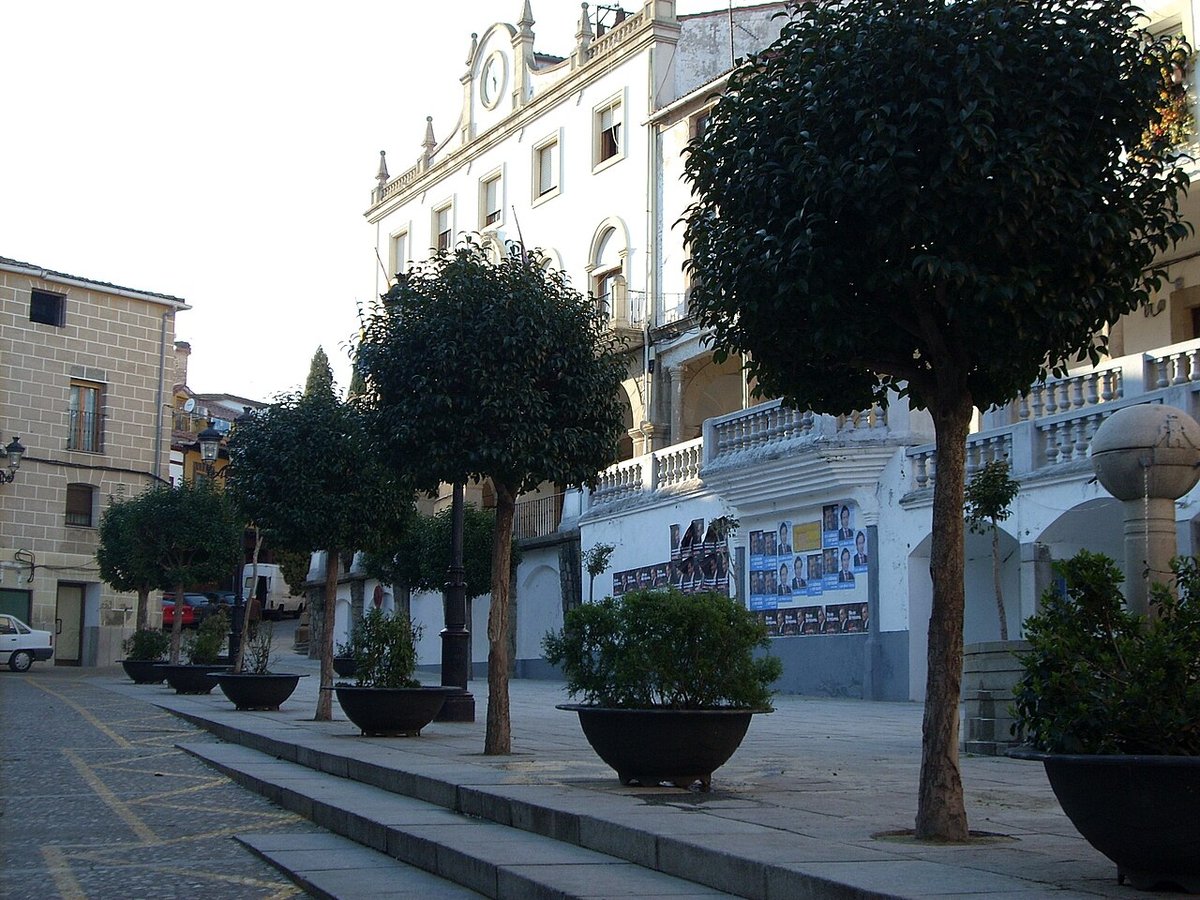
Jarandilla se encuentra en el noreste de Cáceres. Se accede por carretera, a través de un paisaje de castaños y olivares. El centro histórico se recorre bien a pie. Desde la plaza Mayor, donde está la picota o rollo jurisdiccional, las calles suben hacia el castillo con pendientes pronunciadas en algunos tramos.
El pueblo sirve a menudo como base para explorar las gargantas cercanas o para visitar otras localidades de La Vera, comunicadas por la misma carretera comarcal. Funciona como un punto práctico para entender esta parte de Extremadura: un territorio modelado por el agua de sierra, los castañares y el cultivo del pimiento.