Full Article
about Madrigal de la Vera
Gateway to La Vera from Gredos; spectacular Roman bridge over the Alardos ravine
Hide article Read full article
Anyone planning tourism in Madrigal de la Vera should sort out the car first. The old quarter has narrow streets and very few parking spaces. The most sensible option is usually to leave the car in the upper part of the village and walk down. Madrigal is small and easy to cover on foot.
In summer, it helps to arrive early. By mid-morning there is already a steady flow of people heading towards the gorges for a swim. The rhythm of the day shifts quickly once the heat sets in.
Parking and getting around
Madrigal sits on a gentle rise. There are no dramatic climbs, but many of the streets are tight enough that two cars can only just pass. Parking higher up saves unnecessary loops through the same lanes.
The centre can be explored in a short time. There is no need for detailed planning. A relaxed walk, a turn through the streets around the church, and that is largely it. The village does not demand a checklist. It rewards simple wandering.
The Urban Core
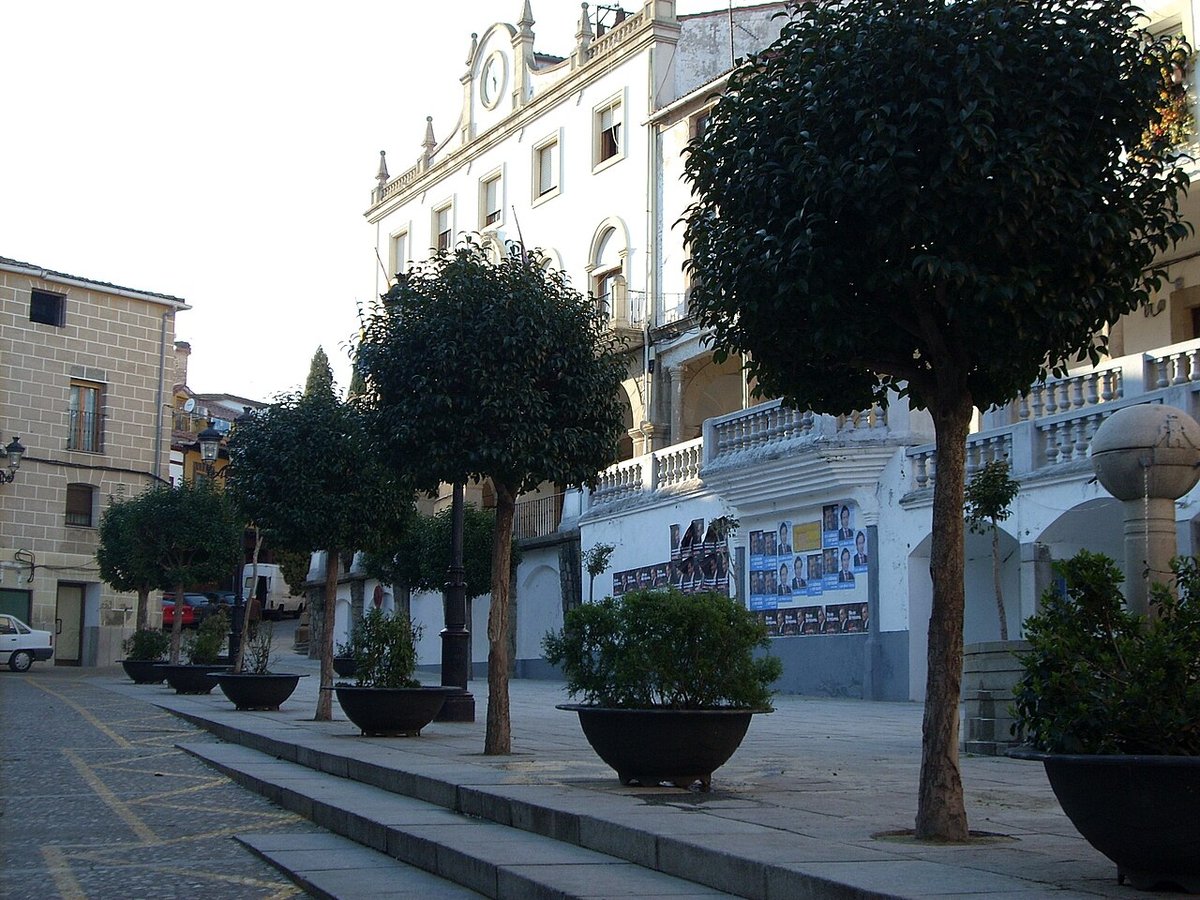
The houses follow the familiar pattern of La Vera, a comarca in the north-east of Extremadura. Whitewashed walls, wooden balconies and irregular streets define the look. Some homes hide interior courtyards and small cellars dug into the rock. These features are not always visible from the outside. They are working houses, built for everyday life rather than display.
The parish church is the most visible building in the village. It is not large. Even so, inside there are often old altarpieces that catch the eye, provided the church is open at the time.
The main square is straightforward. It acts as a point of passage and meeting, without elaborate decoration. People cross it on their way elsewhere or stop briefly to talk. Its role is practical and social rather than monumental.
Gorges and Walks Near the Village
A few minutes from the built-up area, paths begin to weave between smallholdings. Plots of red pepper, fruit trees and other family crops are still cultivated here. This is real agricultural landscape, not something arranged for visitors.
The nearby gorges, such as Jaranda and Barbellido, draw most of the summer activity. In this part of Extremadura, a garganta is a mountain stream with natural pools. The water remains cold even when the heat is intense. There are spots where people bathe, although it is wise to check the ground carefully before getting in. Rocks can be uneven and conditions vary.
Some stretches are used for canyoning when the water flow allows. This is not organised directly from the village itself. It usually depends on external companies and on the state of the water at the time. Activity levels change with the season and with rainfall.
Beyond the gorges, the surrounding countryside encourages short walks rather than major excursions. The scale is modest. A path through orchards or along irrigation channels is enough to understand the setting.
Countryside, Cooking and the Seasons
Agriculture remains present in daily life. Red pepper is one of the most visible crops in the area, alongside fruit trees and small vegetable plots. The fields shape the views around the village and the rhythm of the year.
On the table, you are likely to find embutidos, which are cured sausages and other pork products typical across Spain. There are also aged cheeses and small game when the season allows. Cooking tends towards simple stews prepared slowly and without fuss. The emphasis is on familiar ingredients rather than elaborate presentation.
When autumn arrives, the nearby hills attract people searching for wild mushrooms. Caution is important. Without experience it is easy to confuse certain species. The landscape changes with the season, but it does not become a spectacle. It remains working countryside.
Festivals and Atmosphere
The patron saint festivals usually take place at the end of August. There is noticeably more movement in the streets at that time, though the size of the village sets natural limits on excess. The celebrations fit the scale of the place.
Holy Week, or Semana Santa, is quiet. Short processions pass through the old quarter. The atmosphere is local, without large-scale staging or elaborate productions. It is a community event rather than a show.
For a visit, there is little need to overthink the plan. Park at the top, walk down through the narrow streets and make your way towards the gorges. That simple route offers a clear sense of Madrigal de la Vera: a small settlement on a gentle rise, shaped by agriculture, defined by its cold water and lived in at an unhurried pace.